
The Bosch F00RJ00339 is a precision common rail injector control valve assembly used in Bosch diesel injectors to regulate internal fuel pressure and injection timing. It plays a critical role in controlling how much fuel is delivered into the combustion chamber by managing the hydraulic pressure inside the injector.
When this valve becomes worn or internally leaks, the injector loses pressure stability, which can lead to rough idling, power loss, excessive smoke, hard starting, and increased fuel consumption. In most cases, these symptoms are often misdiagnosed as fuel pump or nozzle failure.
Replacing the F00RJ00339 valve assembly restores proper injector hydraulic balance, improves fuel atomization, and helps the engine return to stable and efficient operation.
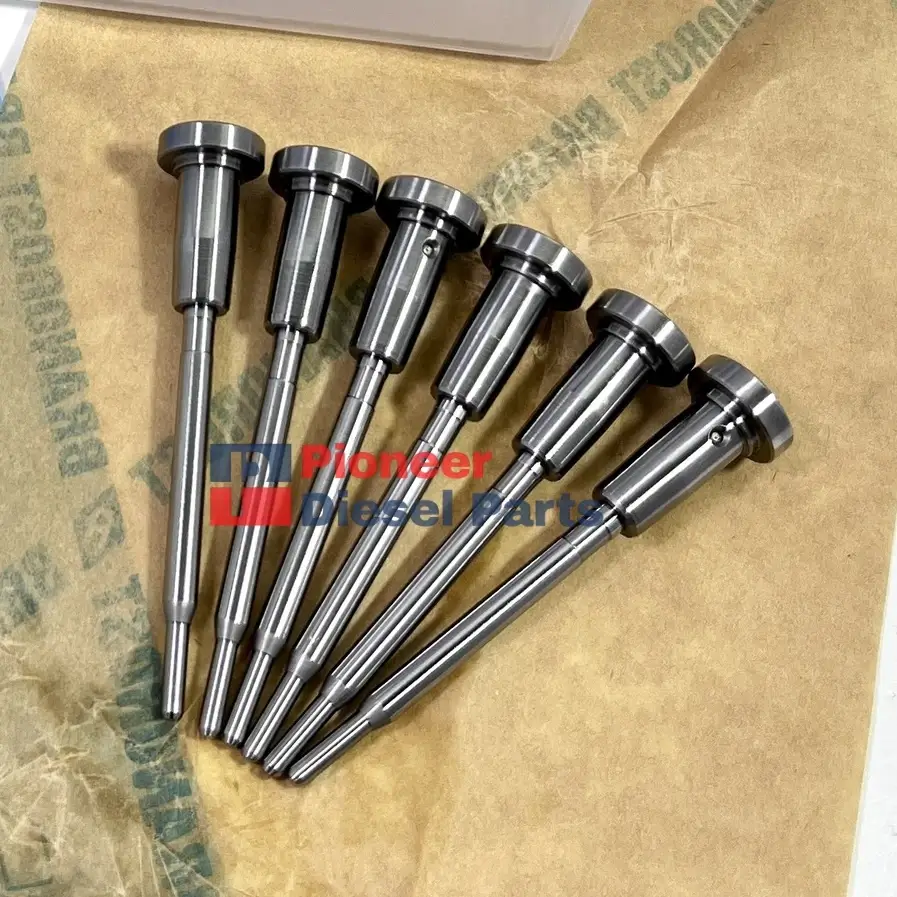
1. How to Accurately Diagnose a Failing F00RJ00339 Valve Assembly
The root cause of failure is internal hydraulic pressure leakage – micron‑level wear between the valve seat and spool, which prevents the control chamber from maintaining stable pressure.
Standard Workshop Diagnostic Procedure
Step 1 – Read Fault Codes
Use a diagnostic scanner to check for common ECU codes:
- Rail pressure deviation
- Injector imbalance
- Fuel metering error
Step 2 – Measure Injector Return Flow (Most Reliable Method)
This is the gold standard for detecting valve leakage:
- Disconnect the return lines from each injector.
- Route the return fuel into graduated cylinders.
- Run the engine at idle and measure the return volume over a fixed time.
Benchmark: If one injector’s return flow exceeds the others by more than 20–30 ml/min, internal hydraulic leakage is present – and the F00RJ00339 valve assembly is the primary suspect.
Step 3 – Swap Test
Move the suspect injector to another cylinder. If the fault follows the injector, the problem is internal to that injector (valve assembly), not the wiring or ECU.
⚠️ Note: These diagnostics require professional injector test benches or diagnostic tools. Do not rely solely on “feeling” – many workshops wrongly blame the high‑pressure pump, leading to costly unnecessary replacements.
2. Function and Working Principle of the F00RJ00339 Valve Assembly
In a common‑rail injector, fuel injection is governed by hydraulic pressure balance inside the injector body, not just by the nozzle.
Core function: Regulates the fuel pressure in the injector’s control chamber, thereby precisely controlling injection timing and fuel quantity.
Operating sequence:
- The ECU sends an electrical signal to the injector solenoid.
- The solenoid actuates the F00RJ00339 valve assembly (open/close).
- The control chamber pressure changes almost instantaneously.
- The injector needle lifts or seats based on the pressure differential.
- The injection event is controlled with microsecond precision.
👉 Key insight: This valve assembly does not inject fuel directly – it triggers injection by modulating hydraulic pressure. Even micron‑level wear can severely impair engine performance.
3. Technical Specifications
| Parameter | Specification |
|---|---|
| Part Number | F00RJ00339 |
| Type | Injector valve assembly (includes spool, seat, spring, etc.) |
| System | Bosch Common Rail Injector |
| Material | High‑strength precision alloy steel |
| Function | Fuel pressure and timing control |
| Fuel | Diesel |
| Weight | ~0.03 kg |
| Operating Conditions | High pressure (common‑rail system) |
| Application Level | Heavy‑duty diesel engines |
4. Compatible Injector Models (Full List)
The F00RJ00339 is widely used in the following Bosch injector part numbers:
| Injector Part No. | Primary Application |
|---|---|
| 0445120007 | Cummins ISBe series |
| 0445120006 | Cummins platforms |
| 0445120018 | Light‑duty commercial diesel |
| 0445120032 | Industrial diesel engines |
| 0445120079 | Heavy‑duty truck engines |
| 0445120103 | Commercial vehicles |
| 0986435505 | OEM replacement systems |
| 0986435508 | Diesel common‑rail platforms |
💡 Most common fitment: 0445120007 (Cummins ISBe platform)
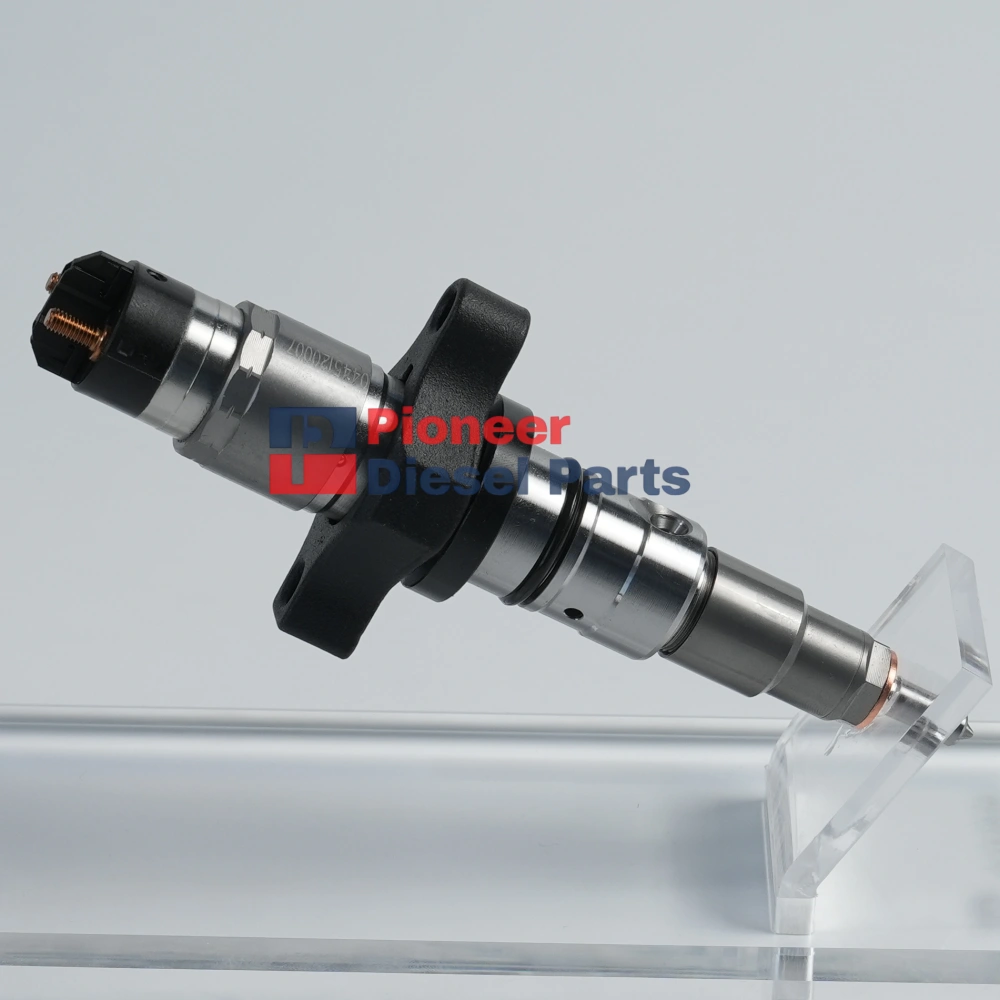
5. Vehicle and Engine Applications
Compatible Engines
- Cummins ISBe / ISDe series
- Iveco F1C / light‑commercial diesel engines
- Dongfeng diesel truck engines
- Ford commercial diesel applications (Transit, Ranger, etc.)
- Agrale industrial diesel engines
Compatible Vehicles
- Heavy‑duty trucks
- Construction machinery
- Light‑commercial vans
- Diesel generator sets
6. Detailed Failure Symptoms
A worn F00RJ00339 valve assembly typically causes injector‑level malfunctions, leading to:
Engine symptoms:
- Rough idle / unstable RPM – the earliest warning
- Hard starting, especially when cold
- Loss of power – sluggish acceleration, poor hill‑climbing
- Increased fuel consumption – poor atomisation reduces efficiency
- Black or white smoke – uncontrolled fuel quantity or timing deviations
- Knocking or vibration – cylinder imbalance
Common diagnostic trouble codes:
- Rail pressure deviation
- Injector imbalance
- Fuel metering error
⚠️ Important: These symptoms are frequently misattributed to high‑pressure pump failure. In many real‑world cases, the valve assembly is the actual root cause – replacing the pump costs thousands, while replacing the valve assembly costs only a fraction.
7. Root Causes and Repair Options
7.1 Why Does the F00RJ00339 Fail?
Typical failure causes (in order of frequency):
- Fuel contamination (dust / metal particles) – #1 factor
- High‑pressure erosion wear
- Long‑term thermal fatigue
- Poor fuel filtration
- Internal leakage across the valve seat
👉 Fuel quality is the single most important determinant of valve assembly life. Contaminated diesel accelerates seat wear and shortens component life.
7.2 Valve‑Assembly‑Only Replacement vs. Full Injector Replacement
✅ Choose valve‑assembly‑only when:
- The injector body is in good condition
- Only pressure instability is detected
- The nozzle spray pattern is normal
- Return‑flow tests confirm the valve assembly is the sole issue
❌ Choose full injector replacement when:
- Multiple internal components are worn
- There is severe mechanical damage
- The injector body is leaking
- The nozzle is badly worn or stuck
💰 Cost perspective: Replacing only the valve assembly is a highly cost‑effective repair – typically 20‑30% of the cost of a new complete injector.
8. Installation and IQA Code Matching
8.1 Critical Installation Requirements
The F00RJ00339 is a precision hydraulic component – not a simple mechanical part.
Mandatory conditions:
- Work in a clean‑room‑grade environment
- Absolutely no dust or metal particles allowed
- Professional injector test‑bench calibration after installation
- IQA code matching (see below)
Common installation mistakes:
- Not replacing the accompanying seals (causes leaks)
- Incorrect torque (over‑ or under‑tightening)
- Failing to clean the valve seat face before assembly
- Skipping test‑bench calibration and fitting directly to the engine
⚠️ Improper installation can immediately destroy the injector!
8.2 Why IQA Code Matching is Non‑Negotiable
What is the IQA code?
IQA (Injector Quantity Adjustment) is a fuel‑quantity correction code printed on every Bosch injector. It is unique to each injector and is stored in the ECU, assigned to the corresponding cylinder.
Why it matters after valve replacement:
Replacing the valve assembly slightly alters the injector’s hydraulic characteristics. If you do not write the new injector’s IQA code into the ECU, the ECU continues using the old correction values, causing:
- Uneven fuel delivery across cylinders
- Increased engine vibration
- Power loss
- Exceeded emission limits
Correct procedure:
- Install the new F00RJ00339 valve assembly.
- Calibrate the injector on a test bench.
- Read the IQA code (alphanumeric string) from the injector body.
- Use a diagnostic tool (e.g., A60PCS) to write the IQA code into the ECU.
- Clear fault codes and perform a road test for verification.
⚠️ Replace without calibration = wasted effort. Skipping IQA matching prevents the new valve from delivering its full potential and may trigger new fault codes.
9. Genuine vs. Aftermarket Valve Assemblies – An Objective Comparison
Both genuine (Bosch OEM) and many aftermarket (branded) valve assemblies are available. Aftermarket quality is not inherently inferior – it depends on the manufacturer’s technical capability and quality control.
Comparison Table
| Aspect | Genuine (Bosch) | Quality Aftermarket (Branded) | Counterfeit / No‑Name |
|---|---|---|---|
| Material | Special alloy steel, strictly heat‑treated | Often equivalent or similar; some brands use robust materials | Ordinary steel, insufficient hardness |
| Machining Precision | Micron‑level, extremely smooth surface | Top brands can match OEM; others vary | Rough, visible tool marks on sealing faces |
| Sealing Performance | Consistently reliable | Good quality equals OEM; poor ones leak early | Leaks from the start |
| Service Life | Designed for hundreds of thousands of km | Good brands approach OEM; cheap ones halve the life | Fails within a few thousand km |
| Price | Higher (100% baseline) | Typically 60‑80% of genuine | Extremely low (below 30% of genuine) |
How to Choose a Reliable Aftermarket Valve
- Brand reputation: Stick to well‑known aftermarket brands (e.g., Delphi, Bosch‑certified partners) – avoid unbranded products.
- Visual inspection: Quality aftermarket parts have clear laser engraving, uniform matte finish on the body, and a smooth sealing face with no scratches.
- Weight and feel: Quality alloy steel is dense – the part should feel “solid” in hand; lightweight parts indicate poor material.
- Test reports: Reputable suppliers often provide factory test reports (flow curves, pressure data) – request them.
💡 Recommendation: If budget allows, choose genuine. For cost‑effectiveness, a trusted aftermarket brand is perfectly acceptable – as long as installation and IQA matching are done correctly, performance can match the genuine part. Never buy cheap unbranded imitations – they are the real source of trouble.
10. Related Bosch Valve Assemblies (Reference)
Other Bosch injector valve assemblies in the same family:
| Part Number | Main Application |
|---|---|
| F00RJ00375 | Injector repair systems |
| F00RJ00399 | Dongfeng diesel platform (Dci11) |
| F00RJ01479 | Volvo / Deutz applications |
| F00RJ01941 | Common‑rail injector series |
| F00VC01033 | Bosch system valve family |
| F00VC01352 | Updated generation valve assembly |
Quick Distinction: F00RJ00339 vs. F00RJ00399
Although they look similar, they are not interchangeable:
- F00RJ00339 – primarily for Cummins ISBe / Iveco platforms
- F00RJ00399 – primarily for Dongfeng Dci11 engines
Visual difference: The overall length and valve seat angle differ. Always verify the injector part number before ordering.
Read related content in this series
- F00VC01372 Injector Valve Assembly – Function, Failure Symptoms, Compatibility & Repair Guide
- F00VC01033 Injector Valve Applications for Hyundai & Kia 2.5 CRDi Engines
- Common Rail Injector Valve F00RJ00375 for Injector 0445120006
- Common Rail Injector Valve F00RJ00834 for Injector 0445120025
11. Frequently Asked Questions
Q1: What is the role of the F00RJ00339?
It controls the fuel pressure inside Bosch common‑rail injectors to precisely time and meter injection events.
Q2: Which injectors use this valve assembly?
Mainly Bosch 0445120007, 0445120018, 0445120032, 0445120079, and 0445120103.
Q3: What are the symptoms of a failing valve?
Rough idle, power loss, smoke, high fuel consumption, and injector imbalance – see Section 6 for full details.
Q4: Can I replace only the valve assembly instead of the whole injector?
Yes – if the injector body and nozzle are still sound, valve‑only replacement is a common and economical repair.
Q5: Is professional calibration required after replacement?
Absolutely – test‑bench calibration and IQA code writing into the ECU are mandatory.
Q6: What is the difference between F00RJ00339 and F00RJ00399?
They suit different injector platforms – 339 for Cummins/Iveco, 399 for Dongfeng Dci11. Check your injector number before purchase.
Q7: Can I use aftermarket parts?
Yes, but choose reputable brands. Quality aftermarket parts can match genuine in performance and are more cost‑effective. Avoid unbranded fakes.
Q8: What happens if I skip IQA code matching?
The ECU keeps old correction values, causing cylinder imbalance, vibration, power loss, and increased emissions.
Closing Summary
The Bosch F00RJ00339 valve assembly is a key precision component in common-rail injector systems that directly affects fuel pressure control, injection accuracy, and overall engine performance. When faults are identified early and confirmed through proper diagnostic testing, replacing the valve assembly—combined with correct IQA code matching and professional calibration—can effectively restore injector efficiency, stabilize engine operation, and prevent unnecessary full injector replacement costs.
Disclaimer
Bosch and Cummins part numbers are used for compatibility and identification purposes only. All products described in this article are aftermarket replacement parts and are not claimed to be original Bosch or Cummins products unless explicitly stated.
