
The Bosch CP3 high-pressure fuel pump 0445020300 is a third-generation common rail diesel injection pump featuring a three-plunger radial piston design driven by a cam ring. It is capable of generating fuel system pressures typically up to 1,600 bar (23,206 PSI), depending on ECU calibration and application. Note: In certain system configurations utilizing 1,500-bar pressure sensors, the maximum operating pressure may be electronically limited to 1,400 bar, underscoring the importance of verifying specific OEM calibration.
This pump is widely used in the Cummins 6.7L ISB diesel platform (early 2007–2012 applications) and is recognized for its robust mechanical design, stable fuel delivery characteristics, and long service life under proper filtration and inlet fuel pressure conditions.
Unlike later CP4 designs, the CP3 architecture is generally considered more tolerant to fuel quality variation due to its lubrication and internal load distribution design.
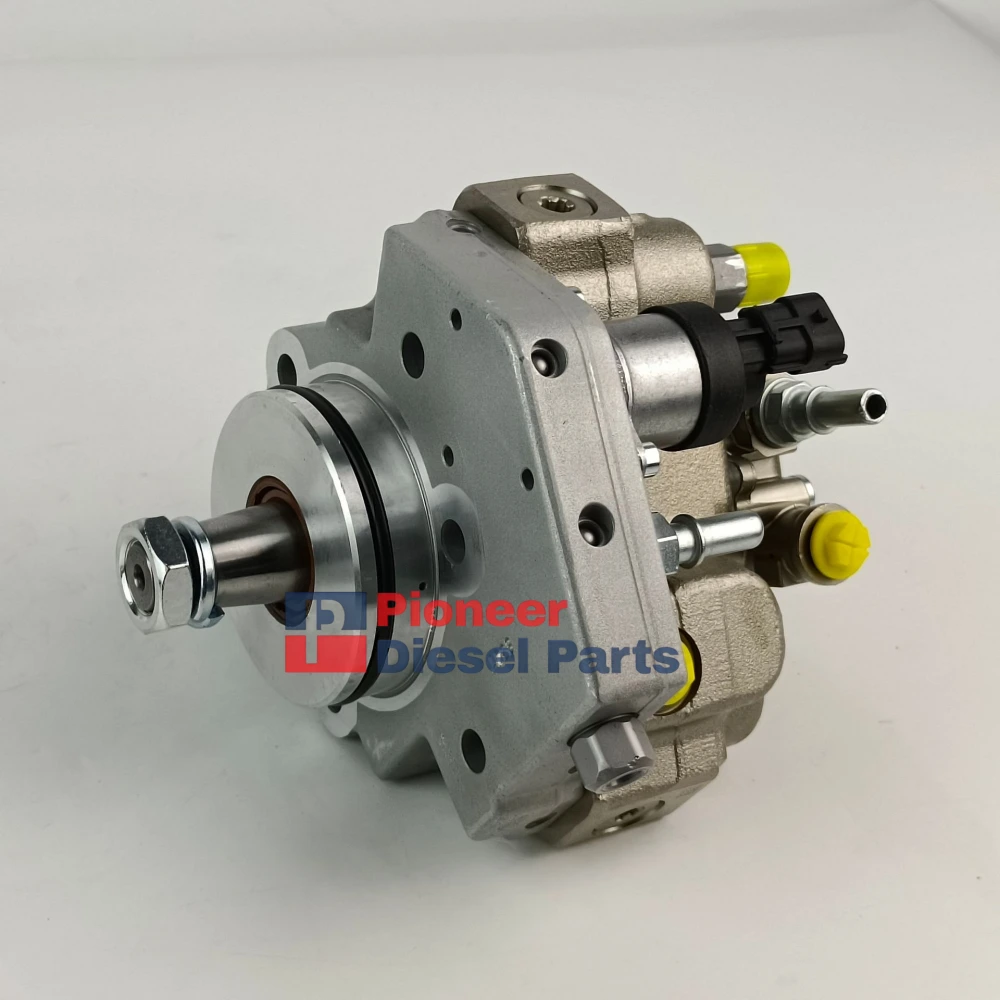
1. Overview of Bosch CP3 Pump
The Bosch CP3 represents the third generation of Bosch common rail high-pressure pumps, developed as an evolution of the CP1 and CP2 series.
Its core design uses a radial piston configuration with three pumping elements arranged around a cam ring, allowing sequential compression cycles during each rotation.
Compared with earlier generations, the CP3 improved:
- Pressure stability under load
- Fuel delivery consistency
- Mechanical durability in heavy-duty cycles
- Serviceability of electronic control components (FCA/MPROP)
0445020300 Variant Positioning
The 0445020300 model is an OEM-specific CP3 variant commonly matched with Cummins ISB 6.7L early-generation applications. It is designed as a direct high-pressure supply pump feeding a common rail system through a steel high-pressure line. While the broader CP3 architecture supports a wide range of engines (including GM Duramax and various European commercial platforms), this specific variant is calibrated exclusively for Cummins’ fuel mapping and mounting requirements.
2. Technical Specifications
| Specification | Value |
|---|---|
| Pump Type | Bosch CP3 radial piston pump |
| Generation | 3rd generation common rail pump |
| Plunger Design | 3 × radial plungers |
| Drive Type | Engine-driven gear/shaft |
| Fuel System Pressure Range | ~250–1600 bar (system dependent) |
| Max Pressure (typical OEM) | up to 1600 bar |
| Control Valve | FCA / MPROP (electronic metering valve) |
| Lubrication | Diesel fuel lubricated |
| Housing Material | High-strength cast steel / iron alloy |
| Country of manufacture | China |
Maximum pressure is ECU-calibrated. Some applications may have lower pressure limits based on sensor specifications.
Key Engineering Characteristics
The CP3 pump operates through a cam-driven eccentric mechanism that actuates three plungers in sequence. Each plunger compresses fuel in a dedicated chamber before discharging into a shared high-pressure outlet gallery.
Key design features include:
- Sequential pressure generation for smoother rail pressure stability
- Fuel-lubricated internal architecture, eliminating external oil lubrication requirement
- Electronic fuel metering (FCA) controlled by ECU demand
- No mechanical timing calibration required, as pump is gear-driven and synchronized with engine rotation
3. Application – Engines and Vehicles
Primary Application: Cummins ISB 6.7L
The Bosch 0445020300 CP3 pump is primarily used in:
- 2007–2012 Dodge Ram 2500 / 3500 / 4500 / 5500
- Early Cummins ISB 6.7L diesel engines
- Selected cab & chassis commercial applications
Engine Platform
- Cummins ISB 6.7L inline-six diesel engine
OEM Cross References
- Bosch: 0445020300 , 0 445 020 300
- Bosch Reman: 0986437370
- Cummins: 4983416 , 5398557 series
Broader CP3 Platform Applications
While 0445020300 is Cummins-specific, CP3 architecture is also used or adapted in:
- GM 6.6L Duramax (LMM / LML platforms depending on calibration and system version)
- European commercial diesel engines (various displacement classes)
- Industrial diesel engines and agricultural machinery
- Performance retrofit applications in modified common rail systems
4. How the Bosch CP3 Pump Works
The CP3 operates as a mechanically driven, ECU-controlled high-pressure pump.
Working Cycle
- Fuel Supply Stage
Low-pressure fuel is supplied from the tank via a lift pump system. Adequate inlet pressure is critical to maintain lubrication and prevent cavitation.
- Fuel Metering (FCA Control)
The Fuel Control Actuator (FCA / MPROP) regulates the volume of fuel entering the pumping chambers. The ECU adjusts FCA duty cycle based on rail pressure feedback.
- Compression Phase
A cam ring drives three plungers in a sequential pattern. Each plunger compresses fuel independently during its stroke.
- Pressure Accumulation
Compressed fuel is collected into a shared internal gallery before being discharged into the high-pressure rail.
- Rail Pressure Regulation
A rail pressure sensor provides real-time feedback to the ECU, which continuously adjusts FCA input to maintain target pressure.
5. Failure Modes and Diagnosis
The CP3 pump is generally considered durable. Most failures are secondary-system related rather than internal mechanical collapse.
Common Failure Causes
| Failure Mode | Technical Explanation |
|---|---|
| Fuel contamination | Abrasive particles damage precision components |
| Low inlet pressure | Causes cavitation and reduced lubrication |
| Air intrusion | Disrupts consistent chamber filling |
| FCA malfunction | Incorrect fuel metering to pumping chambers |
| Injector leakage | Causes misleading low rail pressure symptoms |
| Seal degradation | Leads to external or internal fuel leakage |
Typical Symptoms
- Hard hot start / extended cranking
- P0087 (low fuel rail pressure under load)
- Reduced engine power at higher RPM
- Excess smoke during acceleration transition
- Engine limiting RPM under load conditions
- Visible fuel leakage near pump housing
Diagnostic Procedure (Recommended Sequence)
- Verify fuel filter condition and contamination presence
- Measure low-pressure fuel supply (inlet pressure stability)
- Check for air ingress in fuel lines
- Inspect FCA electrical signal and response curve
- Monitor rail pressure deviation via scan tool
- Perform injector leak-off test to rule out rail pressure drop causes
6. Repair and Service
Serviceable Components
The CP3 design allows partial service without full pump replacement:
- Fuel Control Actuator (FCA / MPROP)
- External seals and gasket interfaces
- Fuel inlet/outlet fittings
Common Repair Options
| Repair Type | Description | Cost Level |
|---|---|---|
| FCA replacement | Replaces metering control valve | Low |
| Seal kit service | Uses Bosch DGK603 gasket set | Low–Moderate |
| Remanufactured unit | OEM rebuilt pump | Moderate |
| New OEM pump | Factory new replacement | High |
Maintenance Recommendations
- Maintain stable inlet fuel pressure (critical for pump life)
- Replace fuel filters at scheduled intervals
- Prevent water contamination via separator drainage
- Avoid air ingestion after service work
- Use clean diesel fuel meeting OEM standards
Pro Tip for FCA Diagnosis: If you suspect FCA malfunction, a quick check involves unplugging the FCA electrical connector while the engine is running (at your own risk). If the engine’s behavior does not change dramatically, or if rail pressure remains abnormally high, the FCA is likely stuck or faulty. Additionally, when replacing the FCA, it is highly recommended to replace the retaining screws, as they are often treated with thread-locking compound and can stretch over time.
Performance Upgrade Path
- Increased plunger stroke (8.2 mm → 10 mm in aftermarket setups)
- High-flow FCA upgrades for modified engines
- Dual CP3 systems for high horsepower applications
7. CP3 vs CP2 Comparison
| Feature | CP2 | CP3 |
|---|---|---|
| Pump Design | 2-plunger radial | 3-plunger radial |
| Pressure Capability | Lower system range | Up to ~1600 bar |
| Control System | More mechanical-based | ECU-controlled FCA |
| Pressure Stability | Moderate | High stability under load |
| Serviceability | Medium | High (FCA serviceable) |
| Applications | Industrial/heavy equipment | On-road heavy-duty diesel |
| Aftermarket Support | Limited | Extensive performance ecosystem |
Engineering Interpretation
The CP3’s additional third plunger improves:
- Pressure ripple reduction
- Fuel delivery consistency
- High-load stability
This is one of the main reasons it became a dominant platform in heavy-duty common rail systems. Furthermore, the CP3’s robust design and widespread adoption have fostered a massive aftermarket ecosystem—offering everything from upgraded “stroker” plunger kits to dual-pump setups—making it the preferred choice for both reliability-focused repairs and extreme high-horsepower builds.
8. Other models in the same series and related reading
The Bosch CP3 high-pressure pump is part of the third-generation CP series and is widely recognized for its improved durability, efficiency, and high-pressure stability.
- 0445020110
- 0445020134
- 0445020149
- 0445020176
Read about other related models:
- Bosch CP4 High-Pressure Pump 0445010622 – Specifications, Applications, and Failure Analysis
- Bosch CB18 0445025084 High-Pressure Pump – Specs, Applications & Fault Diagnosis Guide
- CP3 High Pressure Pump 0445020122 For Cummins QSB6.7 Engine
- Fuel Injection Pump 0445020045 For Cummins Diesel Engine DAF Truck
9. Frequently Asked Questions
1. What engines use the Bosch CP3 0445020300?
It is primarily used in early Cummins ISB 6.7L diesel engines, especially 2007–2012 Dodge Ram applications and related commercial variants.
2. What is the maximum pressure of the CP3 pump?
The CP3 system typically operates up to 1600 bar depending on ECU calibration and system configuration, though some applications may have lower limits.
3. Is the CP3 pump reliable?
Yes. The CP3 is widely regarded as a durable high-pressure pump when proper fuel filtration and inlet pressure conditions are maintained.
4. What are common CP3 failure symptoms?
Typical symptoms include low rail pressure codes (P0087), hard starting, reduced power, and fuel leakage.
5. What is the FCA on a CP3 pump?
The FCA (Fuel Control Actuator) is an ECU-controlled metering valve that regulates fuel entering the pump to maintain rail pressure.
6. Can the CP3 pump be repaired?
Yes. Common repairs include FCA replacement, seal servicing, and remanufactured pump replacement.
7. What is the difference between CP2 and CP3?
CP3 uses a three-plunger radial design with ECU-controlled fuel metering, offering higher pressure capability and improved stability compared to CP2, along with significantly greater aftermarket support.
Final Summary
The Bosch CP3 0445020300 is a durable, three-plunger common rail pump used primarily in 2007–2012 Cummins ISB 6.7L engines. It delivers up to 1,600 bar with excellent pressure stability. Reliability is high when fuel filtration and inlet pressure are maintained, yet most failures stem from external factors like contamination or low supply pressure rather than internal failure. Serviceable components (FCA, seals) enable cost-effective repairs. Compared to CP2 and CP4 designs, the CP3 offers the best balance of durability, electronic control, and aftermarket support—making it a proven workhorse when properly maintained.
Disclaimer
Bosch and Cummins part numbers are used for compatibility and identification purposes only. All products described in this article are aftermarket replacement parts and are not claimed to be original Bosch or Cummins products unless explicitly stated.
