
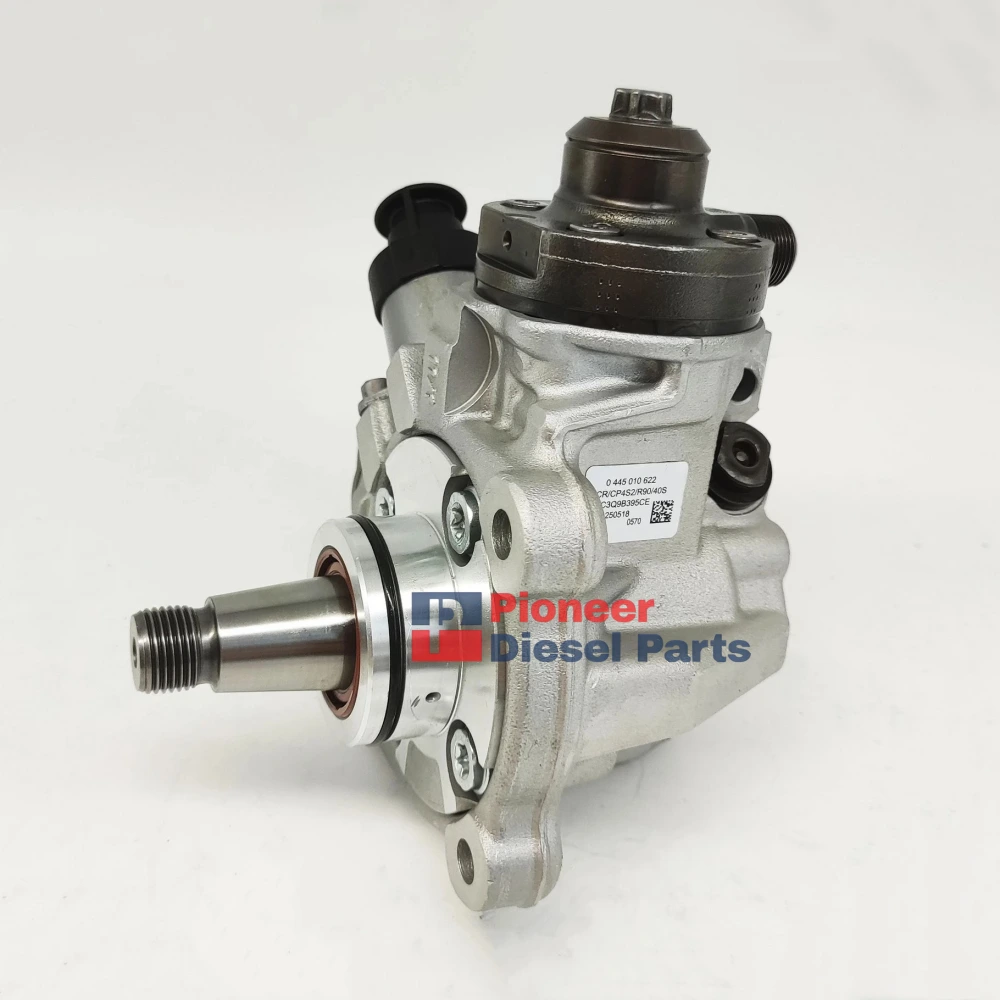
The Bosch CP4 high-pressure pump 0445010622 is a fourth-generation common rail diesel fuel pump featuring a V-twin plunger design with roller followers. It operates at pressures of 1,800–2,000 bar in normal operation and is used across passenger cars, light-duty, and medium-duty vehicles. The 0445010622 variant is specifically associated with 2011–2014 Ford 6.7L Powerstroke applications. Unlike the earlier CP3, the CP4 is more compact and efficient but has a higher risk of failure modes that can lead to widespread fuel system contamination if not addressed promptly.
1. Overview
The Bosch CP4 represents the fourth generation of common rail high-pressure pumps, introduced in the early 2010s to meet stricter emissions standards. It was designed as a smaller, lighter, and more efficient replacement for the long-running CP3 pump.
The CP4 comes in two main variants:
- CP4.1 – single plunger design
- CP4.2 – dual plunger (V-twin) design
Model 0445010622 is a CP4.2 variant used in Ford applications.
Despite its efficiency advantages, the CP4 has gained a reputation for reliability concerns, particularly related to its sensitivity to fuel quality and lubrication properties.
2. Technical Specifications
- Model: Bosch CP4.2
- Pump Type: V-twin plunger, roller follower
- Normal Operating Pressure: 1,800–2,000 bar
- System Peak Pressure Capability: Up to approximately 2,500 bar under transient operating conditions
- Pumping Chambers: 2 (V-configuration)
- Camshaft Design: Two-lobe cam
- Lubrication System: Fuel-lubricated, fuel-cooled design
- Low-Pressure Supply Range: 60–87 PSI (platform dependent)
- Drive Mechanism: Engine timing gear-driven
- Housing Material: Lightweight aluminum alloy
- Size Comparison: Approximately 25% smaller than CP3 pump
Key Design Features
- Two pumping plungers arranged in a V configuration, each driven by a roller follower riding on a two-lobe cam, producing four pressure pulses per revolution.
- Fuel-lubricated design – diesel fuel flows through the pump body to lubricate the cam, rollers, and plunger bores.
- No timing adjustment required – pump is driven directly by engine timing gears.
- Timed operation – fuel pressure pulses correspond with injection events, maintaining pressure commanded by the engine control module.
Pressure Notes:
- The pump’s normal operating range is 1,800–2,000 bar under most driving conditions.
- Peak pressures of up to approximately 2,500 bar (36,000 PSI) may be achieved in certain transient conditions, but this represents an engineering maximum rather than a sustained operating pressure.
- OEM ratings (Ford, GM, Ram) typically list maximum fuel pressure at 36,000 PSI for CP4 applications.
3. Application – Engines and Vehicles
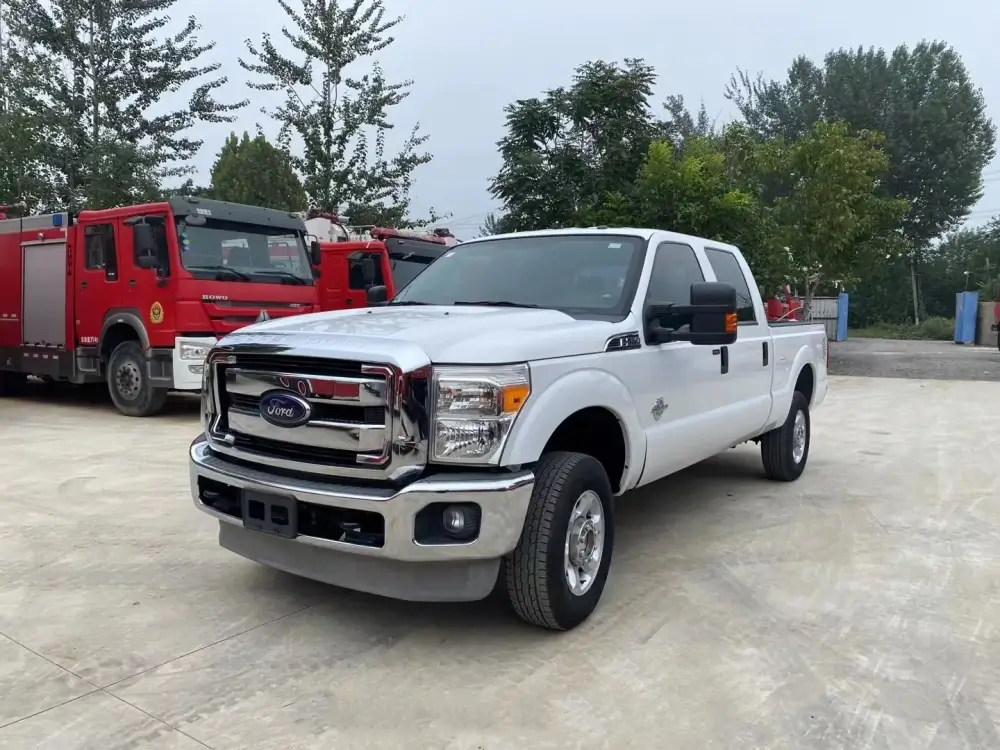
Primary Application: Ford 6.7L Powerstroke (2011–2014)
The Bosch CP4 pump variant 0445010622 is used in:
- 2011–2014 Ford F-250 Super Duty
- 2011–2014 Ford F-350 Super Duty
- Ford F-450 Super Duty 2011–2014
- Ford F-550 Super Duty 2011–2014
Engine:
- Ford 6.7L Powerstroke V8 diesel
OEM Cross-Reference Part Numbers:
- BC3Q-9B395-CB, BC3Q-9B395-CD, BC3Q-9B395-CE
- BC3Z-9A543-A, BC3Z-9A543-B
- 0986437422, 0445010649, 0445010851
Other CP4 Applications
| Application | Engine | Years |
|---|---|---|
| Ford Super Duty | 6.7L Powerstroke V8 | 2011–present |
| Chevrolet/GMC Silverado/Sierra HD | 6.6L Duramax LML | 2011–2016 |
| Ram Trucks 2500–5500 | 6.7L Cummins I6 | 2019–2020 |
| Ram 1500 | 3.0L EcoDiesel V6 | 2014–2023 |
| Jeep Gladiator | 3.0L EcoDiesel V6 | 2021–2023 |
4. How the Bosch CP4 Pump Works
The CP4.2 is a mechanical pump driven off the engine timing gears. Here’s the operational sequence:
Fuel Supply: Fuel is drawn from the tank by either a built-in low-pressure pump or an electric lift pump at roughly 60–87 PSI, depending on the platform.
Compression: The pump shaft rotates. A two-lobe camshaft actuates roller followers attached to plunger assemblies. Each rotation produces four pressure pulses.
Valve Operation: Fuel is pressurized in the two V-configured pumping chambers and delivered to the high-pressure fuel rail(s).
Pressure Regulation: The pump achieves pressures from approximately 5,000 PSI at idle to 1,800–2,000 bar (26,000–29,000 PSI) at wide-open throttle under normal operating conditions.
Delivery: High-pressure fuel is distributed to injectors via one or two fuel rails mounted on the cylinder heads.
Internal Design Consideration
The CP4 features roller-type followers riding on a two-lobe camshaft. The CP4’s cam movement is more aggressive than the CP3’s design. There is no mechanism to keep the roller followers from rotating in their bore, and any rotational movement can result in premature wear.
5. Failure Modes and Diagnosis
Why CP4 Pumps Fail
The CP4’s vulnerability stems from two converging factors:
- Fuel-Lubricated Design: The pump depends entirely on diesel fuel to lubricate its internal components. The CP4’s tighter tolerances and roller follower design make it particularly sensitive to fuel properties.
- Ultra-Low Sulfur Diesel (ULSD) Lubricity: While ULSD in North America meets the HFRR (High-Frequency Reciprocating Rig) lubricity standard (typically around 520 µm wear scar diameter), it is significantly less lubricious than older, higher-sulfur diesel formulations. The hydrotreating process that removes sulfur also strips out naturally occurring lubricity-enhancing compounds.In Europe, lubricity additives are commonly added at the refinery to compensate for this reduction. However, North American refiners are not mandated to do so to the same extent. For a sensitive pump like the CP4, which operates with tighter internal clearances, the margin of lubrication is much thinner, making it more reliant on fuel quality than its predecessor.
Common Failure Mechanisms
| Failure Mode | Description |
|---|---|
| Roller follower seizure | Roller stops rolling and skids on the cam lobe, scoring both surfaces. |
| Roller follower rotation | Roller rotates in its bore, putting the side in contact with the cam. |
| Plunger and bore wear | Plunger scrapes the bore, generating fine metal particles. |
| Cam lobe failure | Metal-on-metal action causes rapid wear of both parts. |
Contributing Factors
- Water in fuel (displaces the lubrication film)
- Air in fuel (CP4 does not handle air well)
- DEF contamination
- Prolonged operation at very low fuel levels
Failure Symptoms
| Symptom | Description |
|---|---|
| Engine cranks but won’t start | Fuel pressure drops too low to fire injectors. |
| Reduced engine power | Sluggish acceleration or poor throttle response. |
| Check Engine Light | Fuel rail pressure-related codes: P0087, P0088, P0191, P128E. |
| Metal debris in fuel filters | Early warning sign of internal wear. |
| Hard starting | Especially after sitting overnight. |
Critical Warning: If you see any combination of these symptoms, shut the engine down immediately. Continuing to run the engine can circulate metal debris throughout the fuel system and significantly increase the extent of the damage.
Understanding the Risk: When Does Damage Spread?
When a CP4 pump experiences internal wear, the resulting metal particles may be carried through the fuel system. However, the extent of the damage is highly dependent on several critical factors:
- Continued Operation: If the engine continues to run after failure symptoms appear, metal debris will be circulated through the high-pressure system, increasing the likelihood of component destruction.
- Filtration System: The factory fuel filter can capture some debris. A filter change and inspection may reveal the problem early, potentially limiting damage.
- Timing of Discovery: Early detection of symptoms (hard starting, P0087 code, metal in the filter) allows for a more targeted repair, such as pump replacement only.
In summary: A CP4 failure can lead to widespread fuel system contamination requiring extensive replacement, but this is not an inevitable outcome. Prompt diagnosis and immediate engine shutdown are the most effective ways to contain the damage. Early intervention can mean the difference between a $3,500 pump replacement and a $12,000+ full-system overhaul.
6. Repair and Replacement
Components That May Be Affected
When contamination occurs, the following components may require replacement:
- High-pressure fuel lines
- Fuel rails
- Injectors
- Low-pressure lift pump
- Fuel tank and pickup assembly
- Return lines and filters
Repair Cost Estimates
The required repair scope depends on the extent of contamination:
| Scenario | Estimated Cost (USD) |
|---|---|
| Complete fuel system replacement (widespread contamination) | $8,000 – $15,000+ |
| Pump replacement only (early detection, limited contamination) | $3,500 – $6,000+ |
| Pump + injectors + rails (moderate contamination) | $10,000 – $14,000 |
Note: Costs are estimates based on common industry repair scenarios and can vary significantly based on labor rates, parts availability, and regional pricing. For the most accurate estimate, consult a certified diesel repair facility.
Repair Options
Option 1: Complete Fuel System Replacement
- Replace pump, injectors, fuel rails, lines, and flush tank.
- Most comprehensive solution; required if contamination has spread.
Option 2: CP4 to CP3 Conversion
- Replaces the CP4 with the more reliable CP3 pump.
- Eliminates the risk of CP4-related failures.
- Ram temporarily switched back to the CP3 for the 2021 model year due to CP4 reliability concerns.
Option 3: CP4 to DCR Conversion
- S&S’s CP4 to DCR pump conversion directly replaces the factory pump.
- Provides a permanent solution without requiring ECU recalibration.
Option 4: Remanufactured CP4 Replacement
- Bosch-remanufactured pumps to exact OEM specifications.
- More affordable but still carries the same inherent design risks.
Prevention Strategies
| Strategy | Description |
|---|---|
| Disaster Prevention Kit | External filter system that can help trap metal particles before they reach injectors. |
| Fuel Additives | Restore lubricity to ULSD fuel (use additives with HFRR performance data). |
| Regular Fuel Filter Changes | Adhere to severe service schedule; inspect for metal debris at every change. |
| Drain Water Separator | Regularly remove water from fuel system. |
| Never Run Out of Fuel | Fuel starvation can accelerate wear. |
| Properly Prime System | Cycle key multiple times after service to ensure proper fuel supply. |
| Preemptive Replacement | Consider proactive pump replacement at higher mileages. |
A Disaster Prevention Kit supplies the CP4 case with an independent supply of diesel fuel for cooling and lubrication, returning that fuel back to the tank through a filter. While it does not prevent pump failure, it can help minimize collateral damage by filtering debris before it reaches other components.
7. CP4 vs CP3 – Comparison
| Feature | Bosch CP3 | Bosch CP4 |
|---|---|---|
| Generation | Third generation | Fourth generation |
| Design | 3 radial pistons | 2 V-configured plungers |
| Normal Operating Pressure | Up to 1,800 bar (26,000 PSI) | 1,800–2,000 bar (26,000–29,000 PSI) |
| Peak Pressure Capability | Up to 26,000 PSI | Up to approximately 36,000 PSI |
| Follower Type | More robust internal design | Roller-type followers |
| Housing | Larger, more cylindrical | Approx. 25% smaller, more compact |
| Lubrication | Fuel-lubricated | Fuel-lubricated |
| Tolerances | More forgiving of fuel quality variations | Tighter internal tolerances |
| Reliability Reputation | Proven, durable across varied fuel qualities | Efficient but more sensitive to fuel properties |
| Failure Consequence | Typically pump replacement only | Can lead to widespread fuel system contamination |
| Typical Repair Cost (Failure) | Moderate | $8,000–$15,000+ (if contamination spreads) |
Key Takeaways
- Pressure: The CP4 operates at higher pressures in normal use (1,800–2,000 bar) compared to the CP3 (up to 1,800 bar), with a higher peak capability.
- Size: The CP4 is about 25% smaller than the CP3, contributing to packaging efficiency.
- Design Philosophy: CP3 uses a robust 3-piston radial design with greater tolerance for fuel quality variations; CP4 uses a compact V-twin design with roller followers and tighter clearances.
- Reliability: The CP3 is known for durability across a wide range of fuel qualities; the CP4 has a higher risk of failure, and when failure occurs, the consequences can be more severe.
- Failure Cost: A CP3 failure typically results in pump replacement only. A CP4 failure can cost $8,000–$15,000+ to repair if contamination spreads, but early detection can significantly reduce this cost.
Ram recognized CP4 reliability concerns and temporarily switched back to the CP3 pump for the 2021 model year.
8. Other models in the same series and related reading
The Bosch CP4 high-pressure pump is part of a broader CP series, and several related pump models share similar design principles, applications, and technical characteristics.
- 0445020533
- 0445010616
- 0445010687
- 0445010802
- 0445010817
Read about other related models:
- Bosch CP3 0445020300 High Pressure Fuel Pump – Specs, Applications & Failure Guide
- Bosch CB18 0445025084 High-Pressure Pump – Specs, Applications & Fault Diagnosis Guide
- CP4 Fuel Injection Pump 0445020531 for Mitsubishi Fuso
- CP4 High Pressure Pump 0445010804 For 2015-2019 Ford 6.7L Power Stroke
9. Frequently Asked Questions
1. What vehicles use the Bosch CP4 pump 0445010622?
The CP4 0445010622 is used in 2011–2014 Ford F-Series Super Duty trucks with the 6.7L Powerstroke engine, including F-250 to F-550 models.
2. What is the operating pressure of the Bosch CP4 pump?
It operates at 1,800–2,000 bar (26,000–29,000 PSI) under normal conditions, with peak pressures up to approximately 2,500 bar (36,000 PSI).
3. Why do CP4 pumps fail?
Failures are mainly caused by fuel-lubrication sensitivity and reduced diesel lubricity in Ultra-Low Sulfur Diesel (ULSD), combined with tight internal tolerances.
4. What are the symptoms of a failing CP4 pump?
Common signs include hard starting, loss of power, check engine light, fuel rail pressure codes, and metal particles in fuel filters.
5. How much does CP4 pump repair cost?
Repair costs range from $3,500–$6,000 for early detection to $8,000–$15,000+ if the fuel system is contaminated.
6. Can CP4 pump failure be prevented?
It cannot be fully prevented, but risk can be reduced with proper fuel filtration, regular filter changes, additives, and early symptom detection.
7. What is the difference between CP4 and CP3 pumps?
CP3 is more durable with a 3-piston design and lower pressure. CP4 is more compact, higher pressure, but more sensitive to fuel quality and has a higher risk of system-wide damage when failure occurs.
Conclusion
The Bosch CP4.2 (0445010622) delivers higher injection pressure and a more compact design than its predecessor, supporting modern diesel efficiency and emissions targets. However, its tight tolerances and fuel-lubricated architecture make it sensitive to fuel quality, particularly the reduced lubricity of North American ULSD. While failure is not inevitable, the risk of widespread fuel system contamination is real if early warning signs are ignored. Proactive maintenance—using lubricity additives, regular filter inspections, and prompt diagnosis of symptoms—can significantly reduce the likelihood of catastrophic damage. For high-mileage vehicles or owners seeking maximum peace of mind, conversion kits offer a permanent solution. Ultimately, understanding the CP4’s vulnerabilities and acting early are the keys to reliable long-term operation.
Disclaimer
Bosch and Cummins part numbers are used for compatibility and identification purposes only. All products described in this article are aftermarket replacement parts and are not claimed to be original Bosch or Cummins products unless explicitly stated.
