
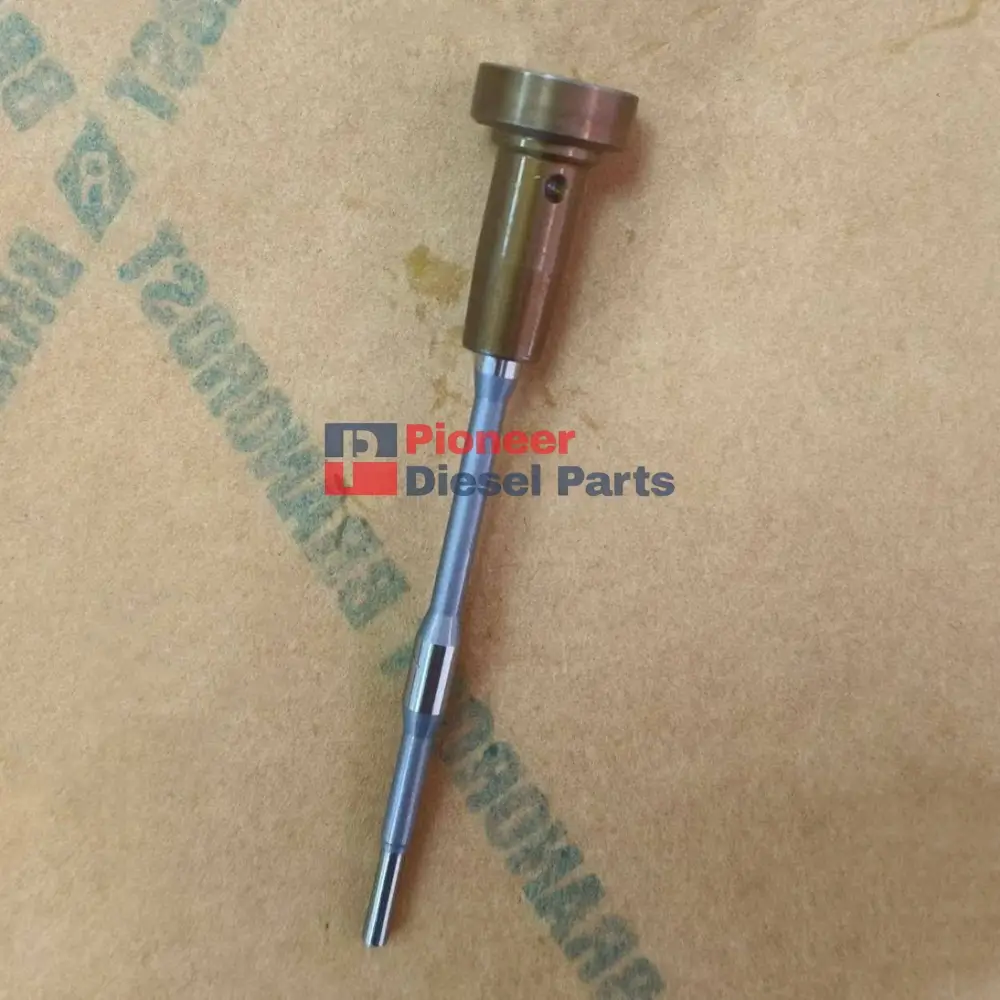
The Bosch F00VC01372 common rail injector valve assembly is a precision hydraulic metering component installed inside Bosch diesel injectors. It consists of two parts: the valve rod and the valve cap, housed in the control room within the injector body. Its primary function is to control fuel injection and return flow by regulating fuel return and internal chamber pressure, ensuring precise injection timing, stable combustion, and optimized engine efficiency.
In high-pressure systems operating up to 2,000 bar, even minor wear in this valve assembly can lead to injector imbalance, rough idle, and excessive fuel consumption. The F00VC01372 is one of the most frequently failed components in Bosch CP Series injectors.
Table of Contents
- What Is the Bosch F00VC01372 Valve Assembly?
- F00VC01372 Technical Specifications
- Which Injectors Are Compatible with F00VC01372?
- What Vehicles and Engines Use F00VC01372?
- F00VC01372 Working Principle Explained
- Symptoms of a Failing F00VC01372 Valve Assembly
- How to Inspect and Replace F00VC01372
- Related Bosch Valve Assembly Models
- Frequently Asked Questions
- Sourcing High-Quality Aftermarket F00VC01372
- Summary
1.What Is the Bosch F00VC01372 Valve Assembly?
The F00VC01372 valve assembly is a micro-precision hydraulic component installed inside Bosch common rail injectors. It consists of a valve rod and a valve cap, housed in the control room within the injector body. It is responsible for controlling fuel chamber pressure balance, which directly affects injection timing and fuel quantity.
Unlike the injector nozzle—which sprays fuel into the combustion chamber—this valve assembly controls the internal hydraulic logic of the injector. It is one of the core components of the common rail injector and has one of the highest failure rates.
Core Functions:
- Controls fuel return flow
- Maintains control chamber pressure
- Enables precise needle lift timing
- Stabilizes injection cycles under high pressure
Key Insight: This component operates in microsecond-level response cycles and is essential for modern diesel emission compliance (Euro VI, China 6).
2.F00VC01372 Technical Specifications
- Part Number: F00VC01372 (F 00V C01 372)
- Type: Injector Valve Assembly (Valve Rod + Valve Cap)
- Fuel Type: Diesel
- System: Bosch Common Rail Injection System (CRDI)
- Material: High-strength precision alloy steel
- Operating Pressure: Up to 2,000 bar
- Function: Hydraulic pressure control & fuel metering
- Control Method: Solenoid-actuated hydraulic system
- Temperature Range: –40°C to +150°C
- Sealing Precision: Micron-level tolerance
- Weight: Approx. 30 g
Engineering Note: The valve assembly operates under extreme hydraulic stress and must maintain ultra-tight sealing to prevent internal leakage. Even micron-level wear can compromise injector performance.
3.Which Injectors Are Compatible with F00VC01372?
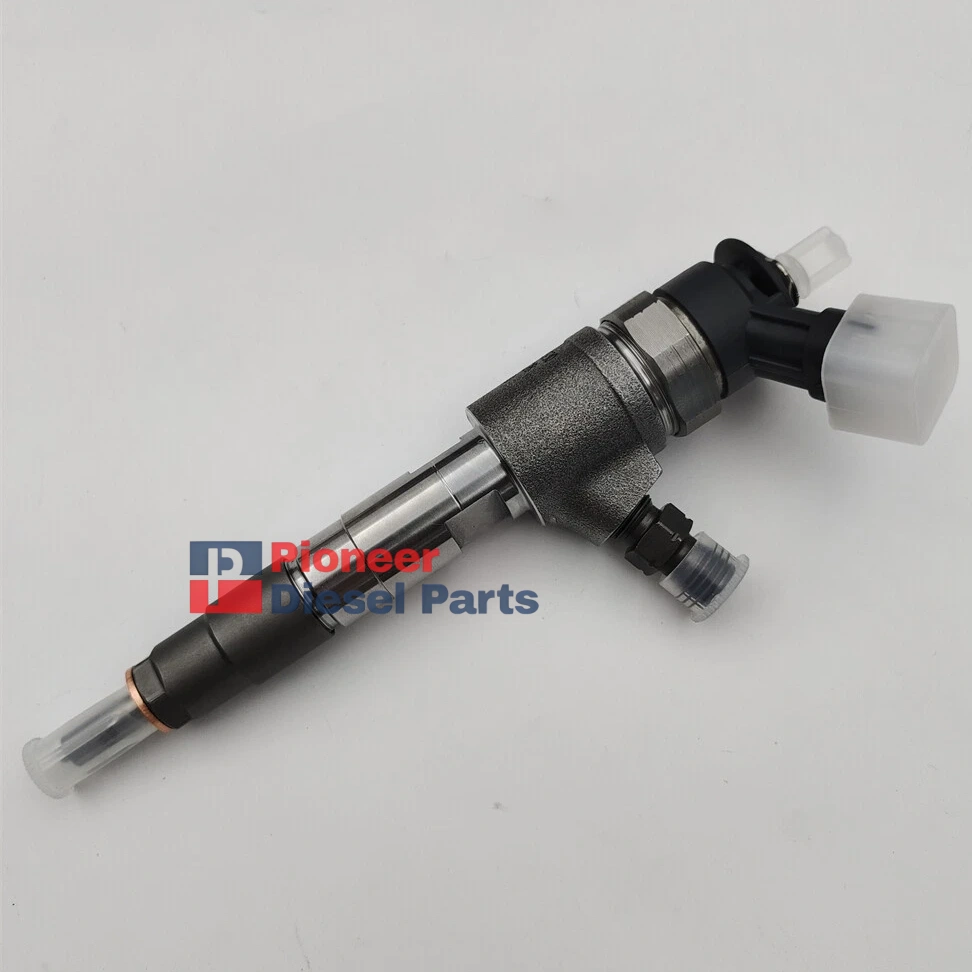
The F00VC01372 valve assembly is used across multiple Bosch injector models. Below is the compatibility reference:
- 0445110339 – Peugeot / Citroën HDi
- 0445110340 – Peugeot / Citroën HDi
- 0445110488 – UD commercial diesel
- 0445110489 – UD trucks
- 0445110317 – Cross-platform variant
- 0445110348 – Heavy-duty diesel
- 0445110739 – Heavy-duty diesel
Most common applications: Peugeot and Citroën 1.4–1.6 HDi systems using injectors 0445110339 and 0445110340.
4.What Vehicles and Engines Use F00VC01372?
Passenger Vehicles
| Make | Models |
|---|---|
| Peugeot | 208, 308, 508, Partner |
| Citroën | C3, C4, C5, Berlingo, Jumpy |
| UD | Light commercial diesel trucks |
Engines
- 1.4 HDi diesel engines
- 1.6 HDi diesel engines
- UD light commercial diesel engines
Application Insight: This valve assembly is widely used in small-displacement turbo diesel engines, where injection precision is critical for emissions and fuel economy.
5.F00VC01372 Working Principle Explained
The working principle is based on hydraulic pressure modulation inside the injector body. Here’s how it works step by step:
Step 1 – ECU Signal
The Engine Control Unit (ECU) sends an electrical pulse to the injector solenoid system based on real-time data including throttle position, turbo pressure, and temperature.
Step 2 – Valve Assembly Actuation
The valve assembly opens or closes a micro hydraulic channel. The coordination between the valve rod and valve cap regulates fuel pressure within the common rail at a level that enables precise injection control.
Step 3 – Pressure Control
This action changes the pressure in the control chamber:
- Pressure drop → injector needle lifts → fuel injection starts
- Pressure stabilizes → needle closes → injection stops
Step 4 – Injection Cycle
This process repeats rapidly—hundreds to thousands of cycles per second. The system enables “multiple injection” strategies (pre-injection, main injection, post-injection) to improve power delivery smoothness and reduce emissions.
Key Insight: The valve assembly does not inject fuel directly—it controls hydraulic timing accuracy. Think of it as the “brain” that tells the injector needle when and how much to move.
6.Symptoms of a Failing F00VC01372 Valve Assembly
The F00VC01372 is one of the components with the highest failure rate in common rail injectors. Here are the most common symptoms:
Common Warning Signs
| Symptom | What It Feels Like |
|---|---|
| Rough idle | Engine vibrates or shakes at stoplights |
| Unstable RPM | Tachometer needle fluctuates |
| Loss of engine power | Sluggish acceleration, especially uphill |
| Increased fuel consumption | Noticeably worse mileage |
| Black or white smoke | Excessive exhaust smoke from tailpipe |
| Hard starting | Long cranking time before engine fires |
| Fault codes | P0201–P0208 (cylinder injector circuit failure), engine enters limp mode |
Failure Mode Analysis
| Failure Type | Cause | Result |
|---|---|---|
| Internal Leakage | Valve seat wear | Hard start / low pressure |
| Delayed Response | Solenoid fatigue | Misfire / timing error |
| Contamination | Diesel impurities | Weak injection |
| Seal Wear | Thermal stress | Increased fuel return |
| Valve rod damage | Surface wear | Original silver color turns white → requires replacement |
Engineering Insight: Most failures are caused by micro wear + contamination accumulation, not sudden breakage. The valve cap contact surface with the ball should be inspected under a microscope for damage.
7.How to Inspect and Replace F00VC01372
Visual Inspection
- Valve Cap Inspection: Use a microscope to observe the contact surface between the valve cap and the ball. If damage is visible, the valve cap must be replaced.
- Valve Rod Inspection – Top Section: Check the top of the valve rod that contacts the valve cap. If the surface shows damage—indicated by the original silver color turning white—the valve rod needs replacement.
- Valve Rod Inspection – Contact Area: Examine the valve rod’s contact area with the injector. Any change from silver to white indicates the need for replacement.
Replacement Best Practices
Follow these steps for proper installation of the F00VC01372 valve assembly:
- Ultrasonic cleaning: Clean the valve assembly in an ultrasonic cleaner for 3–5 minutes before installation to remove stains, dust, rust-proof oil, and other contaminants.
- Compressed air drying: Use compressed air to clean residual cleaning fluid from the surface.
- Steel ball and seat installation: When installing the steel ball and ball seat, ensure the steel ball closes tightly to the oil return hole at the top of the valve cap.
- Valve rod installation: When installing the valve rod, ensure it can move smoothly within the bonnet.
- Oil inlet alignment: Ensure the oil inlet position is 180° relative to the injector body’s oil inlet position.
Professional Recommendation: Valve assemblies should only be installed in clean-room or workshop-controlled environments to avoid contamination. After replacement, professional calibration is required.
Real-World Case Study
Case Example: A 2012 Peugeot 308 1.6 HDi with 120,000 km presented with rough idle, intermittent power loss, and fault code P0204 (cylinder 4 injector circuit malfunction). Injector #4 was removed and inspected. The F00VC01372 valve rod showed visible surface wear—the silver color had turned white at the contact point. The valve assembly was replaced following the ultrasonic cleaning and installation procedure above. After replacement and injector calibration, idle stability was restored, power returned to normal, and fuel consumption improved noticeably.
8.Related Bosch Valve Assembly Models
These valve assemblies share similar hydraulic control architecture but differ in calibration and flow characteristics:
- F00VC01325 – Injector 0445110236
- F00VC01355 – Injector 0445110280
- F00VC01364 – Injector 0445110311
- F00VC01380 – Injector 0445110375
- F00VC01386 – Injector 0445110388
Always verify compatibility before purchasing. Using the wrong calibration variant can cause injector imbalance.
Guide to related models in the same series:
- F00RJ00339 Injector Valve Assembly: Symptoms, Testing, Compatibility & Replacement Guide
- F00VC01033 Injector Valve Applications for Hyundai & Kia 2.5 CRDi Engines
- Common Rail Injector Valve F00VC01346 for Injector 0445110253
- Common Rail Injector Valve F00VC01383 for Injector 0445110376
9.Frequently Asked Questions
Q1: What is the main function of F00VC01372?
A: It controls internal injector hydraulic pressure to regulate fuel injection timing and quantity.
Q2: Is it responsible for fuel injection directly?
A: No, it controls hydraulic pressure that determines injection behavior. The nozzle performs the actual fuel spray.
Q3: What are typical failure symptoms?
A: Rough idle, power loss, excessive smoke (black or white), injector imbalance, and fault codes P0201–P0208.
Q4: Can the F00VC01372 control valve be replaced individually?
A: Yes, but professional calibration is required after replacement to ensure proper injector performance.
Q5: What pressure does the F00VC01372 operate under?
A: Up to 2,000 bar in common rail diesel injection systems.
Q6: Which engines commonly use the F00VC01372?
A: Peugeot and Citroën 1.4–1.6 HDi diesel engines, as well as UD commercial diesel applications.
Q7: Does replacing the control valve improve engine performance?
A: Yes. In most cases, injector balance and combustion stability are restored, improving overall engine performance and efficiency.
10.Sourcing High-Quality Aftermarket F00VC01372
While OEM Bosch parts remain the industry benchmark, high-quality aftermarket alternatives have become a reliable and cost-effective option for many repair shops and vehicle owners. Here’s what to look for when sourcing aftermarket F00VC01372 valve assemblies:
What to Look for in Aftermarket Parts
- Material Quality: High-strength precision alloy steel matching OEM specifications
- Manufacturing Precision: Micron-level tolerances; consistent machining finish
- Supplier Reputation: Established suppliers with proven track records in diesel injection components
- Quality Certification: ISO 9001 or IATF 16949 certified production facilities
- Testing & Validation: Products that have undergone hydraulic performance testing
- Warranty: Reasonable warranty period (typically 6 months)
Quality Indicators to Verify
- Surface finish: Smooth, consistent machining with no burrs or rough edges
- Packaging: Professional packaging with proper labeling and batch numbers
- Dimensional accuracy: Correct fitment in the injector; smooth valve rod movement
- Material appearance: Consistent color and finish matching OEM specifications
Cost-Benefit Comparison
- OEM Bosch:
- Price: Premium ($$$)
- Quality: Factory benchmark
- Availability: Limited to authorized dealers
- High-Quality Aftermarket:
- Price: Competitive ($–$$)
- Quality: Comparable when sourced from reputable suppliers
- Availability: Widely available through multiple channels
Professional Tip: The price difference between OEM and quality aftermarket can be significant—often 30–50% lower for aftermarket—without compromising performance when sourced from reputable manufacturers. Always prioritize quality over the lowest price.
Summary
The Bosch F00VC01372 valve assembly is a precision hydraulic control component used in common rail diesel injectors. It regulates internal pressure and fuel return flow, directly affecting injection timing, combustion stability, and engine performance. Operating at up to 2,000 bar, it is highly sensitive to wear, and even microscopic damage or contamination can lead to injector imbalance and performance loss.
Key Takeaways
The F00VC01372 is essential for stable injector operation and modern emission compliance (Euro VI / China 6). It enables precise fuel control and supports multiple injection strategies that improve power, reduce noise, and optimize efficiency. Even small surface changes may indicate internal wear and the need for replacement. Proper installation in a clean environment and professional calibration are required after replacement.
Performance Impact & Recommendations
Replacing the valve assembly can often restore a significant portion of injector performance, making it a cost-effective repair solution compared to full injector replacement. High-quality OEM or aftermarket parts should be used, while low-quality or counterfeit components must be avoided. For best results, inspect the valve during diagnosis, replace the full assembly, and perform calibration after installation.
Disclaimer
Bosch and Cummins part numbers are used for compatibility and identification purposes only. All products described in this article are aftermarket replacement parts and are not claimed to be original Bosch or Cummins products unless explicitly stated.
