
The Weichai WP3N is a 2.97L inline-four diesel engine designed for front-mounted light buses and city buses. Its Euro VI model range covers 116–147 kW, with peak torque reaching 600 N·m at 1300–1600 rpm, depending on the model. The engine combines electronically controlled common rail fuel injection with DOC, DPF, and SCR aftertreatment.
Key characteristics include a compact design, low noise and vibration, fuel efficiency, and a stated B10 service life of 800,000 km. With a dry weight of 280 kg and dimensions of 872 × 690 × 790 mm, the WP3N is suitable for bus applications where installation space, passenger comfort, and operating costs are important considerations.
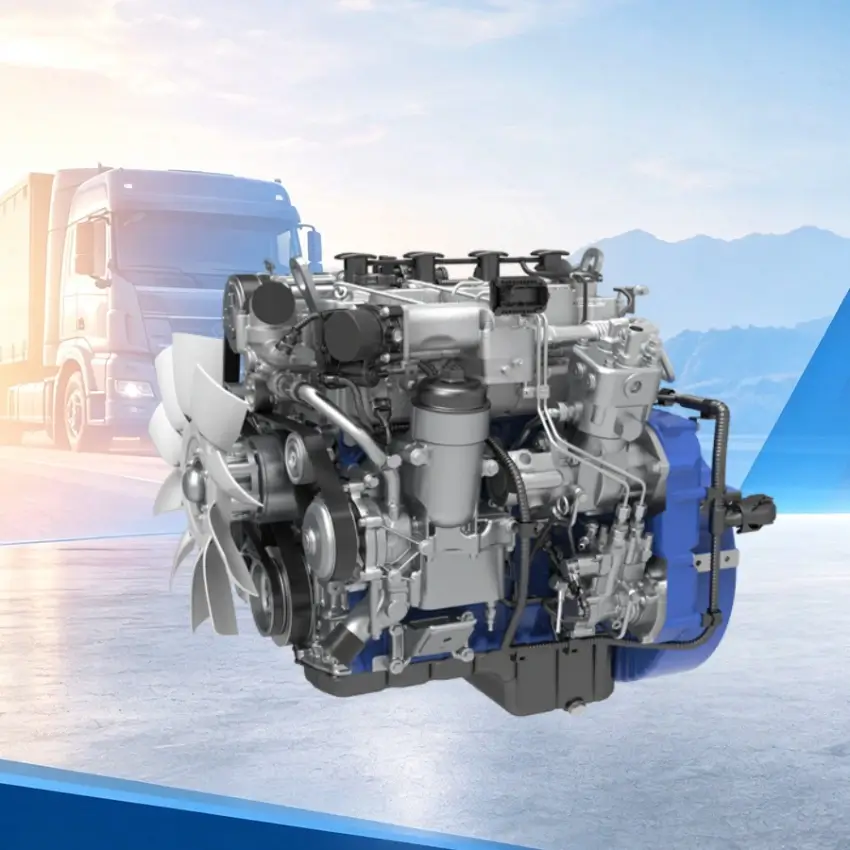
What Is the Weichai WP3N Engine?
The Weichai WP3N is a 2.97L four-cylinder diesel engine developed for light commercial passenger transport. In bus applications, it is designed for front-mounted layouts and operating conditions involving frequent stops, repeated acceleration, and extended periods of idling.
The engine features four valves per cylinder, turbocharging, and intercooling. Its electronically controlled high-pressure common rail fuel system supports precise fuel delivery, while the Euro VI configuration uses a combination of diesel oxidation catalyst (DOC), diesel particulate filter (DPF), and selective catalytic reduction (SCR) technologies.
Compared with larger diesel engines used in heavy-duty trucks, the WP3N prioritizes compact packaging, passenger comfort, and fuel economy for light bus and urban transport applications.
What Are the Main Technical Specifications of the Weichai WP3N Engine?
The following specifications describe the WP3N front-mounted bus engine range. Individual ratings and configurations vary by model and emission version.
| Parameter | Specification |
|---|---|
| Engine Series | WP3N |
| Displacement | 2.97 L |
| Cylinder Configuration | Inline 4-cylinder, four-stroke |
| Valves per Cylinder | 4 |
| Aspiration | Turbocharged and intercooled |
| Fuel System | Electronically controlled high-pressure common rail |
| Power Range | 116–147 kW |
| Maximum Peak Torque | Up to 600 N·m |
| Euro VI Aftertreatment | CR + DOC + DPF + SCR |
| Available Emission Configurations | China VI, Euro VI, Euro V, Euro III, depending on model |
| Dry Weight | 280 kg |
| Dimensions (L × W × H) | 872 × 690 × 790 mm |
| Stated B10 Life | 800,000 km |
What Are the Differences Between WP3N Euro VI Models?
The WP3N Euro VI bus engine range includes several power ratings designed to meet different vehicle performance requirements.
| Engine Model | Rated Power | Peak Torque | Torque Range |
|---|---|---|---|
| WP3NQ158E62 | 116 kW at 2800 rpm | 500 N·m | 1300–2200 rpm |
| WP3NQ170E62 | 125 kW at 2800 rpm | 520 N·m | 1400–2100 rpm |
| WP3NQ210E62 | 147 kW at 2800 rpm | 600 N·m | 1300–1600 rpm |
The WP3NQ158E62 is the lower-output option, while the WP3NQ170E62 offers a higher power and torque rating. The WP3NQ210E62 delivers the highest rated power and peak torque among these three configurations.
When selecting replacement parts or evaluating an engine for a specific bus, confirm the complete engine model, serial number, emission configuration, and existing part number rather than relying on the WP3N series designation alone.
What Are the Main Advantages of the Weichai WP3N Engine?
Low Noise and Vibration
Noise and vibration control are important for city buses and light passenger vehicles. The WP3N incorporates a secondary balancing mechanism to help reduce engine vibration and noise.
Comparative performance figures indicate noise reductions of approximately 2.5–4 dB(A) under common operating conditions, with a reported 4 dB(A) reduction at the rated operating point compared with competing engines.
For bus operators, improved noise and vibration characteristics can contribute to a more comfortable passenger environment and reduce driver fatigue during long working shifts.
Fuel Economy Under Real Operating Conditions
The WP3N is designed to balance engine output with fuel consumption in passenger transport applications. Its combustion system and calibration support efficient operation across relevant engine speed ranges.
A reported comparison indicates vehicle fuel consumption approximately 1.5 L/100 km lower than that of same-power competitors under actual operating conditions. Actual results depend on vehicle configuration, passenger load, traffic conditions, route profile, driving style, and maintenance condition.
For fleets operating buses over long annual distances, even modest reductions in fuel consumption can contribute to lower operating costs.
Long Service Life
The WP3N has a stated B10 service life of 800,000 km. B10 refers to the mileage at which 10% of a defined engine population is expected to have reached the specified life-limit criterion under the applicable test conditions.
This figure should not be interpreted as a guarantee that every engine will operate for 800,000 km without major repairs. Actual service life depends on operating conditions, lubrication, fuel quality, cooling performance, maintenance, and component condition.
For fleet managers, the stated B10 life is a useful reference when evaluating long-term engine durability and operating costs.
Compact Size and Lightweight Construction
With a dry weight of 280 kg and dimensions of 872 × 690 × 790 mm, the WP3N is designed for installation in vehicles with limited engine compartment space.
Its compact four-cylinder configuration is particularly relevant to front-engine buses and light passenger vehicles, where engine packaging affects vehicle layout, service access, and weight distribution.
Modular Platform Design
The WP3N belongs to a modular engine platform. Certain components, including selected filters, alternators, and starters, may be shared across related engine configurations.
However, component commonality should not be assumed solely from the engine family name. Part numbers, mounting dimensions, electrical specifications, and engine configuration should be checked before ordering replacement components.
Which Vehicles Use the Weichai WP3N Engine?
City Buses
City buses operate under frequent stop-start conditions, with repeated acceleration, braking, and extended idling at passenger stops. The WP3N’s torque characteristics, compact design, and noise-control features make it relevant to this type of passenger transport.
Depending on the selected rating and vehicle configuration, its torque delivery can support acceleration from stops and routine urban operation.
Light Buses
The WP3N is also intended for front-mounted light bus applications. In this segment, engine size, weight, power output, fuel consumption, and cabin noise all influence vehicle suitability.
The appropriate engine rating depends on vehicle weight, passenger capacity, road conditions, and the manufacturer’s original powertrain specification.
School Buses
Selected WP3N configurations are used in school bus applications. Low noise and vibration can improve passenger comfort, while the relevant emission configuration must match the regulations applicable to the vehicle’s market.
When identifying a replacement engine or ordering related components for a school bus, confirm the installed engine model and emission system before selecting parts.
What Should You Check When Diagnosing Weichai WP3N Engine Problems?
A warning light, reduced power, abnormal smoke, or unstable operation does not necessarily identify a failed component. Start with diagnostic fault codes and supporting measurements before replacing parts.
Reduced Power or Black Smoke
Possible causes include restricted air intake, boost-system problems, fuel-system faults, or incorrect sensor readings.
- Check the air filter, intake hoses, and charge-air connections.
- Read fault codes and compare boost pressure and sensor readings with the applicable specifications.
- Inspect the intake throttle assembly only when diagnostic evidence supports further investigation.
- Test the fuel system if initial checks do not identify the cause.
Fuel System Warning Lights or Unstable Running
Water contamination, restricted filters, air entering the fuel circuit, or component wear may affect common rail system performance.
Check the fuel filter and water separator where fitted, inspect for leakage, and review available fuel-pressure and injector test data. Replace injectors or high-pressure pump components only when test results support the diagnosis.
DPF or Aftertreatment Warnings
Euro VI configurations use DOC, DPF, and SCR aftertreatment. Warning lights or reduced power may be associated with excessive soot loading, incomplete regeneration, sensor faults, or SCR system problems.
Read the relevant fault codes and review DPF differential pressure, regeneration status, and sensor readings where available. Follow the vehicle manufacturer’s diagnostic and regeneration procedures rather than assuming the DPF requires replacement. Forced regeneration should only be performed when permitted by the applicable service instructions.
How Should the Weichai WP3N Engine Be Maintained?
Maintenance requirements vary by engine configuration, bus manufacturer, operating environment, and service schedule. City buses with frequent stops and extended idling may accumulate substantial engine hours even when their recorded mileage is relatively low.
| Service Item | Maintenance Considerations |
|---|---|
| Engine Oil and Oil Filter | Use the specified oil grade and follow the applicable service interval. |
| Fuel Filter | Replace according to the maintenance schedule; consider fuel contamination and operating conditions. |
| Air Filter | Inspect according to the service schedule and restriction indicator, where fitted. |
| Cooling System | Check coolant condition, hoses, connections, and signs of leakage. |
| Intake and Turbocharger System | Inspect for leaks, damaged hoses, abnormal noise, and performance changes. |
| Fuel Injection System | Investigate abnormal pressure readings, leakage, and fuel contamination promptly. |
| DPF and SCR System | Monitor warning lights, regeneration status, and relevant diagnostic data. |
| Electrical System | Check wiring, connectors, starting performance, and charging operation as required. |
There is no single maintenance interval that applies to every WP3N installation. Follow the applicable engine and vehicle service documentation to determine oil-change intervals, filter replacement schedules, and aftertreatment maintenance requirements.
For buses operating mainly in congested urban routes, monitoring engine hours alongside mileage can provide a more complete picture of maintenance needs.
Which Replacement Parts Should Be Checked for the WP3N?
Depending on the engine configuration and the fault being investigated, replacement requirements may involve:
- Fuel filters and related fuel-system service parts.
- Common rail injectors and associated components.
- High-pressure fuel pump components.
- Intake and boost-system components.
- Engine sensors and electrical components.
- Aftertreatment sensors and emission-control parts.
- Oil filters, air filters, and other routine maintenance items.
Euro VI, Euro V, and earlier emission configurations may use different components, control strategies, or calibration requirements. Not every component is interchangeable across the WP3N series.
Before purchasing replacement parts, compare the existing component number, engine model, serial number, connector and mounting details, and applicable vehicle specifications. For electronic fuel-system and aftertreatment components, correct calibration and system compatibility are particularly important.
More Weichai Engine Guides
- Weichai WP2.5T Engine for Light Duty Trucks and Urban Delivery
- Weichai WP2H Engine for Pickup Trucks SUVs and Vans
- Weichai WP7H Engine for Heavy Duty Trucks and Tourist Buses
- Weichai WP8H Engine for Medium and Heavy Duty Trucks and Coaches
Read more:
- Weichai WP10H Engine Complete Guide for Dump Trucks and Heavy Duty Trucks
- Weichai WP14T Engine
- Weichai WP12H Engine for Long Distance Coaches and Touring Buses
- Weichai WP8NG Engine for Natural Gas Trucks and City Buses
Frequently Asked Questions About The Weichai WP3N Engine
Is the Weichai WP3N Suitable for City Bus Operation?
Yes. The WP3N is designed for front-mounted light buses and city buses. Its compact dimensions, low-noise design, and available torque ratings make it relevant to passenger transport applications involving frequent stops and repeated acceleration. Suitability depends on the bus manufacturer’s original powertrain specification and the selected engine rating.
What Is the Maximum Torque of the WP3N Bus Engine?
Among the three listed Euro VI models, the WP3NQ210E62 has the highest peak torque at 600 N·m from 1300 to 1600 rpm. The WP3NQ170E62 produces 520 N·m from 1400 to 2100 rpm, while the WP3NQ158E62 produces 500 N·m from 1300 to 2200 rpm.
What Is the Difference Between the WP3N and WP3?
The WP3N is a distinct engine series with its own model designations and configurations. Although both series belong to the same general engine displacement class, their components and specifications should not be assumed to be interchangeable. Confirm the complete engine model and part number before ordering replacement components.
Which Emission Standards Are Available for the WP3N?
The WP3N range includes China VI, Euro VI, Euro V, and Euro III configurations, depending on the specific engine model and application. The three E62 models listed in this article are Euro VI versions. Always verify the installed engine’s emission configuration before selecting fuel-system or aftertreatment components.
What Is the Torque of the WP3NQ170E62?
The WP3NQ170E62 has a rated power of 125 kW at 2800 rpm and peak torque of 520 N·m from 1400 to 2100 rpm.
What Can Cause a Check Engine Light on a WP3N Bus?
Possible causes include intake or boost-system problems, fuel-system faults, sensor or electrical issues, and aftertreatment warnings. The actual cause should be established through fault-code reading, system measurements, and the appropriate diagnostic procedure before components are replaced.
What Is the Expected Service Life of the WP3N?
The WP3N has a stated B10 service-life figure of 800,000 km. This is a population-based durability measure, not a guarantee of trouble-free operation for every engine. Fuel quality, maintenance, operating conditions, lubrication, and cooling-system performance all influence actual service life.
Conclusion
The Weichai WP3N is a compact 2.97L four-cylinder diesel engine designed for light buses and city buses. Its available power ratings of 116–147 kW, peak torque of up to 600 N·m, low-noise characteristics, and compact dimensions make it relevant to passenger transport applications where fuel economy and operating comfort matter.
For operators and maintenance workshops, long-term performance depends on correct maintenance, reliable fuel quality, appropriate aftertreatment care, and accurate parts identification. When replacing injectors, fuel pumps, sensors, or other engine components, confirm compatibility using the complete engine model, serial number, and existing part number.
For parts inquiries, workshops, fleet operators, and distributors should provide the engine model, serial number, and old part number whenever possible. This helps verify compatibility and identify suitable replacement components for the specific WP3N configuration.