
The Weichai WP7H is a 6.8L inline-six diesel engine designed for 130–220 PS wheeled tractors. Its EU Stage IIIA version delivers 103–162 kW (140–220 PS), with peak torque ranging from 570 to 920 N·m at 1,600 rpm, depending on the model. Key features include four valves per cylinder, an overhead camshaft, turbocharged and intercooled air intake, and electronically controlled high-pressure common rail fuel injection. The engine is designed for demanding agricultural operations, offering strong low-speed torque, fuel efficiency, and reliable performance in challenging field conditions.
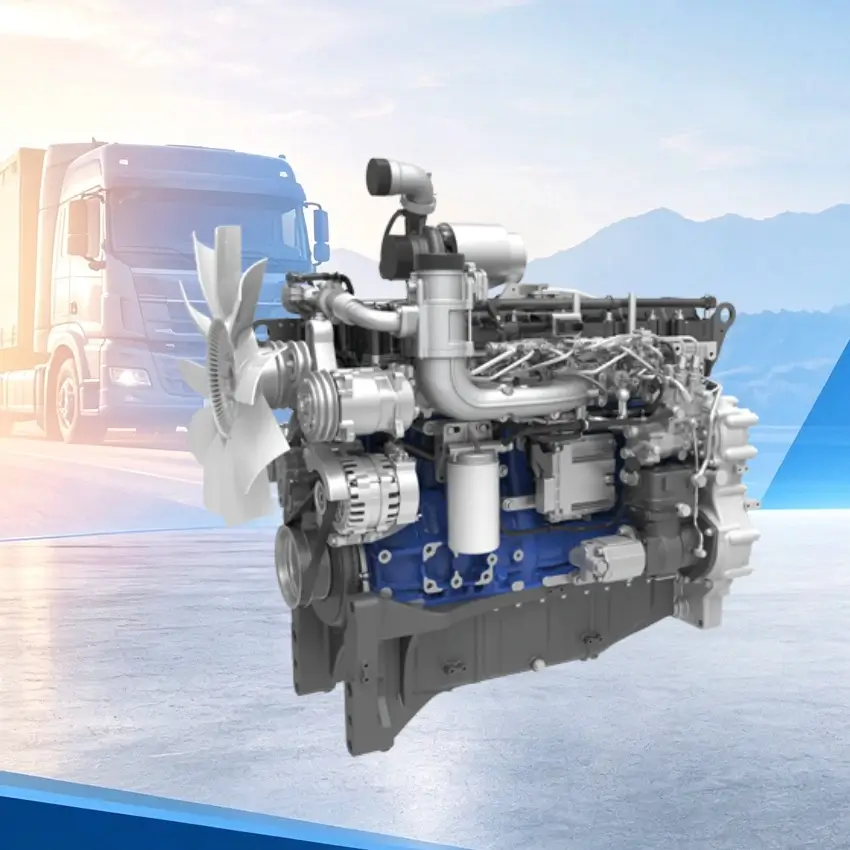
What Is the Weichai WP7H Engine?
The Weichai WP7H belongs to Weichai’s H-series diesel engine platform and is designed for agricultural machinery, particularly medium- and high-horsepower wheeled tractors.
It features a 6.8L inline-six configuration, four valves per cylinder, and a turbocharged-intercooled air intake system. Its electronically controlled high-pressure common rail fuel system supports precise fuel delivery and efficient combustion.
The engine is developed to handle sustained loads, frequent changes in working resistance, low-speed operation, and dusty agricultural environments. According to Weichai, the WP7H tractor engine is suitable for 130–220 PS wheeled tractors.
What Are the Technical Specifications of the Weichai WP7H Engine?
The following specifications refer to the EU Stage IIIA tractor configuration listed on Weichai’s official English product page.
| Parameter | Specification |
|---|---|
| Engine Series | WP7H |
| Engine Configuration | Inline 6-cylinder, four-stroke |
| Displacement | 6.8 L |
| Valves per Cylinder | 4 |
| Aspiration | Turbocharged and intercooled |
| Fuel System | Electronically controlled high-pressure common rail |
| Fuel Type | Diesel |
| Power Range | 103–162 kW (140–220 PS) |
| Maximum Torque | Up to 920 N·m |
| Peak Torque Speed | 1,600 rpm |
| Emission Standard | EU Stage IIIA |
| Dry Weight | 800 kg |
| Dimensions (L × W × H) | 1,233 × 704 × 1,119 mm |
| Main Application | 130–220 PS wheeled tractors |
Actual specifications may vary depending on the engine model and configuration.
Which WP7H Models Are Available in the EU Stage IIIA Range?
Weichai lists four main tractor engine models in its EU Stage IIIA product lineup.
WP7HG140E302
- Rated power: 103 kW at 2,100 rpm
- Peak torque: 570 N·m at 1,600 rpm
WP7HG160E302
- Rated power: 118 kW at 2,100 rpm
- Peak torque: 665 N·m at 1,600 rpm
WP7HG192E302
- Rated power: 141 kW at 2,100 rpm
- Peak torque: 890 N·m at 1,600 rpm
WP7HG220E302
- Rated power: 162 kW at 2,100 rpm
- Peak torque: 920 N·m at 1,600 rpm
These models provide different output levels for medium- and high-horsepower agricultural tractors.
The E302 suffix identifies the listed EU Stage IIIA configuration. Other WP7H versions may have different model suffixes, power ratings, and emission systems. Buyers should verify the complete engine model before comparing specifications or ordering replacement parts.
What Makes the Weichai WP7H Engine Suitable for Agricultural Work?
Strong Low-Speed Torque
The WP7H features a four-valve cylinder head and an optimized air intake system to support efficient cylinder filling and combustion.
Its torque characteristics help tractors maintain working performance when soil resistance changes during plowing, subsoiling, and cultivation. Weichai also highlights the engine’s torque reserve and anti-bogging capability, which are important for demanding field operations.
Improved Fuel Economy
The electronically controlled high-pressure common rail system provides precise fuel injection, while the turbocharged-intercooled design supports efficient combustion.
According to Weichai, the WP7H achieves approximately 5%–8% better fuel economy than China Non-Road Stage III products. This is a manufacturer-published comparison rather than a guaranteed saving under every operating condition.
Actual fuel consumption depends on tractor configuration, working load, operating speed, soil conditions, and maintenance.
Fuel and Air Filtration Protection
Agricultural machinery frequently operates in dusty environments containing crop residue and other airborne contaminants.
The WP7H is equipped with a triple-stage fuel filtration system and a dust filtration system with a filtration efficiency of at least 93%, according to Weichai’s product information.
These features help reduce contaminant entry into the fuel and air systems. Regular filter inspection and replacement remain essential, particularly when tractors operate in dusty fields or use fuel from storage tanks.
Overhead Camshaft and Reduced Vibration
The WP7H uses an overhead camshaft design instead of a traditional pushrod valve mechanism. This eliminates conventional pushrods and reduces the number of components in the valvetrain.
Weichai also identifies combustion pre-injection technology and a high-precision gear transmission system as features that help reduce engine vibration and noise, contributing to smoother operation during extended agricultural work.
What Agricultural Applications Use the Weichai WP7H Engine?
The WP7H is primarily designed for 130–220 PS wheeled tractors. Its power range and torque characteristics support several agricultural operations.
Primary and Secondary Tillage
Plowing, subsoiling, harrowing, and cultivation require tractors to maintain sufficient power against changing soil resistance. The WP7H’s low-speed torque and torque reserve help support these demanding operations.
Seeding and Field Preparation
Seeding and field preparation require consistent engine performance over extended working periods. The WP7H’s common rail injection system and turbocharged-intercooled design support stable power delivery for these applications.
Agricultural Transportation
Tractors transport crops, fertilizers, equipment, and other materials between fields and storage facilities. The different WP7H power configurations provide options for tractors used in agricultural transportation.
PTO-Driven Agricultural Equipment
Depending on the tractor configuration, the engine can also provide power for PTO-driven equipment such as balers and other agricultural implements. Compatibility depends on the tractor’s PTO specifications, transmission configuration, and implement requirements.
What Are the Common Weichai WP7H Engine Problems and How Can They Be Diagnosed?
Publicly available information does not establish a comprehensive WP7H-specific field failure database. The following symptoms are general diagnostic considerations for electronically controlled common rail diesel engines, not confirmed WP7H failure statistics.
Power Loss and Black Smoke
Black smoke and reduced engine power may be associated with insufficient air supply, fuel injection problems, or incomplete combustion.
Possible areas to inspect include:
- Restricted air filters or intake passages.
- Fuel filter restriction or contaminated diesel.
- Abnormal fuel pressure or injector performance.
- Turbocharger or charge-air system problems.
- Mechanical conditions affecting cylinder compression.
Begin by checking the air intake and fuel filtration systems. If these are functioning correctly, use appropriate diagnostic equipment to examine fuel pressure, injector performance, and turbocharger operation. Avoid replacing components without confirming the underlying cause.
Unstable Engine Speed and Rough Running
Unstable engine speed may result from irregular fuel delivery, air entering the fuel system, injector performance problems, or electronic control issues.
Recommended checks include inspecting fuel lines and connections, checking the fuel filters and water separator, verifying fuel supply pressure, and reading electronic fault codes. Injector operation should be evaluated using appropriate testing equipment before replacement.
Low Engine Oil Pressure
Low oil pressure requires immediate attention because continued operation may cause serious internal engine damage.
Potential causes include insufficient engine oil, an incorrect oil specification, restricted oil passages, a malfunctioning oil pump, or excessive internal bearing clearance.
Check the oil level and verify pressure using an appropriate mechanical gauge if necessary. If oil pressure remains below the manufacturer’s specified limit, stop operating the engine and arrange further inspection.
How Should the Weichai WP7H Engine Be Maintained?
Proper maintenance helps preserve engine performance and extend service life, particularly when tractors operate under heavy loads or in dusty agricultural environments.
The following are general maintenance recommendations, not official WP7H service intervals.
Engine Oil and Filter Maintenance
Use engine oil that meets the specifications for the particular WP7H model and emission configuration. Check the oil level regularly and replace the oil and filter according to Weichai’s maintenance schedule.
Fuel Filter and Water Separator Inspection
Fuel cleanliness directly affects the high-pressure common rail system. Inspect the fuel filtration system regularly, drain the water separator according to the manufacturer’s instructions, and replace filter elements with compatible components.
Air Filter Maintenance
Inspect the air filter restriction indicator and service the filter according to the manufacturer’s instructions. A restricted air intake can reduce engine performance and increase fuel consumption. Avoid cleaning methods that may damage the filter material.
Cooling System Inspection
Check coolant level, hoses, radiator condition, and cooling system connections. Remove accumulated dust and crop residue from the radiator area to maintain proper airflow. Investigate abnormal temperature increases before continuing operation.
Regular Engine Inspection
Inspect belts, electrical connections, fuel lines, and intake pipes during routine servicing. Pay attention to abnormal vibration, unusual engine noise, fluid leakage, and changes in operating performance.
For valve clearance and other scheduled maintenance procedures, follow the service documentation for the specific engine model.
Which Replacement Parts Should Be Checked for the Weichai WP7H Engine?
The WP7H uses several engine and fuel system components that require inspection and replacement when necessary.
Common service and replacement categories include:
- Fuel filters and water separator elements.
- Air filter elements.
- Engine oil filters.
- Fuel injection system components.
- Turbocharger-related components.
- Engine gaskets and sealing components.
- Belts and other maintenance parts.
The exact replacement parts depend on the engine model, serial number, emission configuration, and original equipment specifications.
Although some WP7H versions may share components with other Weichai engine platforms, similar engine series names do not guarantee parts interchangeability.
Before ordering injectors, fuel system components, or internal engine parts, verify the original part number and engine identification. For replacement fuel injection components, provide the complete engine model, serial number, or original part number to help verify compatibility before ordering.
More Weichai Engine Guides
- Weichai WP4.6N Engine for 90–160 PS Agricultural Tractors and Field Operations
- Weichai WP3.6N Engine for Combine Harvesters and Efficient Crop Harvesting Operations
- Weichai WP8 Engine for High-Horsepower Tractors and Heavy-Duty Agricultural Field Work
- Weichai WP10H Engine for Large Combine Harvesters and High-Capacity Crop Harvesting
Read more:
- Weichai WP5N Engine
- M21 Diesel Engine
- Weichai WP13 Engine for Forage Harvesters and High-Capacity Wheat Harvesting Machines
- Weichai WP14T Engine for Ultra-High-Horsepower Wheeled and Tracked Tractors
Frequently Asked Questions About The Weichai WP7H Engine
What Is the Displacement of the Weichai WP7H Engine?
The Weichai WP7H tractor engine has a displacement of 6.8 liters and uses an inline-six configuration with four valves per cylinder.
How Much Power Does the WP7H Produce?
The EU Stage IIIA tractor version delivers 103–162 kW (140–220 PS), depending on the model. Other emission configurations may have different power ratings.
What Is the Maximum Torque of the WP7H?
The highest listed torque for the EU Stage IIIA tractor configuration is 920 N·m at 1,600 rpm, produced by the WP7HG220E302 model.
What Emission Standards Does the WP7H Meet?
Weichai lists tractor WP7H versions in EU Stage IIIA and China Non-Road Stage IV configurations. These emission versions have different configurations and should be identified by their complete engine model numbers.
What Fuel System Does the WP7H Use?
The WP7H uses an electronically controlled high-pressure common rail fuel injection system designed to provide precise fuel delivery and efficient combustion.
What Agricultural Machinery Uses the WP7H Engine?
The WP7H is designed primarily for 130–220 PS wheeled tractors used in plowing, cultivation, field preparation, agricultural transportation, and PTO-driven operations.
How Can I Identify the Correct WP7H Replacement Parts?
Check the complete engine model, serial number, emission configuration, and original part number. Do not rely on the WP7H series name alone when selecting replacement components.
Conclusion
The Weichai WP7H is designed to deliver reliable power for 130–220 PS agricultural tractors, combining strong torque, efficient fuel injection, and filtration features for demanding field operations. Proper maintenance and the use of compatible replacement components are essential for maintaining engine performance and minimizing equipment downtime.
If you are looking for WP7H fuel injectors, injection system components, filters, or other engine replacement parts, Pioneer Diesel Parts can help with product sourcing and part-number verification. Contact us with your engine model, serial number, or original part number to check availability and compatibility and request a quotation.