
The F833 Constant Pressure Delivery Valve is a precision component used in compatible diesel fuel injection pumps. It works with the pump plunger and high-pressure fuel line to control fuel delivery, maintain residual pressure after injection, and reduce unwanted fuel backflow.
For diesel injection pump repair and rebuilding, the condition of the delivery valve is important because wear on the valve or its mating surfaces can affect pressure control, injection consistency, and injector cutoff.
Publicly available diesel fuel-system parts catalogs identify F833 with several related references, including 1 418 522 055 and HD3. Other supplier listings associate F833 with P-type injection pumps and PS7100 constant-pressure valve applications, while one specific application listing identifies Longbeng 14V8 BH4P120R.
These references are useful for identification, but they should not be treated as proof that every pump carrying these series names uses exactly the same F833 specification.
This guide covers the function, reference specifications, known applications, identification methods, failure symptoms, inspection points, replacement considerations, and compatibility checks for the F833 delivery valve.
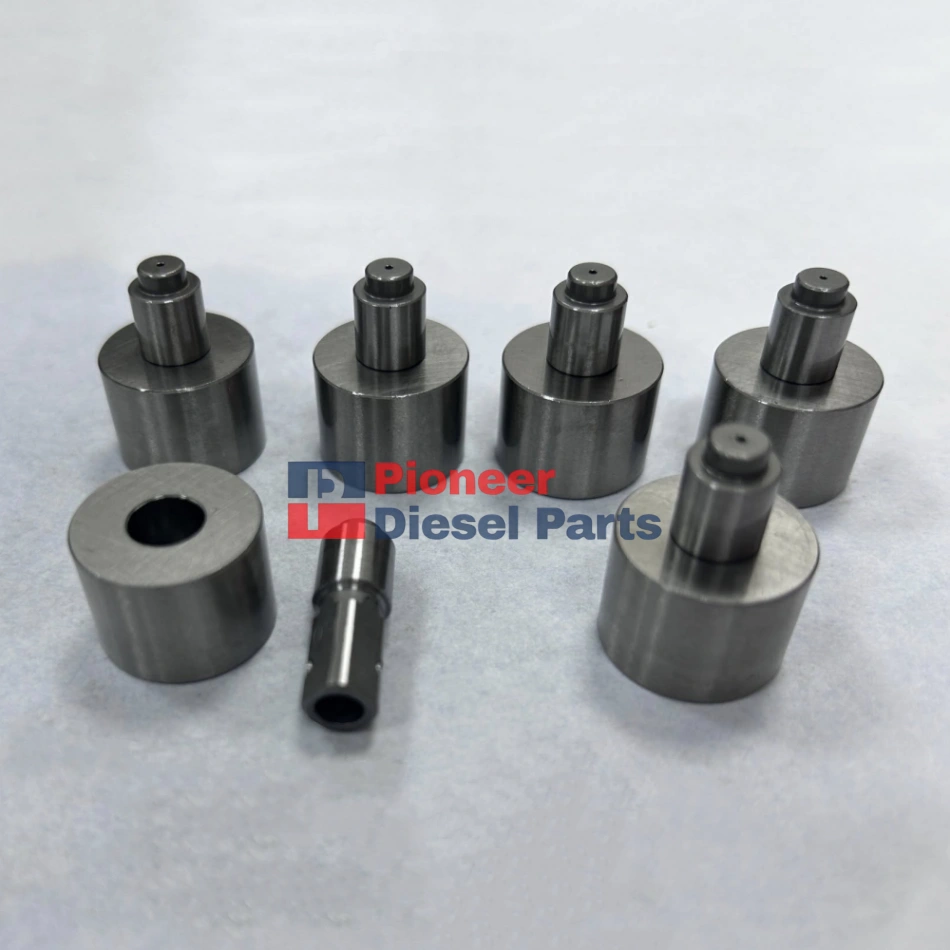
1. What Is an F833 Delivery Valve and How Does It Work?
The F833 delivers constant pressure as a valve in compatible diesel fuel injection pump assemblies.
During the pump delivery stroke, the plunger compresses fuel inside the pumping element and raises fuel pressure. When the required pressure conditions are reached, fuel is delivered through the delivery valve and into the high-pressure injection line leading to the injector.
When the delivery stroke ends, the valve closes. Its pressure-control geometry helps regulate the pressure remaining in the injection line and limits excessive fuel movement after the injection event.
The main functions of the delivery valve include:
- Controlling fuel flow from the injection pump
- Helping maintain appropriate residual pressure in the high-pressure line
- Reducing unwanted fuel backflow after injection
- Helping limit injector after-dribble
- Supporting consistent fuel delivery between injection cycles
- Contributing to stable operation of the mechanical fuel injection system
The exact operating characteristics depend on the pump design, valve geometry, spring characteristics, and matching components. Match the F833 to the correct injection pump rather than treating it as a universal delivery valve.
2. What Are the Key F833 Specifications and Part Number References?
Available aftermarket parts information identifies F833 as a constant-pressure delivery valve for compatible diesel injection pump applications.
Reference information associated with F833 includes:
- Part Number: F833
- Type: Constant-pressure delivery valve
- Reference matching clearance: Approximately 0.002–0.004 mm
- Reference operating pressure: Up to 220 MPa
- Reference residual line pressure: Approximately 10–15 MPa
- Reference flow-hole diameter: Approximately 3–5 mm
- Material: Hardened alloy steel
These figures should be considered reference specifications rather than universal specifications for every F833 application. Actual dimensions, pressure characteristics, clearances, and matching requirements may vary according to the injection pump and delivery-valve assembly.
Public delivery-valve catalogs also associate F833 with several identification references, including:
- F833
- 1 418 522 055
- HD3
These numbers may appear together as product-identification or cross-reference information. Readers should not interpret a cross-reference as a universal OEM interchange number.
Before ordering a replacement, compare the original delivery valve with the complete injection-pump identification. The pump model, pump part number, original valve number, and physical dimensions provide stronger compatibility evidence than a cross-reference number alone.
3. Which Injection Pumps and Equipment Use the F833?
Public application information provides useful guidance, although it does not establish a complete vehicle or engine application list for F833.
Several aftermarket sources identify F833 as a delivery valve for P-type diesel injection pumps. Some listings specifically describe it as a constant-pressure valve for PS7100 applications.
One more specific application listing identifies:
F833 → Longbeng 14V8 BH4P120R
and describes the component as a delivery valve for a P-type diesel injection pump.
Compatible P-type or related mechanical injection-pump systems may be found in equipment such as agricultural tractors, construction machinery, industrial diesel engines, heavy-duty equipment, and generator sets. However, this does not mean that every machine in these categories uses F833.
P-type pumps are available in different configurations, so the exact application depends on the injection pump installed on the engine.
For this reason, engine model alone should not be used as the final compatibility reference. Check the complete pump model and identification before ordering.
4. Is F833 Interchangeable With Other Delivery Valves?
F833 should not automatically be considered interchangeable with other delivery valves simply because they belong to the same general product family or appear in the same catalog.
Public catalogs may list F833 alongside other delivery-valve numbers such as F832, F842, F850, F838, F844, F910, F703, and F707. These are different product references and may have different specifications.
Delivery valves can vary in:
- Overall dimensions
- Valve diameter
- Pressure-relief geometry
- Matching clearance
- Spring characteristics
- Delivery characteristics
- Valve-seat configuration
- Flow characteristics
A valve that looks similar to F833 may therefore produce different pressure behavior when installed in a different pump.
The correct approach is to confirm the original part number and complete injection-pump application before selecting a substitute. For a pump rebuild, the replacement valve should match the pump’s specified design and required fuel-delivery characteristics.
5. How Do You Identify the Correct F833 Delivery Valve?
Correct identification is important because visually similar delivery valves can have different dimensions and pressure characteristics.
Before ordering an F833, check the following information.
Check the Number on the Original Valve
If the original component bears the marking F833, the marking provides an important starting point. Record any additional markings or numbers that may appear on the component.
We should also record references such as 1 418 522 055 if they are present.
Identify the Injection Pump
Locate the pump model and identification plate or stamping. One publicly listed application, for example, associates F833 with Longbeng 14V8 BH4P120R.
Check the Complete Pump Part Number
The complete pump number is normally more useful for compatibility confirmation than the engine model alone. Manufacturers may equip one engine family with different injection-pump configurations.
Compare the Original Component
When the original valve is available, compare:
- Overall length
- Outside diameter
- Valve shape
- Pressure-relief section
- Seat configuration
- Spring arrangement
- Component markings
Confirm Before Bulk Ordering
For distributors, repair shops, and diesel-pump rebuilders, providing the original valve number, pump number, and clear photos can reduce the risk of selecting a visually similar but incompatible component.
This is particularly important for wholesale orders because an incorrectly specified delivery valve can lead to additional sorting, returns, and installation problems.
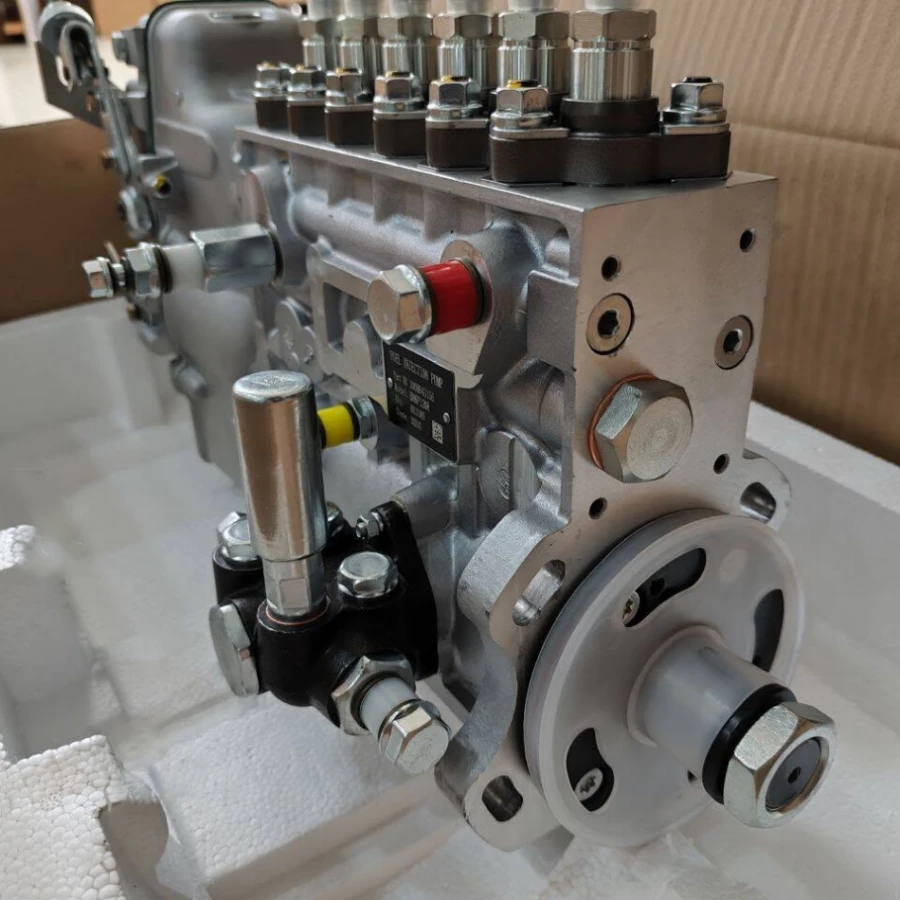
6. What Are the Symptoms and Causes of F833 Delivery Valve Wear?
A worn, damaged, or poorly sealing delivery valve can affect pressure control and fuel delivery. Possible symptoms include:
- Hard starting: Poor residual-pressure control can affect the conditions needed for consistent starting.
- Rough or unstable idle: Uneven fuel delivery between injection cycles can contribute to unstable engine operation.
- Excessive exhaust smoke: Incorrect pressure or poor injector cutoff can affect combustion.
- Injector dribbling: Leakage through the delivery valve can allow unwanted fuel movement after the intended injection event.
- Reduced engine performance: Incorrect fuel pressure or inconsistent delivery can reduce engine response and power.
- Poor fuel economy: Fuel-system problems can reduce combustion efficiency and increase fuel consumption.
These symptoms are not exclusive to the delivery valve. A worn plunger and barrel, damaged injector, weak spring, contaminated fuel, air in the fuel system, or incorrect pump adjustment can create similar symptoms.
Common factors that can accelerate delivery-valve wear
Fuel Contamination
Dirt, abrasive particles, and water can damage precision sealing surfaces and accelerate wear.
Mechanical Wear
The delivery valve operates repeatedly under high-pressure conditions. Long-term operation can gradually affect the valve and its mating surfaces.
Poor Fuel Filtration
Inadequate filtration can allow contaminants to reach precision components inside the injection pump.
Pressure Cycling and Surface Damage
Repeated pressure changes can contribute to surface wear over time, particularly when fuel quality or operating conditions are unfavorable.
Incorrect Assembly
Contamination, damaged sealing components, or improper assembly during pump repair can shorten component life.
Because these problems can affect several parts of the injection pump, diagnosis should consider the complete high-pressure fuel system rather than the delivery valve alone.
7. When Should an F833 Be Replaced During Pump Repair?
There is no universal engine-hour replacement interval for every F833 delivery valve.
Replacement should instead be based on inspection results, pump performance, component condition, and the service requirements of the specific injection pump.
Consider replacing the delivery valve when:
- The sealing surface shows significant wear
- Someone damages the valve or seat.
- The valve does not move correctly
- We cannot maintain the required pressure characteristics.
- Investigators traced injector after-dribble to delivery-valve leakage.
- The pump is undergoing a complete rebuild and the valve fails inspection
- Fuel contamination has caused significant component damage
During an injection-pump overhaul, inspect the delivery valve together with the plunger, barrel, spring, delivery-valve seat, and other precision components.
Replacing only the delivery valve may not restore correct fuel delivery if another high-pressure component remains worn or damaged.
8. How Is an F833 Delivery Valve Replaced?
Delivery-valve replacement requires a clean work environment because even small contaminants can damage precision injection-pump components.
A general replacement procedure includes:
- Clean the outside of the injection pump around the delivery-valve and fuel-line connection.
- Remove the relevant high-pressure line connection according to the pump manufacturer’s service procedure.
- Remove the spring, sealing components, and delivery-valve assembly in the correct order.
- Inspect the valve, seat, spring, and surrounding components for wear or contamination.
- Clean the mating surfaces carefully.
- Install the replacement delivery valve and required sealing components.
- Reconnect the fuel line and tighten fasteners according to the specifications for the specific pump.
- Bleed the fuel system as required.
- Start the engine and check for leakage, stable idling, and proper operation.
The 40–50 Nm value sometimes quoted for the pipe connection should not be treated as a universal F833 installation torque. Always verify the correct torque for the specific injection pump and fuel-line connection.
If the pump requires calibration or bench testing after repair, delivery-valve replacement should be performed by a qualified diesel injection specialist using the appropriate service and testing procedures.
9. Why Should F833 Be Checked During Injection Pump Rebuilding?
The delivery valve is only one part of the injection pump’s high-pressure system.
If the plunger and barrel wear, replacing the delivery valve alone may not restore correct fuel delivery. Similarly, a new valve cannot compensate for a damaged valve seat, weak spring, contaminated fuel system, or incorrect pump adjustment.
A proper pump overhaul should therefore evaluate the complete fuel-delivery system.
The F833 should be checked for:
- Sealing condition
- Surface wear
- Free movement
- Spring condition
- Valve-seat condition
- Contamination
- Correct dimensional matching
- Compatibility with the injection pump
This approach reduces the risk of replacing one component while leaving another worn component responsible for the original problem.
For repair shops and diesel-pump rebuilders, confirming the complete pump specification before assembly is particularly important because delivery-valve dimensions and pressure characteristics must match the pump’s design.
10. Other Delivery Valve Guides and More Reading
The F833 Delivery Valve is a precision component used in compatible diesel injection pump applications. For related diesel fuel injection solutions, explore the following guides to learn more about delivery valves, pump components, compatibility, replacement, and servicing.
- Pressure Valve Delivery Valve F238
- Pressure Valve Delivery Valve F833
- Delivery Valve F1082
- Pressure Valve Delivery Valve F924A
Read more:
- Delivery Valve 131160-5320 39A: Specifications, Applications & Replacement Guide
- F167 Delivery Valve: Technical Specifications, Applications & Replacement Guide
- Pressure Valve Delivery Valve F832
11. F833 Delivery Valve Frequently Asked Questions
What Injection Pumps Does the F833 Delivery Valve Fit?
The F833 delivery valve is matched to compatible injection pumps rather than directly to an engine. It is associated with P-type and PS7100 pumps, including Longbeng 14V8 BH4P120R. Always confirm the pump model before ordering.
Is 1418522055 the Same as F833?
1 418 522 055 and HD3 are listed as related references to F833 in some catalogs. However, cross references can vary by application. Check the original valve and pump model before replacement.
What Are the Symptoms of a Failing F833 Delivery Valve?
Common symptoms include hard starting, rough idling, excessive smoke, injector dribbling, reduced power, and poor fuel economy. Other injection system problems can cause similar symptoms.
Can an F833 Delivery Valve Replace an F832 or F842?
Not automatically. F832, F842, and F833 may have different specifications and pressure-control characteristics. Always use the delivery valve specified for your injection pump.
What Causes an F833 Delivery Valve to Wear?
Fuel contamination, poor filtration, prolonged use, corrosion, and incorrect assembly can accelerate delivery valve wear. Clean fuel and proper filtration help extend service life.
Should the F833 Delivery Valve Be Replaced During a Pump Overhaul?
Not necessarily. Inspect the valve for wear, sealing condition, and proper movement during the overhaul. Replace it if it fails inspection or does not meet the required specifications.
Conclusion
The F833 Delivery Valve is a precision component used in compatible diesel fuel injection pumps, particularly applications associated with P-type injection pumps and PS7100 constant-pressure systems. Public aftermarket listings also identify a specific application for Longbeng 14V8 BH4P120R, while F833-related catalogs list identification references including 1 418 522 055 and HD3.
Because delivery valves are precision-matched components, F833 should not be treated as a universal replacement based only on appearance or a general engine application. The original valve number, injection-pump model, complete pump part number, and component dimensions should be checked before replacement.
For diesel pump repair, rebuilding, distribution, and wholesale sourcing, Pioneer Diesel Parts supplies new aftermarket diesel fuel injection components and can assist with compatibility checking based on available pump and part information.
Contact Pioneer Diesel Parts with the original F833 number, injection-pump number, or product photos to check availability, compatibility, and wholesale pricing.