
The P7100(A) injection pump repair kit is an aftermarket seal and gasket service kit for compatible Bosch P7100-series inline mechanical injection pumps. The P7100, also known as the P-pump, is widely associated with 5.9L 12-valve Cummins engines and is also used in selected industrial, agricultural, construction, and other diesel applications.
Depending on the kit configuration, it may include O-rings, gaskets, seals, caps, backup rings, and other application-specific sealing components used during injection pump service.
The P7100 uses a mechanical inline design with an individual pumping element for each cylinder. Its serviceability and fuel-delivery capability have made it a popular pump for heavy-duty diesel applications.
Important: A repair kit replaces sealing components. It does not automatically replace worn plungers, barrels, delivery valves, camshaft components, governor parts, or other precision components.
1. What Is the P7100(A) Injection Pump?
The P7100 is a Bosch P-series inline mechanical diesel injection pump. It became particularly well known through its use on the 1994–1998 5.9L 12-valve Cummins platform and is also found in selected industrial and other diesel applications.
The pump uses individual pumping elements for each cylinder. Fuel is pressurized by the plunger and barrel assemblies and delivered through the corresponding delivery valves and high-pressure injection lines.
Compared with distributor-type pumps such as the VE, the P7100 has an inline architecture that allows individual pumping elements to serve each cylinder. The mechanical design also allows professional technicians to inspect, rebuild, calibrate, and modify the pump according to the application.
Key Characteristics
- Pump type: Inline mechanical injection pump
- Cylinder configuration: Individual pumping element for each cylinder
- Common plunger sizes: 10 mm, 11 mm, 12 mm, and 13 mm configurations
- Governor: Configuration-dependent
- Common application: Cummins 5.9L 12-valve / 6BT
- Other applications: Selected industrial, agricultural, construction, and diesel equipment
- Serviceability: Rebuildable and calibratable by qualified diesel injection specialists
The P7100 is also widely used in modified diesel applications where different plungers, delivery valves, governor components, and calibration settings may be selected for specific fuel-delivery requirements.
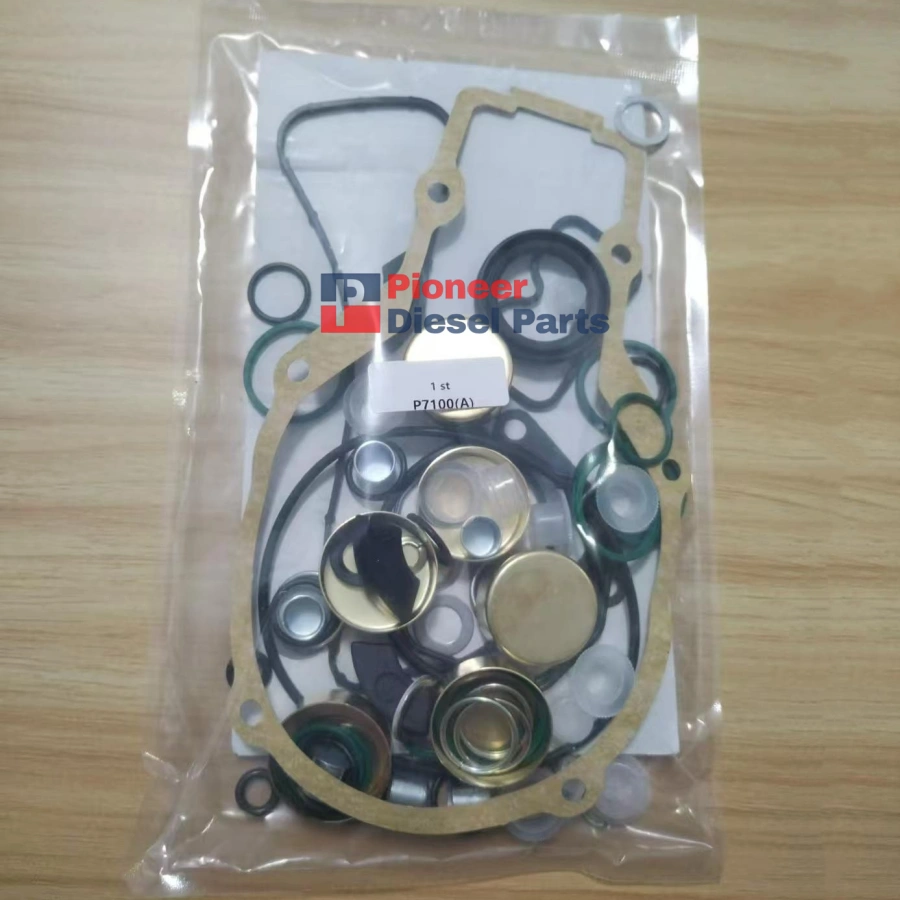
2. What Is Included in a P7100(A) Repair Kit?
A P7100(A) injection pump repair kit is primarily designed for replacing sealing components during pump service.
Current aftermarket listings for P7100 repair kits commonly describe the contents as gaskets, seals, and O-rings. Some kits also list caps or other sealing components. Exact contents vary between suppliers and pump configurations, so the actual package should always be verified before ordering.
Depending on the specific kit, components may include:
- O-rings
- Pump gaskets
- Shaft seals
- Sealing rings
- Caps or sealing caps
- Backup rings
- Application-specific sealing components
- Delivery-valve O-rings or holder seals on certain configurations
For example, a separate aftermarket listing identifies 2410210033 as a P7100 delivery-valve O-ring/seal, showing that delivery-valve sealing components are also available separately for compatible P7100 pumps.
What the Repair Kit Does Not Replace
A seal and gasket repair kit should not be considered a complete replacement for the pump’s precision components.
It generally does not replace:
- Plungers
- Barrels
- Delivery valves
- Camshaft
- Tappets
- Rack components
- Governor components
- Other worn internal pump components
If inspection finds scoring, excessive wear, corrosion, or components outside the applicable service specifications, those parts may require separate replacement or professional rebuilding.
Important: P7100 repair kits are not necessarily identical. Always confirm the actual package contents before ordering.
3. Which Applications Use the P7100(A) Repair Kit?
The P7100(A) repair kit is primarily associated with compatible Bosch P7100 inline injection pumps, rather than with one specific vehicle.
Common Engine and Vehicle Applications
- Cummins 5.9L 12-valve
- Cummins 6BT
- Selected Cummins 6CTA / 8.3L applications
- Dodge Ram 2500 applications equipped with the P7100
- Dodge Ram 3500 applications equipped with the P7100
- Selected agricultural equipment
- Selected construction and industrial equipment
- Other diesel applications using compatible P7100 pumps
The strongest automotive association is the 1994–1998 Dodge Ram 2500/3500 with the 5.9L 12-valve Cummins and P7100 mechanical injection pump. Current aftermarket P7100 repair-kit listings also specifically identify 5.9L, 6B, 6BT, and 1994–1998 Dodge Ram applications.
Examples of P7100 Pump Numbers
Examples of Bosch P7100 pump numbers encountered in the aftermarket include:
- 0 402 736 838
- 0 402 736 841
- 0 402 736 854
- 0 402 736 885
- 0 402 736 899
- 0 402 736 911
- 0 402 736 912
- 0 402 736 913
These numbers represent different pump configurations and applications rather than one universal P7100 specification.
Always compare the complete pump identification number and application before ordering a P7100(A) repair kit.
4. What Symptoms Indicate a P7100 Pump May Need Repair?
P7100 pumps are known for their mechanical durability, but seals and gaskets can deteriorate through age, heat cycles, fuel exposure, and long-term service.
External Fuel Leaks
Fuel may appear around:
- Pump covers
- Pump-body joints
- Shaft areas
- Fuel connections
- Other sealing surfaces
A visible leak does not automatically mean the internal pump components are worn. If the leak is caused by a deteriorated seal or gasket, replacing the appropriate sealing component may resolve the problem.
Hard Starting
A leaking seal can contribute to air entering the fuel system or fuel draining back after shutdown. This may cause extended cranking or repeated priming.
However, hard starting can also result from fuel-supply restrictions, injection timing, injectors, worn pumping elements, or other fuel-system problems.
Unstable Idle
An unstable idle can be associated with governor, rack, or fuel-control problems. A seal replacement alone may not correct the problem if internal components require inspection or calibration.
Reduced Engine Performance
Power loss can have many causes, including:
- Fuel supply restrictions
- Incorrect injection timing
- Worn plungers and barrels
- Delivery valve problems
- Injector problems
- Pump calibration issues
- Governor or rack-related faults
Other causes require separate diagnosis and component inspection.
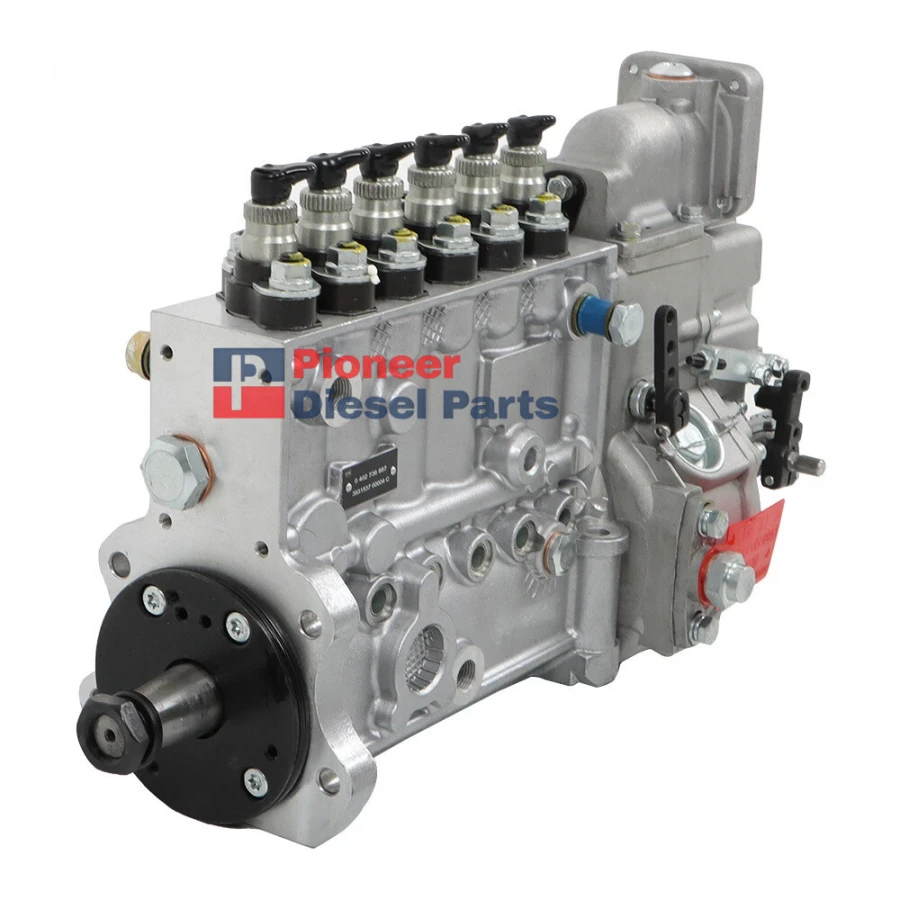
5. Why Rebuild a P7100 Pump Instead of Replacing It?
For a serviceable P7100 pump core, rebuilding can be a practical alternative to replacing the complete pump.
Lower Repair Cost
If the major pump components remain within serviceable limits, replacing worn seals and gaskets can be considerably less expensive than replacing the complete injection pump.
Preserve the Existing Pump
Keeping the original pump can avoid unnecessary changes to its application-specific configuration, calibration, and internal components.
Inspect Before Replacing
A proper rebuild allows technicians to inspect:
- Plunger and barrel condition
- Delivery valves
- Camshaft
- Governor components
- Rack movement
- Sealing surfaces
This helps determine whether the pump needs only sealing service or a more extensive rebuild.
Suitable for Performance Applications
The P7100 is also popular in modified diesel applications. Depending on the intended application, professional pump builders may change plungers, delivery valves, governor components, or calibration settings.
The repair kit itself does not increase engine horsepower. Its primary function is to provide the sealing components required during pump service.
6. How Is a P7100(A) Pump Rebuilt?
A professional P7100 rebuild involves much more than replacing O-rings.
Step 1: Identify the Pump
Record the complete pump number and identification-plate information before disassembly.
This helps determine:
- Pump configuration
- Plunger size
- Governor arrangement
- Application
- Applicable calibration requirements
Step 2: Remove and Disassemble the Pump
Follow the applicable service procedure and keep components organized during disassembly.
Depending on the rebuild scope, the technician may access:
- Governor assembly
- Shaft and seal areas
- Delivery valve holders
- Pumping elements
- Internal covers
- Rack and control components
Step 3: Clean and Inspect
Reusable components should be thoroughly cleaned and inspected for:
- Plunger and barrel wear
- Scoring
- Camshaft condition
- Delivery valve condition
- Governor wear
- Rack movement
- Damaged sealing surfaces
Precision components should be measured against the applicable service specifications rather than judged only by appearance.
Step 4: Replace Repair Kit Components
Install the appropriate new seals, O-rings, gaskets, caps, and other components supplied in the repair kit.
Important points include:
- Maintain a clean assembly environment
- Lubricate applicable seals correctly
- Avoid damaging O-rings during installation
- Install seals in the correct orientation
- Follow applicable torque specifications
Step 5: Reassemble and Calibrate
After reassembly, the pump should be adjusted according to the correct application and calibration requirements.
A complete professional rebuild may require adjustment of fuel delivery and governor characteristics.
Step 6: Bench Test
For a fully rebuilt pump, bench testing is strongly recommended.
Testing can verify:
- Fuel delivery
- Governor operation
- Rack response
- Leakage
- Pump performance
- Calibration
A seal kit can support the mechanical rebuilding process, but proper pump calibration remains essential when internal components have been serviced.
7. How Do You Decode a P7100 Pump Identification Number?
Correct identification is one of the most important steps when selecting a P7100(A) injection pump repair kit.
A commonly referenced P7100 identification example is:
PES6P110A120RS7213
The code can provide information about the pump’s configuration, including the P-series designation and plunger size.
For example:
- PES6P – P-series pump designation and six-cylinder configuration
- 110 – 11.0 mm plunger/barrel size
- A – Configuration or modification designation
- 120RS – Pump configuration information
- 7213 – Series/configuration information
The exact interpretation of individual characters can depend on the pump coding system and application.
Why Identification Matters
Two P7100 pumps may look similar but have different:
- Plunger sizes
- Governor configurations
- Calibration specifications
- Fuel-delivery characteristics
- Application requirements
Therefore, selecting a repair kit based only on the term “P7100” may not be sufficient.
Best practice: Provide the supplier with the complete pump number, engine model, application, and a photograph of the identification plate when possible.
8. How Should You Choose a Reliable P7100(A) Repair Kit Supplier?
Verify Compatibility First
Before ordering, provide:
- Complete Bosch pump number
- Engine model
- Vehicle or equipment model
- Pump identification information
- Existing repair-kit or seal number, if available
Confirm the Kit Contents
Different aftermarket kits can contain different combinations of:
- O-rings
- Gaskets
- Shaft seals
- Caps
- Backup rings
- Other sealing components
For example, current eBay listings identify some P7100 kits simply as gasket, seal, and O-ring rebuild kits, while another listing specifically includes gasket, seal, O-ring, and cap terminology.
Therefore, buyers should confirm the actual package contents before ordering.
Check Material and Manufacturing Quality
For diesel injection pump applications, sealing components should be suitable for diesel fuel exposure and the pump’s operating environment.
Important considerations include:
- Correct dimensions
- Fuel-resistant sealing material
- Consistent molding quality
- Proper fit
- Clean packaging
- Consistent production quality
Consider Wholesale Support
For diesel repair shops, distributors, and fleet maintenance businesses, useful supplier services include:
- Stock availability
- Bulk pricing
- Application verification
- Part-number cross-reference
- Technical support
- International shipping
For B2B buyers, confirming compatibility before shipment can help reduce incorrect orders and unnecessary returns.
9. How Can You Maintain a P7100 Injection Pump?
Keep the Fuel System Clean
Contaminated fuel can accelerate wear in precision injection-system components. Maintain fuel filtration according to the engine manufacturer’s service requirements.
Inspect for Fuel Leaks
Regularly check around:
- Pump body joints
- Shaft areas
- Covers
- Fuel connections
- Injection lines
Early detection of a leak can help prevent fuel contamination and more extensive service problems.
Maintain Correct Injection Timing
Incorrect timing can affect:
- Starting
- Engine response
- Exhaust smoke
- Fuel consumption
- Combustion performance
Always follow the correct timing procedure for the specific engine and pump configuration.
Use Suitable Diesel Fuel
Fuel quality and adequate lubricity are important for mechanical injection-pump durability.
Do Not Ignore Small Leaks
A minor external leak may indicate deteriorated sealing components. Addressing the problem early can be simpler than waiting until fuel contamination or additional component wear develops.
10. Related P7100(A) Repair Kit Models and More Reading
Selecting the correct P7100(A) repair kit requires checking the injection pump part number, engine model, and pump configuration. Proper matching helps support accurate pump servicing, reliable fuel delivery, and consistent diesel engine performance.
- 320D Pump Repair Kit
- OSM11/QSN14 Diesel Pump Repair Kit
- C7 C9 Fuel Injection Pump Repair Kit
- HP5 Oil Pump Repair Kit
More Reading:
- 2417010022 Repair Kit: Fuel Injection Pump PE(S)8P Gasket & Seal Rebuild Guide
- 7135-110 Repair Kit: CAV DPA Seals, Applications & Rebuild Guide
- P8500(A) Fuel Injection Pump Repair Kit
11. Frequently Asked Questions
Q1: What is a P7100 injection pump?
The P7100 is a Bosch P-series inline mechanical diesel injection pump. It is particularly well known for its use on 1994–1998 5.9L 12-valve Cummins applications and is also found in selected industrial and other diesel applications.
Q2: What does a P7100(A) repair kit include?
A typical P7100(A) repair kit is designed around sealing service and may include O-rings, gaskets, seals, caps, backup rings, and other application-specific sealing components. Exact contents vary by supplier and pump configuration, so the actual package contents should be confirmed before ordering.
Q3: Which engines use the P7100 pump?
The P7100 is strongly associated with the Cummins 5.9L 12-valve / 6BT and 1994–1998 Dodge Ram 2500/3500 applications. It is also found in selected industrial, agricultural, construction, and other diesel applications.
Q4: How do I identify my P7100 injection pump?
Check the identification plate and record the complete pump number and pump code. Information such as PES6P110A120RS7213 can help identify the pump configuration and plunger size. Do not select a repair kit based only on the vehicle model.
Q5: Can a P7100 repair kit fix a leaking injection pump?
It can address leaks caused by worn or damaged seals and gaskets when the pump’s other components remain serviceable. Other causes of fuel-system problems require separate diagnosis and inspection.
Q6: Can I rebuild a P7100 pump myself?
The P7100’s mechanical design makes it rebuildable, but a complete rebuild requires appropriate tools, cleanliness procedures, measurement, service information, and calibration knowledge. Professional bench testing is recommended after a major rebuild.
Q7: Is the P7100(A) repair kit compatible with every P7100 pump?
Not necessarily. P7100 pumps are available in different configurations, plunger sizes, governor arrangements, and applications. Always verify the pump identification and application before ordering the P7100(A) injection pump repair kit.
Conclusion
The P7100(A) injection pump repair kit provides a practical aftermarket solution for servicing compatible Bosch P7100 inline mechanical injection pumps when the primary problem involves worn seals, O-rings, gaskets, or other sealing components.
Current aftermarket listings show that P7100 repair kits are commonly marketed around gaskets, seals, and O-rings, while individual components such as delivery-valve O-rings are also available separately. Kit contents can vary between suppliers, so buyers should verify the exact package before ordering.
For workshops, distributors, and diesel-parts buyers, providing the pump identification, engine model, and application can help ensure that the P7100(A) injection pump repair kit matches the intended pump and repair.
Disclaimer
All brand names, trademarks, OEM part numbers, engine models, equipment models, and vehicle names mentioned in this article are used for reference and compatibility identification purposes only. Unless expressly stated otherwise, Pioneer Diesel Parts supplies high-quality aftermarket replacement parts featured on this website. These products are not genuine OEM products, and the respective original equipment manufacturers do not manufacture, affiliate with, endorse, or sponsor them. All trademarks and registered trademarks are the property of their respective owners.