
The Weichai WP14T is a 13.5L inline-six diesel engine developed for large 50–60 tonne excavators. The WP14TG765E304 configuration delivers 562 kW (765 PS) at 1900 rpm and 2900 N·m of peak torque between 1200 and 1500 rpm.
Designed for demanding construction and mining operations, the engine features a turbocharged and intercooled design, a 2000 bar common rail fuel injection system, and Stage IIIA emissions compliance without requiring an aftertreatment system. Its key performance characteristics include high torque at low engine speeds, fuel efficiency, and adaptability to different working environments.
With a dry weight of 1150 kg and a specified oil change interval of 500 hours, the WP14T is designed to deliver consistent power and support long operating hours in heavy-duty excavator applications.
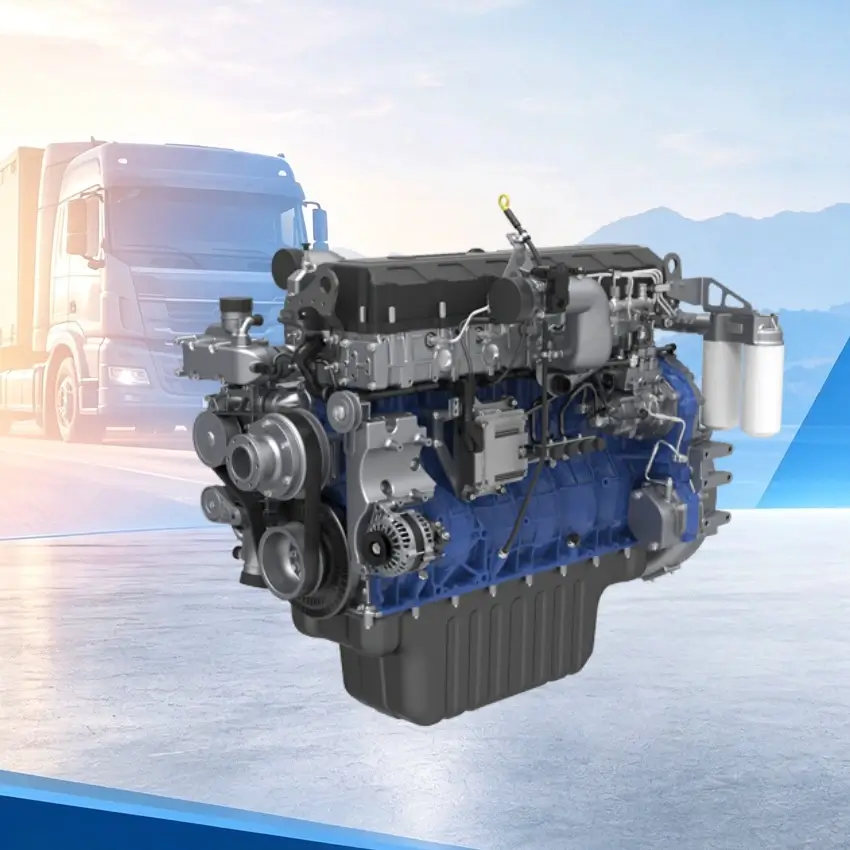
What Is the Weichai WP14T Engine?
The Weichai WP14T is a heavy-duty diesel engine designed primarily for large crawler excavators in the 50–60 tonne class. It features a 13.5-liter inline-six configuration with four valves per cylinder, turbocharging, and intercooling.
Unlike engines primarily developed for road transportation, the WP14T is configured for the demanding operating conditions of construction machinery. Excavators require stable engine output to support hydraulic systems during digging, lifting, loading, and continuous earthmoving operations.
The WP14T addresses these requirements through its high-displacement design and low-speed torque characteristics. Its 2900 N·m torque output across the 1200–1500 rpm range provides the power reserve needed for demanding hydraulic workloads.
The engine meets Stage IIIA emission requirements and uses a common rail fuel injection system without requiring additional exhaust aftertreatment equipment. This configuration simplifies the overall engine installation and reduces the maintenance requirements associated with aftertreatment components.
Its design makes the WP14T suitable for heavy construction equipment operating in demanding environments, including mining areas, quarries, and large infrastructure projects.
Weichai WP14T Engine Technical Specifications
The following specifications refer to the WP14TG765E304 excavator engine configuration.
| Parameter | Specification |
|---|---|
| Engine Model | WP14TG765E304 |
| Engine Series | Weichai WP14T |
| Displacement | 13.5 L |
| Configuration | Inline 6-cylinder, four-stroke |
| Valves per Cylinder | 4 |
| Aspiration | Turbocharged and intercooled |
| Fuel System | Common rail, 2000 bar |
| Rated Power | 562 kW (765 PS) @ 1900 rpm |
| Peak Torque | 2900 N·m @ 1200–1500 rpm |
| Emission Standard | Stage IIIA |
| Technical Route | Common rail, no aftertreatment required |
| Dry Weight | 1150 kg |
| Dimensions (L × W × H) | 1498 × 901 × 1185 mm |
| Oil Change Interval | 500 hours |
| Main Application | 50–60 tonne excavators |
These specifications highlight the engine’s high power output, large displacement, and torque characteristics. For equipment replacement or engine-related parts procurement, the complete engine model and identification information should be checked before confirming compatibility.
Key Performance Advantages of the Weichai WP14T Engine
High Power Output for Heavy Excavator Operations
With a rated output of 562 kW at 1900 rpm, the WP14T provides substantial power for large excavators handling demanding workloads.
In heavy earthmoving, mining, and quarry operations, the engine must supply sufficient power to support hydraulic functions while maintaining stable operation under changing loads.
The 13.5L displacement and six-cylinder configuration provide the foundation for this high-output performance. Combined with turbocharging and intercooling, the engine is designed to meet the power requirements of 50–60 tonne excavators.
High Torque at Low Engine Speeds
One of the main characteristics of the WP14T is its maximum torque of 2900 N·m, available between 1200 and 1500 rpm.
This low-speed torque characteristic is particularly relevant to excavator applications. During digging and material handling, the engine frequently experiences changes in load as hydraulic functions operate.
A broad torque range helps maintain power availability across the working speed range, supporting smoother operation under demanding conditions.
For equipment operators, this characteristic is important when performing continuous excavation, heavy loading, and other high-resistance operations.
Fuel Efficiency and Combustion Performance
Fuel economy is an important consideration for large excavators because diesel consumption represents a significant portion of their operating costs.
The WP14T incorporates a high-pressure common rail fuel injection system operating at 2000 bar. This system supports precise fuel delivery and atomization, helping improve combustion efficiency.
Weichai’s published product information indicates that vehicle fuel consumption is over 15% lower than competing products and lists fuel thermal efficiency at 53.09%.
These figures reflect the manufacturer’s stated performance advantages. Actual fuel consumption depends on excavator configuration, hydraulic system efficiency, working conditions, operator habits, and maintenance quality.
Adaptability to Different Working Environments
The WP14T is designed to operate in a wide range of environmental conditions.
Its specified operating temperature range extends from -30°C to 50°C, while its rated altitude adaptability reaches up to 5000 meters.
These characteristics are valuable for construction and mining equipment working in regions with significant temperature variations or high elevations.
Applications may include high-altitude mining projects, cold-climate construction sites, and large infrastructure developments where engines must maintain reliable operation under changing environmental conditions.
Reliability and Noise Control
The WP14T incorporates several structural and design features intended to support long-term operation.
These include a reinforced engine block, low-speed-ratio accessory design, and fully sealed tensioners.
The engine also uses pre-injection technology to reduce combustion noise and a rear gear housing structure to help control mechanical noise.
Weichai’s product information indicates a noise level reduction of 2 dB(A) compared with comparable advanced competitor products.
Together, these design features address important operating considerations for heavy-duty excavators, including durability, noise management, and maintenance requirements.
Main Applications of the Weichai WP14T Engine
50–60 Tonne Crawler Excavators
The primary application of the WP14T is large crawler excavators in the 50–60 tonne class.
These machines are commonly used for heavy excavation, earthmoving, quarry operations, and large construction projects. Their engines must provide sufficient power for continuous hydraulic operation and demanding material-handling tasks.
The WP14T’s 562 kW rated output and 2900 N·m torque make it suitable for this heavy-duty equipment segment.
Mining and Quarry Operations
Mining and quarry work places significant demands on excavator engines. Machines often operate for extended periods while handling heavy materials under dusty and demanding conditions.
The WP14T combines high power output with low-speed torque delivery to support these working requirements.
Its 500-hour oil change interval also provides a maintenance reference for fleet operators planning equipment servicing and reducing unnecessary downtime.
Heavy Infrastructure Construction
Large infrastructure projects, including highway construction, dam development, and port construction, frequently require high-capacity excavators.
During these operations, machines perform continuous digging, loading, lifting, and earthmoving tasks.
The WP14T’s high torque output and turbocharged-intercooled design provide the power characteristics required for these demanding applications.
Common Faults and Troubleshooting of the Weichai WP14T Engine
The following troubleshooting information covers general diagnostic considerations for heavy-duty common rail diesel engines. These symptoms should not be interpreted as confirmed WP14T-specific failure patterns. Proper diagnosis should be based on fault codes, operating data, and the engine’s applicable service documentation.
Power Loss and Black Smoke Under Load
Power loss accompanied by black exhaust smoke may indicate incomplete combustion or insufficient air supply.
Possible areas requiring inspection include:
- Restricted air filters or intake passages.
- Reduced turbocharger performance.
- Fuel injector malfunction or abnormal fuel delivery.
- Incorrect fuel injection control.
- Fuel quality and contamination problems.
For excavators operating in dusty environments, checking the air filter and intake system is a practical first step.
If the intake system is functioning normally, technicians should examine the fuel injection system, turbocharger performance, and relevant electronic control data.
Replacing fuel system components without identifying the actual cause may lead to unnecessary repair costs.
Hard Starting or Engine No-Start
Difficulty starting can result from several fuel supply, electrical, or engine management problems.
Potential causes include:
- Insufficient common rail pressure.
- Air entering the fuel supply system.
- Blocked or contaminated fuel filters.
- High-pressure fuel pump malfunction.
- Crankshaft or camshaft position sensor faults.
- Low battery voltage or electrical connection problems.
Technicians should check battery voltage during cranking, inspect the fuel supply system, and retrieve relevant diagnostic codes.
If rail pressure does not reach the required starting level, further inspection of the high-pressure pump, pressure control components, and injectors may be necessary.
Warning Lights and Engine Derating
An engine warning light or reduced power output may indicate an electronic control or fuel system issue.
Possible inspection areas include:
- Common rail pressure sensor signals.
- Injector electrical connections.
- Boost pressure sensor readings.
- Wiring harness connections.
- ECU power supply and communication.
A diagnostic scan should be performed before replacing components. Comparing actual rail pressure and boost pressure with commanded values can help technicians identify the affected system.
Even without an exhaust aftertreatment system, electronic fuel injection and engine management components remain important to normal engine operation.
Weichai WP14T Engine Maintenance Schedule
Regular maintenance is important for maintaining engine performance and reducing unexpected downtime in heavy-duty excavator applications.
Weichai specifies a 500-hour engine oil change interval for the WP14T. However, operating conditions should also be considered when planning maintenance, particularly for equipment working in dusty, high-load mining and quarry environments.
The following schedule provides a maintenance reference for normal and severe operating conditions.
| Service Item | Standard Operating Conditions | Severe Duty (Quarry/Mining) |
|---|---|---|
| Engine Oil and Filter | Every 500 hours | Every 250–350 hours |
| Fuel Filter | Follow oil change or per restriction | Every 250 hours |
| Air Filter Element | According to restriction indicator | Inspect daily; replace on restriction |
| Water Separator Drain | Daily, especially in humid climates | Daily |
| Belt and Tensioner Inspection | Every 500 hours | Every 250 hours |
| Valve Clearance | According to Weichai service manual | Halve the interval |
| Cooling System Check | Every 500 hours | Every 250 hours |
Important Maintenance Considerations
Engine oil and filter: Use the specified engine oil grade and replace the oil filter according to the applicable maintenance schedule. High-load operation and dusty working environments may require shorter service intervals.
Fuel filtration: The 2000 bar common rail system requires clean fuel. Regular fuel filter inspection and replacement help protect the high-pressure pump and injectors from contamination.
Air intake system: Excavators working in quarries and construction sites are exposed to significant dust. Inspect the air filter restriction indicator regularly and maintain the intake system to prevent restricted airflow.
Cooling system: Check coolant condition, hoses, radiator cleanliness, and cooling system connections. Effective heat dissipation is particularly important during continuous heavy-load operation.
Accessory drive components: Inspect belts and tensioners for abnormal wear, noise, or damage. Early detection can help prevent unexpected equipment downtime.
Maintenance should be tracked by engine operating hours rather than calendar time alone. Always follow the applicable Weichai service manual and equipment manufacturer’s maintenance requirements when determining final service intervals.
Fuel Injection System and Replacement Parts
The WP14T uses a 2000 bar common rail fuel injection system. Fuel system performance is essential to engine power output, combustion efficiency, and operating stability.
The main fuel injection system components include the high-pressure fuel pump, common rail, fuel injectors, and associated pressure control components.
Each component has a specific role in fuel delivery:
High-Pressure Fuel Pump: Supplies pressurized fuel to the common rail system. Its performance affects the fuel pressure available for injection.
Common Rail: Stores high-pressure fuel and distributes it to the injectors according to the engine’s fuel injection requirements.
Fuel Injectors: Deliver accurately controlled quantities of fuel into the combustion chambers. Injector condition influences fuel atomization, combustion quality, and engine performance.
Pressure Control Components: Help regulate fuel pressure within the common rail system to maintain the required operating conditions.
When diagnosing fuel system problems, technicians should check fuel pressure, injector performance, electrical signals, and relevant fault codes before replacing components.
For replacement parts procurement, the engine model WP14TG765E304 alone may not be sufficient to confirm every component’s compatibility. Buyers and repair workshops should provide the engine identification details, original part number, or photographs of the existing component for verification.
Selecting correctly matched replacement components is important for maintaining reliable fuel injection performance and avoiding compatibility issues.
More Weichai Engine Guides
- Weichai WP13 Engine for Heavy-Duty Wheel Loaders and Mining Operations
- Weichai WP17T Engine for Heavy-Duty Bulldozers and Large-Scale Earthmoving Projects
- Weichai WP11T Engine for Heavy-Duty Mobile Cranes and Construction Lifting Equipment
- Weichai 6M33 Engine for Heavy-Duty Motor Graders and Road Construction Projects
Read more:
- Weichai WP10H Engine Complete Guide for Dump Trucks and Heavy Duty Trucks
- Weichai WP3N Engine Guide to Reliable Bus Performance
- Weichai 12M25 Engine for 90–110 Ton Rigid Mining Dump Trucks
- Weichai WP15H Engine for Large Excavators and Heavy Earthmoving Operations
Frequently Asked Questions About the Weichai WP14T Engine
What is the rated power of the Weichai WP14T engine?
The WP14T excavator configuration WP14TG765E304 delivers 562 kW (765 PS) at 1900 rpm. It is designed for large 50–60 tonne excavators used in heavy construction and mining operations.
What is the displacement of the WP14T?
The Weichai WP14T has a displacement of 13.5 liters and an inline-six cylinder configuration with four valves per cylinder.
What is the maximum torque of the WP14T?
The engine produces a maximum torque of 2900 N·m between 1200 and 1500 rpm. This low-speed torque characteristic supports the demanding power requirements of large excavator hydraulic systems.
What is the oil change interval for the WP14T?
The specified engine oil change interval is 500 hours under normal operating conditions. For severe applications such as dusty quarry and mining operations, the interval can be shortened to 250–350 hours according to the maintenance requirements.
What excavators use the Weichai WP14T engine?
The WP14T is primarily designed for 50–60 tonne crawler excavators. Its high power output and low-speed torque characteristics make it suitable for heavy earthmoving, mining, quarrying, and infrastructure construction.
What is the fuel injection system used in the WP14T?
The WP14T uses a 2000 bar common rail fuel injection system. Its main components include the high-pressure fuel pump, common rail, injectors, and pressure control components.
What is the operating temperature range of the WP14T?
The engine is designed for an operating temperature range of -30°C to 50°C and altitude adaptability up to 5000 meters, supporting applications in different climatic and geographical environments.
Conclusion
The Weichai WP14T is a high-output diesel engine developed for 50–60 tonne excavators. Its 13.5L displacement, 562 kW rated power, and 2900 N·m torque provide the performance characteristics required for demanding construction and mining applications.
Its 2000 bar common rail fuel injection system, fuel efficiency features, and environmental adaptability further support its use in heavy-duty equipment.
For equipment owners, distributors, and repair workshops sourcing WP14T-related fuel injection components or replacement parts, accurate engine identification and part number verification are essential.
Contact Pioneer Diesel Parts with your engine model, serial number, or existing part number for component verification and a quotation. Our team can assist with aftermarket diesel fuel injection parts sourcing for different engine and equipment applications.