
Injector Valve Assembly F00RJ02103 is a precision electro-hydraulic solenoid valve assembly used inside Bosch common rail diesel injectors. It regulates the pressure in the injector control chamber, thereby precisely controlling injection timing and fuel delivery quantity.
This control valve is most commonly used in Cummins ISF3.8 diesel engines with Bosch common rail injector systems (injector model 0445120134) and is a critical service component for restoring injector performance.
Table of Contents
- What Is the Bosch F00RJ02103?
- Role of the Control Valve in a Common Rail Injector
- Working Principle of the F00RJ02103 Control Valve
- Technical Specifications & Parts Information
- Failure Mechanisms of the F00RJ02103
- Diagnostic Methods
- Compatible Injectors & OEM Cross-References
- Applicable Engines & Vehicle Models
- When to Replace the F00RJ02103
- Frequently Asked Questions (FAQ)
1. What Is the Bosch F00RJ02103?
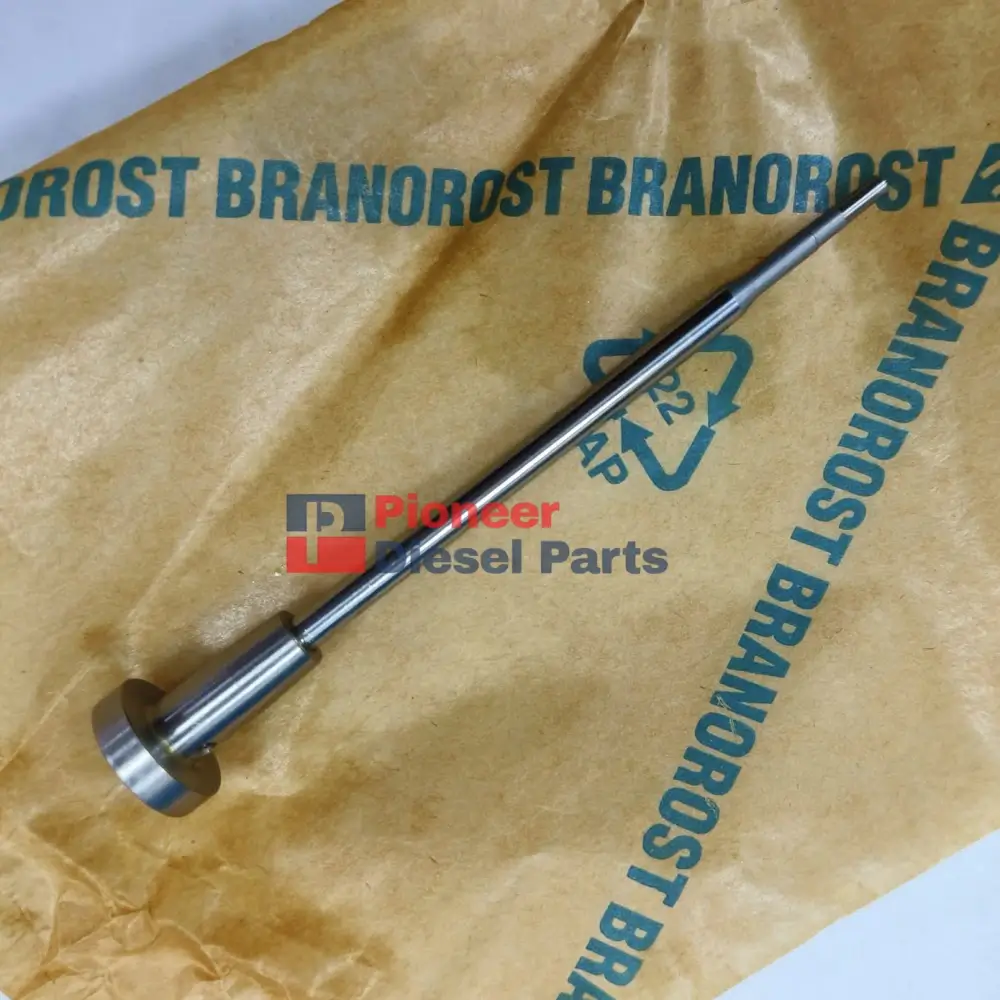
The Bosch F00RJ02103 is a precision solenoid-hydraulic control valve assembly (Control Valve Assembly) used inside Bosch common rail fuel injectors. It is not a standalone component but rather a core sub-assembly of the injector, responsible for controlling the internal hydraulic balance that determines injector opening and closing.
The valve assembly typically consists of a valve body, spool, spring mechanism, and precision sealing surfaces. In repair scenarios, the F00RJ02103 is sold as a repair kit component to replace worn or failed original valves, restoring injector performance.
2. Role of the Control Valve in a Common Rail Injector
In Bosch common rail injectors, the F00RJ02103 control valve performs the critical function of regulating the fuel pressure inside the injector control chamber.
Its specific roles include:
- Injection timing control – By modulating control chamber pressure, it determines when the injector needle opens and closes.
- Fuel quantity control – The on/off duration (energizing time) of the solenoid valve precisely meters the amount of fuel injected per event.
- Start and end of injection – The build‑up and release of control chamber pressure dictate exactly when injection begins and ends.
Even microscopic leakage or slight response delays in the control valve can lead to incorrect injection timing, inaccurate fuel delivery, unstable idle, and other drivability issues.
3. Working Principle of the F00RJ02103 Control Valve
The operation of the F00RJ02103 control valve follows these four steps:
Step 1: ECU Sends Control Signal
The engine ECU calculates the required fuel quantity and injection timing based on current operating conditions (engine speed, load, coolant temperature, etc.) and sends a PWM (Pulse Width Modulated) electrical signal to the solenoid coil of the control valve.
Step 2: Electromagnetic Actuation
When the coil is energized, it generates a magnetic field that moves the valve spool. The spool displacement is proportional to the pulse width sent by the ECU.
Step 3: Control Chamber Pressure Regulation
Movement of the spool opens or closes internal leakage paths within the control valve, thereby adjusting the fuel pressure in the control chamber. When control chamber pressure decreases, the hydraulic force above the injector needle is reduced.
Step 4: Injector Needle Action
When control chamber pressure drops below the fuel pressure beneath the needle, the needle lifts and injection begins. When the ECU de‑energizes the solenoid coil, the spool returns to its resting position, control chamber pressure rebuilds, and the needle seats, ending injection.
4. Technical Specifications & Parts Information
| Parameter | Specification |
|---|---|
| Part Number | F00RJ02103 / F 00R J02 103 / FOORJ02103 |
| Part Type | Common Rail Injector Control Valve (Repair Kit Component) |
| Material | High‑speed steel |
| Fuel Type | Diesel |
| Weight (approx.) | 0.03 kg |
| Primary Application | Cummins ISF3.8 engine |
Note: Common rail systems typically operate at pressures up to 160 MPa (1,600 bar) and above. As a precision internal component, the control valve must maintain sealing integrity and response accuracy under these extreme pressures.
5. Failure Mechanisms of the F00RJ02103
Based on field service experience, failures of the F00RJ02103 control valve occur through the following primary modes:
5.1 Internal Wear (Most Common)
The precision mating surfaces between the spool and valve seat undergo continuous high‑frequency reciprocating motion and high‑pressure fuel flow, leading to wear over time. Increased clearances and reduced sealing effectiveness are the most frequent failure causes.
5.2 Hydraulic Leakage
Due to wear or enlarged clearances, fuel from the control chamber leaks into the low‑pressure return circuit, causing an abnormal increase in return flow (leak‑off). This is the earliest and most reliable warning sign of control valve degradation.
5.3 Solenoid Coil Degradation
Prolonged exposure to high under‑hood temperatures can alter coil resistance or reduce magnetic force, resulting in slower spool response and delayed injection timing.
5.4 Contamination Sticking
Fuel contaminants (such as metal particles or soot) can enter the precision clearances of the control valve, causing the spool to stick or move sluggishly.
6. Diagnostic Methods
6.1 Symptom‑Based Diagnosis
| Symptom | Possible Cause | Recommended Check |
|---|---|---|
| Hard starting | Internal leakage delays control chamber pressure build‑up | Leak‑off test |
| Black smoke | Excessive fuel delivery / incorrect injection timing | Injector test bench |
| Power loss | Slow spool response | ECU data + oscilloscope |
| Rough idle | Control chamber pressure fluctuations | Rail pressure monitoring |
| Misfire | Spool sticking | Ultrasonic cleaning & retest |
6.2 Leak‑off (Return Flow) Test
Abnormally high return flow is the earliest and most reliable indicator of control valve failure.
Test procedure: With the engine idling, collect return fuel from each injector’s leak‑off line and compare the flow rates. If one injector shows significantly higher return flow than the others, its control valve is likely leaking internally.
6.3 Injector Test Bench
Use professional equipment (such as Bosch EPS 205, EPS 118, or other common rail injector test benches) to perform comprehensive tests, including:
- Injection quantity consistency
- Return flow measurement
- Response time testing
- Spray pattern inspection
7. Compatible Injectors & OEM Cross‑References
7.1 Main Compatible Injectors
The F00RJ02103 control valve is most commonly used with the following Bosch injector assemblies:
Primary Injector:
- 0445120134 (main fitment for Cummins ISF3.8)
Other Compatible Injectors:
- 0445120019, 0445120020, 0445120042, 0445120048
- 0445120050, 0445120051, 0445120067, 0445120108
- 0445120127, 0445120128, 0445120135, 0445120163
- 0445120297, 0445120361, 0445120372
- 0986435501, 0986435502, 0986435515
7.2 OEM Cross‑Reference Numbers
| Brand | OEM Part Number |
|---|---|
| Cummins | 3418535, 3968158, 4088715, 4088716, 4902826 |
| Dongfeng | C3968158 |
| Iveco | 500053229 |
| Yutong | 1105‑00049 |
7.3 Other valve assembly models in this series:
F00RJ01941
F00RJ02004
F00RJ02012
F00RJ02056
F00RJ02067

8. Applicable Engines & Vehicle Models
8.1 Primary Engine
Cummins ISF3.8 (3.8‑litre common rail diesel engine)
8.2 Main Vehicle Applications
- Foton light trucks and Auman series
- Dongfeng commercial vehicles
- Iveco light‑duty trucks
- Yutong buses
8.3 Engine Reference Data (Cummins ISF3.8)
| Parameter | Value |
|---|---|
| Max Power | 154 hp @ 2,600 rpm |
| Max Torque | 368 lb‑ft @ 1,200–1,900 rpm |
9. When to Replace the F00RJ02103
9.1 Replacement Criteria
Consider replacing the F00RJ02103 control valve when the following symptoms appear:
- Extended cranking time (both cold and hot starts)
- Noticeably increased fuel consumption
- Injector return flow deviation exceeding normal range (compared to other cylinders)
- Excessive black or blue smoke under acceleration
- Rough idle or unstable engine running
- Diagnostic trouble codes indicating rail pressure instability or abnormal cylinder‑to‑cylinder injector corrections
9.2 Service Recommendation
Always evaluate the control valve before replacing the entire injector assembly. In many cases, control valve wear is the root cause of poor injector performance. Replacing only the control valve (rather than the whole injector) can restore performance at a fraction of the cost.
Important: If the control valve has failed due to fuel contamination or prolonged wear, cleaning alone will not restore performance – replacement of the valve assembly is required.
10. Frequently Asked Questions
Q1: What is the main function of the F00RJ02103?
It regulates the fuel pressure inside the injector control chamber via electromagnetic actuation, thereby precisely controlling injection timing and fuel quantity.
Q2: What are the symptoms of a failing Bosch F00RJ02103 injector control valve?
A failing F00RJ02103 control valve typically causes hard starting, unstable idle, excessive black smoke, and inconsistent engine power. These symptoms are mainly due to internal hydraulic leakage or delayed spool response affecting injection timing and fuel quantity control.
Q3: How do you test a common rail injector control valve like F00RJ02103?
The most reliable method is a leak-off (return flow) test combined with injector bench testing. Excessive return fuel compared to other injectors indicates internal valve leakage. Advanced testing using Bosch injector test benches can also measure response time and injection consistency.
Q4: Can a faulty F00RJ02103 control valve be mistaken for injector nozzle or pump failure?
Yes. A worn or leaking control valve can produce symptoms similar to nozzle wear or high-pressure pump issues, including poor atomization, misfire, and rail pressure instability. This makes proper diagnostic testing essential before replacing major components.
Q5: What is the earliest sign of control valve failure?
An abnormal increase in injector return flow (leak‑off) – this is the most reliable early warning signal.
Q6: Should I replace the control valve or the entire injector?
We recommend testing the control valve first. If the injector body (nozzle, plunger, etc.) is not severely worn, replacing only the control valve can restore injector performance at significantly lower cost than a full injector replacement.
Read more from this series:
- F00RJ02246 Injector Valve Assembly – Failure Symptoms, Replacement Guide & Compatibility with 0445120073
- F00RJ01479 Valve Assembly – Complete Guide: Compatibility, Symptoms & Replacement
- Common Rail Injector Valve F00RJ01924 for Injector 0445120102
- Common Rail Injector Valve F00RJ01819 for Injector 0445120157
Conclusion
The Bosch F00RJ02103 is a critical precision control component inside Bosch common rail injectors, playing an essential role in the fuel injection system of Cummins ISF3.8 diesel engines. It determines injection timing and fuel quantity by precisely regulating the pressure in the injector control chamber.
Control valve failures – especially internal leakage caused by sealing surface wear under high pressure – typically manifest as hard starting, power loss, black smoke, and other drivability complaints. These symptoms are easily mistaken for nozzle or high‑pressure pump failure.
The correct diagnostic approach is to inspect and evaluate the control valve before replacing expensive injector assemblies. Simple return flow tests and injector bench tests can quickly pinpoint the issue, avoiding unnecessary repair costs and saving both time and money.
Need a Replacement F00RJ02103 Control Valve?
If your injector shows hard starting, unstable idle, or high return flow, the issue may be a worn F00RJ02103 control valve instead of a full injector failure.
We supply tested aftermarket control valves compatible with Bosch common rail injectors used in Cummins ISF3.8 applications.
👉 Contact your diesel parts supplier for compatibility check and wholesale inquiry.
Disclaimer
Bosch and Cummins part numbers are used for compatibility and identification purposes only. All products described in this article are aftermarket replacement parts and are not claimed to be original Bosch or Cummins products unless explicitly stated.