
Quick Answer
Bosch DLLA118P2203 (Bosch nozzle number 0 433 172 203) is a 5-hole common rail injector nozzle with φ0.22 mm hole diameter and 2203 flow code. It is designed for Cummins QSL9 8.9L Euro III diesel engines and is factory‑installed in Bosch injector assemblies 0 445 120 236, 0 445 120 125, and 0 445 120 029. The nozzle operates at injection pressures of 1,600–1,800 bar and is commonly found in Komatsu PC350‑8/PC300‑8 hydraulic excavators and heavy‑duty truck applications.
Main Specifications:
- Nozzle stamping: DLLA118P2203
- Bosch nozzle number: 0 433 172 203
- Hole diameter: 0.22 mm
- Number of holes: 5
- Flow code: 2203
- Operating pressure: 1,600–1,800 bar (CRI system)
- Solenoid valve: F 00R J01 941
- Engine application: Cummins QSL9 8.9L (also compatible with ISBe series)
- Cross references: 6745-12-3100, 6745-12-3102, 0986435554
Quick Navigation
- Technical Specifications
- Nozzle Coding System Explanation
- Compatible Injector Assemblies
- Solenoid Valves and Repair Kits
- Vehicle and Equipment Applications
- DLLA118P Series — Other Variants
- Common Failure Symptoms and Maintenance
- Installation and Replacement Guidelines
- FAQ
- Looking for DLLA118P2203 Nozzles?
- Related Articles
- Conclusion
The Bosch DLLA118P2203 is a hole‑type common rail injector nozzle engineered for high‑pressure diesel injection systems in heavy‑duty off‑road equipment and commercial vehicles. Manufactured by Bosch, a global leader in diesel fuel injection technology, this nozzle is a critical component of the Bosch common rail system, responsible for atomizing diesel fuel into fine droplets that mix efficiently with combustion air, enabling complete combustion and optimal engine performance.
The DLLA118P2203 nozzle belongs to the Bosch CRIN (Common Rail Injector) family and operates within Bosch CRI injection systems at pressures of 1,600 to 1,800 bar, providing precise fuel metering for Euro III emissions compliance while delivering the torque and durability demanded by heavy‑duty construction equipment. Unlike the DLLA142P1709 designed for Cummins ISLe, the DLLA118P2203 is calibrated specifically for the larger Cummins QSL9 platform found in Komatsu excavators and similar off‑road machinery.
1. Technical Specifications
1.1 Identification Codes
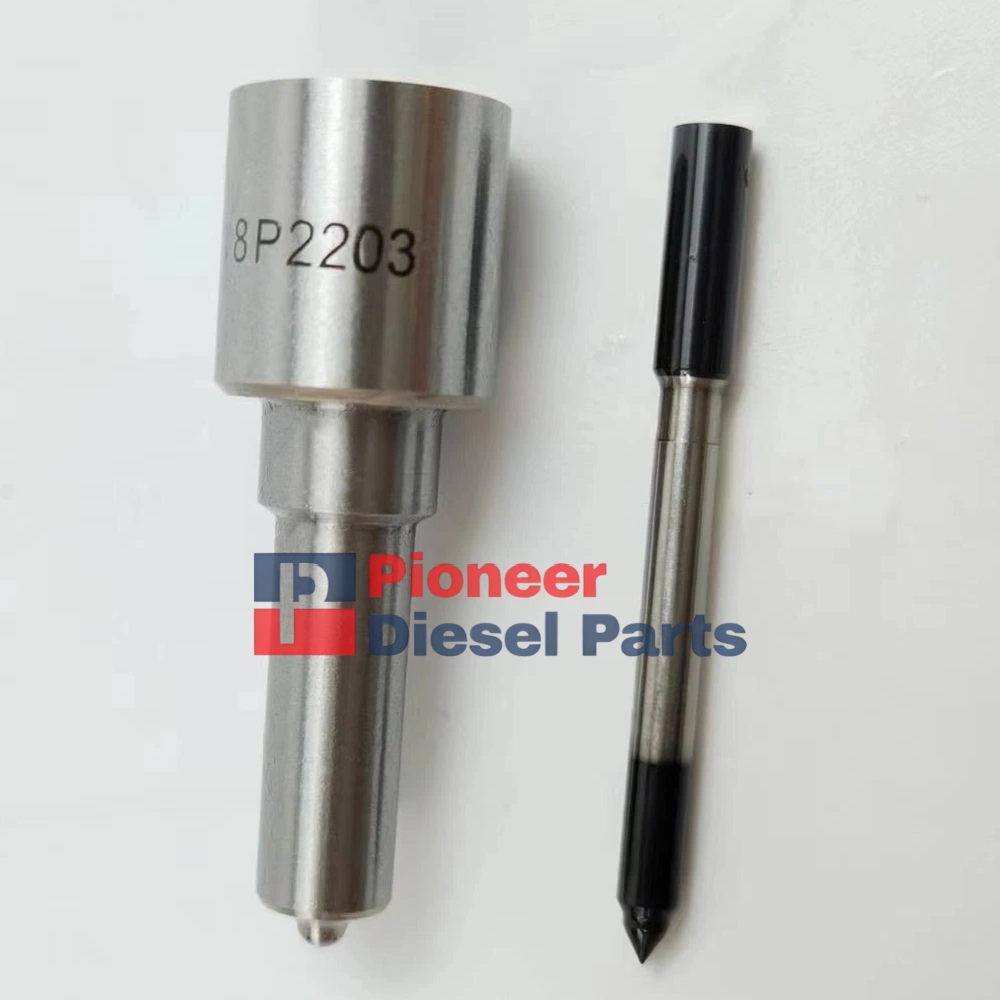
The Bosch DLLA118P2203 injector nozzle is identified by multiple cross‑reference part numbers. These codes are essential for accurate parts lookup and compatibility verification:
| Reference Type | Code |
|---|---|
| Nozzle Stamping | DLLA118P2203 |
| Bosch Nozzle Number | 0 433 172 203 |
| Injector Assembly Numbers | 0 445 120 236 / 0 445 120 125 / 0 445 120 029 |
| OEM Cross References | 6745-12-3100, 6745-12-3102, 0986435554, 107755-0420 |
The nozzle number 0 433 172 203 corresponds directly to the stamping DLLA118P2203, while the injector assembly numbers identify the complete injector units in which this nozzle is installed.
1.2 Physical Specifications
| Parameter | Value |
|---|---|
| Component Type | Hole-type common rail nozzle |
| Nozzle Type | Multi-hole laser drilled |
| Number of Holes | 5 |
| Hole Diameter | 0.22 mm |
| Material | High-speed steel / alloy steel |
| Hardness | HRC 62–65 |
| Weight | ~0.04 kg (40 g) |
| Fuel Compatibility | Diesel |
The nozzle is manufactured from high‑speed steel, typically processed with vacuum hardening to achieve a hardness rating of HRC 62–65. This hardness ensures wear resistance and dimensional stability under the extreme cyclic loads of common rail operation. The nozzle body follows the Bosch φ3.5 series standard. The 5‑hole laser‑drilled design produces fine atomization essential for meeting Euro III emissions standards while maintaining fuel economy.
1.3 Hydraulic and Performance Specifications
- Flow Code: 2203 (calibrated flow reference)
- System Injection Pressure: 1,600–1,800 bar (CRI system)
- Nozzle Hole Diameter: 0.22 mm (indicated by “118” in the designation, per Bosch coding for this series)
- Flow Code Significance: The 2203 flow calibration provides higher fuel delivery per injection event compared to lower flow codes, making the DLLA118P2203 suitable for the higher power requirements of the Cummins QSL9 8.9L engine.
1.4 Material and Quality Standards
DLLA118P2203 nozzles, whether genuine Bosch or manufactured by ISO‑certified aftermarket producers, must meet rigorous quality standards:
- ISO9001 / ISO/TS16949 quality management system certification
- 100% flow‑testing before shipment
- Vacuum hardening for consistent component hardness
- Multi‑hole laser drilling for precision spray patterns
2. Nozzle Coding System Explanation
The Bosch nozzle code follows a structured format that conveys critical technical information:
- DLLA = Hole‑type nozzle with specific seat angle (DLLA indicates a multi‑hole nozzle for direct injection common rail systems)
- 118 = Nozzle hole diameter in a coded format (118 corresponds to 0.22 mm)
- P = Nozzle body length classification (φ3.5 series, standard body length)
- 2203 = Flow code (higher number indicates greater flow capacity)
The “P” designation refers to the length of the nozzle body, which must match the injector holder design. Substituting a nozzle from a different series (e.g., DSLA) without verifying compatibility may result in improper fitment and compromised engine performance.
The 2203 flow code places this nozzle in the higher flow range within the DLLA118P series, making it suitable for the higher horsepower variants of the Cummins QSL9 engine (typically 298–350 HP).
3. Compatible Injector Assemblies
3.1 Primary Injector Fitments
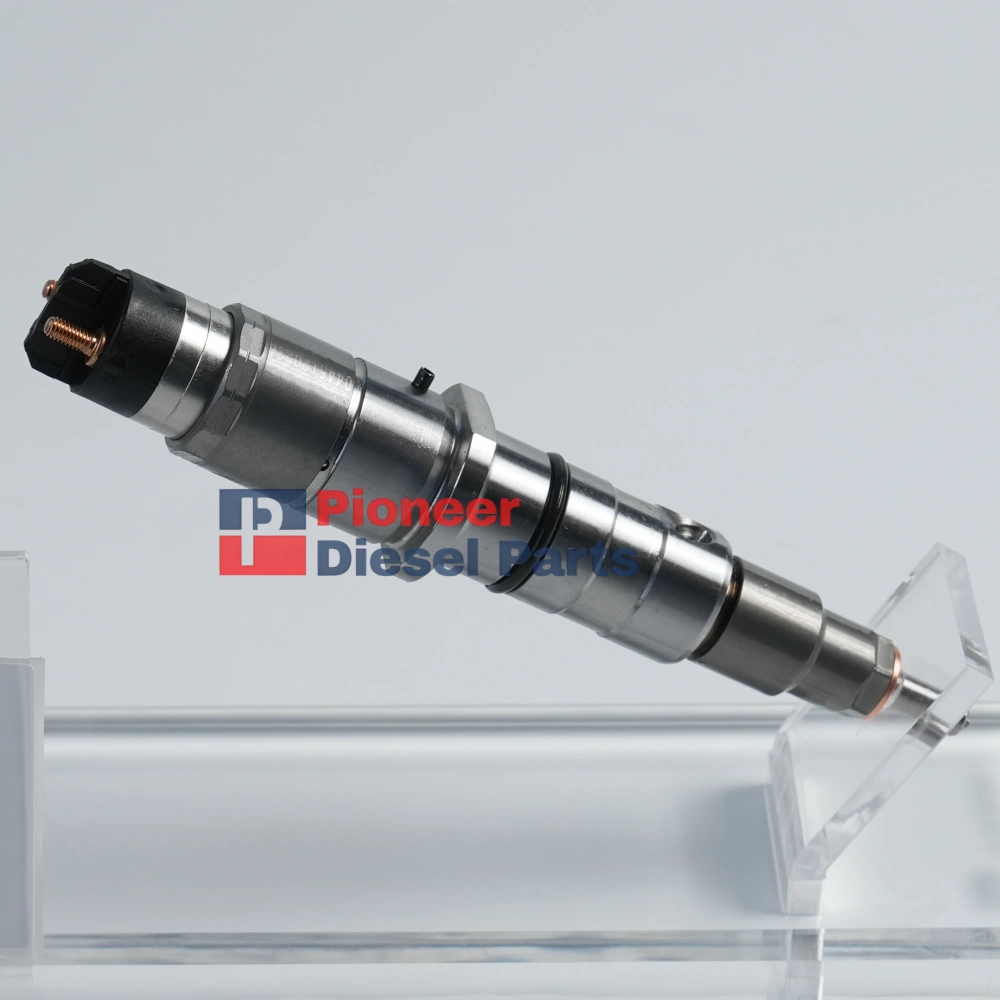
The DLLA118P2203 nozzle is factory‑matched to the following Bosch common rail injector assemblies.
| Injector Assembly | Compatible Nozzle | Application Notes |
|---|---|---|
| 0 445 120 236 | DLLA118P2203 (0433172203) | Primary fitment; Cummins QSL9 8.9L |
| 0 445 120 125 | DLLA118P2203 (0433172203) | Secondary fitment; ISBe / QSL9 variants |
| 0 445 120 029 | DLLA118P2203 (0433172203) | Alternative assembly; Komatsu applications |
When rebuilding an injector, always verify the injector assembly number stamped on the original injector body before ordering a replacement nozzle. Using an incorrect nozzle will alter fuel delivery per injection event and may cause engine performance issues.
3.2 OEM Cross References
The injector assemblies containing the DLLA118P2203 nozzle are also known by the following OEM part numbers:
- For injector 0 445 120 029: 3965721, 3973060, 4939061, 4940170
- injector 0 445 120 125: 5263308, 84346812, 107755-0420, 6745-12-3100
- injector 0 445 120 236: 6745-12-3102, 0986435554, 107755-0420, 3965721, 3973060, 4939061, 4940170, 5263308, 6745-12-3100, 84346812
These cross references are useful when sourcing injectors through OEM parts channels, such as Komatsu or Cummins dealer networks.
4. Solenoid Valves and Repair Kits
4.1 Solenoid Valve Compatibility
The DLLA118P2203 nozzle works with solenoid valve F 00R J01 941. This solenoid valve is shared across multiple injector assemblies within the Bosch CRIN product line, including injectors 0445120121, 0445120122, 0445120125, 0445120236, and 0445120159.
4.2 OEM Repair Kits
A complete OEM‑grade repair kit for injectors containing the DLLA118P2203 nozzle includes:
- DLLA118P2203 nozzle (0 433 172 203)
- Solenoid valve F 00R J01 941
- Control valve and sealing components
Professional rebuilding of injectors using these repair kits can restore original performance at a lower cost than complete injector replacement.
5. Vehicle and Equipment Applications
5.1 Primary Engine Application
The DLLA118P2203 nozzle is primarily used in the Cummins QSL9 8.9L Euro III diesel engine.
The Cummins QSL9 is an 8.9‑liter inline six‑cylinder diesel engine with the following specifications:
- Displacement: 8.9 liters
- Power range: 250–400 HP (186–298 kW)
- Emissions standard: Euro III
- Applications: Heavy‑duty construction equipment, excavators, wheel loaders, trucks
This engine utilizes the Bosch CRI common rail system operating at injection pressures of 1,600 to 1,800 bar, with the DLLA118P2203 nozzle providing the precise fuel delivery required for optimal combustion efficiency and emissions compliance.
5.2 Equipment Applications
- Cummins / QSL9 8.9L: Heavy‑duty trucks, buses, industrial equipment
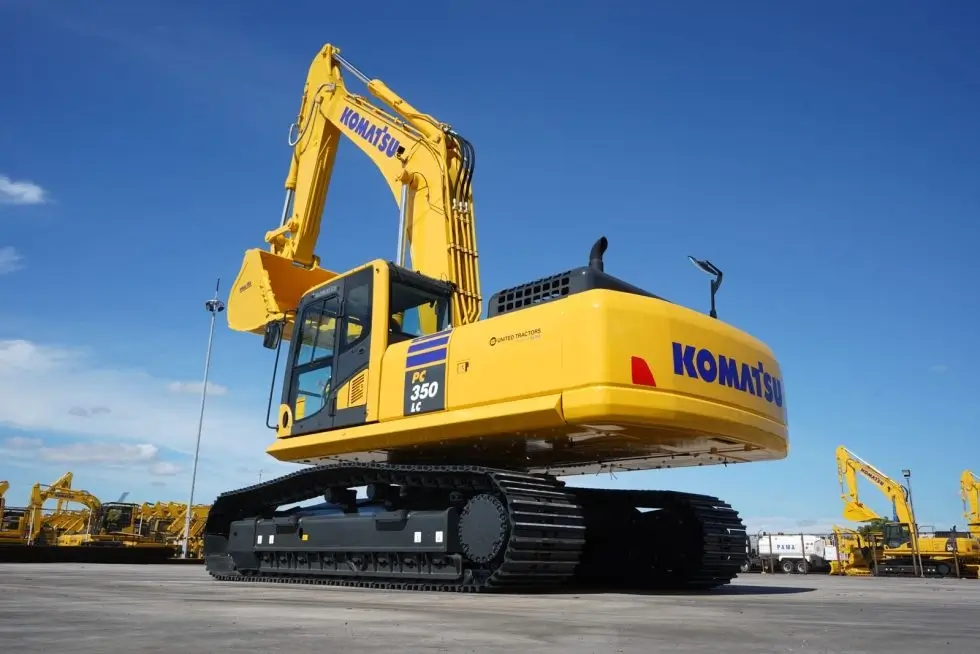
- Komatsu / PC350‑8, PC300‑8: Hydraulic excavators
- Komatsu / Various QSL9‑equipped machinery: Wheel loaders, crawler dozers
- Note on DLLA118P2203 nozzle: Widely used in Komatsu PC350‑8 and PC300‑8 hydraulic excavators (powered by Cummins QSL9 8.9L diesel engines). This represents one of the largest volume applications for this nozzle in the aftermarket.
6. DLLA118P Series — Other Variants
The Bosch DLLA118P series encompasses multiple nozzle variants that share the same body length but differ in hole diameter and flow calibration. Understanding these variants is critical for correct parts selection.
| Nozzle Model | Bosch Nozzle No. | Injector Compatibility | Key Differences |
|---|---|---|---|
| DLLA118P2203 | 0 433 172 203 | 0 445 120 236 / 125 / 029 | 0.22 mm, 5-hole, flow code 2203 |
| DLLA118P1697 | 0 433 172 040 | 0 445 120 236 | Same injector family, different flow calibration |
| DLLA118P1677 | — | 0 455 120 112 | Lower flow variant for smaller Cummins engines |
| DLLA118P1681 | 0 433 171 681 | Various | Alternative calibration for ISBe platforms |
When selecting a replacement nozzle, it is crucial to match the exact flow code. The DLLA118P1697 is a close but different calibration, and interchanging it with DLLA118P2203 will alter the engine’s fuel delivery characteristics.
7. Common Failure Symptoms and Maintenance
7.1 Common Failure Symptoms
When the DLLA118P2203 nozzle begins to fail or degrade, the following symptoms may appear. Early detection is critical to prevent expensive engine damage.
| Symptom | Likely Cause | Severity |
|---|---|---|
| Hard starting / extended crank | Worn nozzle, poor atomization during cranking | Medium |
| Rough idle or cylinder misfire | Uneven fuel delivery, carbon buildup on nozzle tip | Medium |
| White smoke on cold start | Leaking needle seat, fuel dripping after shutdown | High |
| Black smoke under load | Over‑fueling from eroded nozzle holes or stuck needle | High — risk of piston damage |
| Reduced engine power | Restricted fuel flow or poor spray pattern | Medium — investigate promptly |
| Increased fuel consumption | Nozzle efficiency degradation, over‑fueling | Medium |
| Excessive injector return flow | Internal needle/seat wear | High — replace on next service |
If multiple symptoms occur simultaneously, a complete injector inspection including return flow testing is recommended. Hard starting, unstable idle, and lack of acceleration are among the most frequently reported indicators that the nozzle needs replacement.
7.2 Root Causes of Nozzle Failure
Fuel Contamination — The Leading Cause
Common rail injectors operate under very high pressures with tolerances of just a few microns, making them extremely vulnerable to fuel quality issues. Contaminants that cause DLLA118P2203 nozzle failure include:
- Water in diesel fuel — causes corrosion of precision components
- Solid particles (rust, dust, metal debris) — abrasively wear nozzle holes
- Paraffin from poor‑quality fuel — blocks spray holes
- Sulfides exceeding standard limits — chemical attack on components
Normal Wear
- Nozzle hole erosion — occurs over extended service life, progressively degrading spray quality
- Needle valve wear — causes oil hole blockage and insufficient fuel injection
- Spring rust or fracture — leads to black smoke and poor engine response
- Opening pressure decrease — results in increased injection quantity and black smoke
Installation Errors
- Failure to replace wearing parts in time during maintenance may lead to complete injector damage
- Nozzle cap deformation, cracking, thread damage, quenching, or leakage
- Using old copper gaskets — compressed gaskets cannot seal properly
- Over‑torquing or under‑torquing hold‑down clamp-
7.3 Nozzle Inspection Procedure
A professional injector test stand (e.g., Bosch EPS 200, EPS 205, or DCI 700) is required for accurate diagnosis. The test should verify:
- Spray pattern quality — uniform spray distribution across all 5 holes
- Opening pressure — measured against reference values
- Static return flow at full load point
- Dynamic flow quantity across the engine operating range
- Seat seal integrity
The nozzle tight cap must be replaced after being disassembled more than 5 times, as repeated disassembly degrades its sealing performance. All components should be examined for external signs of wear, corrosion, clogging, melting, sticking, or scaling.
8. Installation and Replacement Guidelines
8.1 Pre‑Installation Checks
Before installing a new DLLA118P2203 nozzle, complete these essential steps:
1. Verify part numbers
- Confirm nozzle stamping:
DLLA118P2203 - Verify injector assembly number: 0 445 120 236, 0 445 120 125, or 0 445 120 029
2. Inspect the injector body
- Check for cracks, corrosion, or damage
- Ensure the nozzle seat is clean and carbon‑free
3. Prepare necessary tools
- Torque wrench (20–100 N·m range)
- New copper gasket (1.0–1.5 mm, copper only)
- New nozzle tight cap (replace after 5 disassemblies)
- Clean diesel fuel for rinsing
- Lint‑free cloths
4. Clean the injector bore
- Remove carbon deposits with a bore brush
- Blow out debris with compressed air
8.2 Step‑by‑Step Installation Procedure
Step1: Remove the old nozzle
- Disassemble the injector according to manufacturer service procedure
- Discard old nozzle, old copper gasket, and old tight cap
- Clean reusable components with clean diesel fuel only — never use abrasive methods
Step2: Install the new nozzle
- Insert the new DLLA118P2203 nozzle into the injector body
- Verify proper alignment of locating pin and notch
- Install a new tight cap if this is the sixth or more disassembly
- Torque nozzle nut according to injector specifications (refer to service manual)
Step3: Install injector into cylinder head
- Install a new copper gasket (never reuse old gaskets)
- Lower injector into bore, ensuring complete seating
- Install hold‑down clamp and bolt
Step4: Tighten hold‑down clamp
- Typical torque range: 60–80 N·m (varies by engine, verify in service manual)
- Over‑torquing (>80 N·m) may deform injector body
- Under‑torquing (<60 N·m) may cause combustion gas blow‑by
Step5: Reconnect fuel system
- Reconnect high‑pressure fuel lines, return lines, and electrical connector
Step6: Prime the fuel system
- Turn ignition ON and allow priming pump to complete its cycle
- Crank engine; it may take several seconds to start due to air bleeding
Step7: Perform leak inspection
- With engine running, check all injector connections, fuel lines, and return fittings
- Any fuel leakage must be corrected immediately
8.3 Replacement Best Practices
Replace all nozzles as a matched set
Although replacing a single nozzle may seem economical, common rail systems perform best when all cylinders receive equal fuel delivery. Replacing a complete set ensures balanced combustion, smooth idle quality, consistent power output, and improved fuel economy.
Monitor return flow
Return flow testing is one of the most effective methods for evaluating injector condition. Large differences in return flow between cylinders indicate injector imbalance requiring further investigation.
Maintain fuel system cleanliness
Contaminated fuel remains the single most common cause of nozzle failure. To maximize nozzle life:
- Replace fuel filters at recommended intervals
- Use clean diesel fuel meeting ASTM D975 or EN 590 standards
- Drain water separators regularly
- Follow manufacturer maintenance intervals
Avoid mixing flow codes
Never substitute DLLA118P2203 with another flow code (e.g., DLLA118P1697, DLLA118P1677) unless compatibility has been verified by injector specifications and ECU calibration. Even small differences in flow characteristics can affect emissions, power output, fuel economy, and engine longevity.
8.4 Post‑Installation Verification
After completing installation, verify system performance:
Idle quality: Engine should idle smoothly without excessive vibration, misfires, or white smoke
Rail pressure stability: Fuel rail pressure should remain stable and closely follow commanded values
Return flow balance: All injectors should demonstrate similar return flow rates within approximately 10% of each other
Full‑load operation: Power delivery should be smooth, black smoke minimal, and engine response consistent
9. FAQ
1. What injector uses DLLA118P2203?
The DLLA118P2203 nozzle is installed in Bosch injector assemblies 0 445 120 236, 0 445 120 125, and 0 445 120 029. These injectors are commonly used in Cummins QSL9 and ISBe applications.
2. What engine is DLLA118P2203 for?
It is primarily used in Cummins QSL9 8.9L Euro III diesel engines, found in Komatsu PC350‑8 / PC300‑8 excavators and heavy‑duty trucks.
3. What is the Bosch nozzle number for DLLA118P2203?
The Bosch nozzle number is 0 433 172 203 (also written as 0433172203).
4. What solenoid valve works with DLLA118P2203?
The compatible solenoid valve is F 00R J01 941. This valve is shared across multiple Bosch CRIN injector assemblies.
5. What is the hole diameter of DLLA118P2203?
The nozzle has 5 holes with a diameter of φ0.22 mm. This larger diameter compared to the DLLA142P series (0.142 mm) provides higher fuel flow for the QSL9 engine’s power requirements.
6. What causes DLLA118P2203 nozzle failure?
Common causes include fuel contamination (water, solid particles), normal wear over extended service life, improper maintenance or installation, and failure to replace wearing parts in a timely manner.
7. Can I replace just one DLLA118P2203 nozzle?
It is possible but not recommended. Common rail systems perform best with all nozzles replaced as a complete matched set to maintain balanced fuel delivery across cylinders.
10. How to Choose a Quality DLLA118P2203 Replacement Nozzle?
When purchasing a DLLA118P2203 nozzle, always verify the nozzle marking (DLLA118P2203), Bosch number (0 433 172 203), and compatible injector assemblies (0 445 120 236, 0 445 120 125, and 0 445 120 029). Matching the correct flow code (2203) is essential for maintaining proper fuel delivery and engine performance.
A quality replacement nozzle should feature:
- Precision 5-hole spray design
- Accurate 2203 flow calibration
- High-speed steel construction
- Vacuum heat treatment for wear resistance
- 100% flow testing before shipment
For injector rebuilding, it is recommended to inspect related components such as the solenoid valve F 00R J01 941, control valve, and sealing parts to ensure reliable operation.
If you need OEM-quality DLLA118P2203 nozzles, injector repair parts, or technical assistance with injector identification, contact our diesel injection specialists for support and quotation.
Need help identifying a DLLA118P2203 nozzle?
Send us:
- Injector number
- Engine model
- Equipment model
Our diesel injection specialists can verify compatibility and recommend the correct nozzle, valve, and repair kit before ordering.
11. Related Articles
Read more from this series:
- DLLA142P1709 Common Rail Nozzle – Specs, 0445120121 Injector Fitment & Cummins ISLe Guide
- DLLA148P1726 Nozzle for 0445120105 Injector: MAN Truck & Cummins ISBe Applications
- DSLA143P970 — Hole‑Type Nozzle for Heavy‑Duty Diesel Injection
- Common Rail Nozzle DLLA156P1419 for Hyundai Engine Injector 0445110223
12. Conclusion
The Bosch DLLA118P2203 is a high-performance common rail nozzle designed for Cummins QSL9 8.9L diesel engines used in Komatsu excavators, trucks, and other heavy-duty equipment. With its 5-hole, 0.22 mm design and 2203 flow calibration, it delivers the fuel quantity required for reliable power, fuel efficiency, and Euro III emissions compliance.
For optimal performance, always match the correct flow code and injector assembly, follow proper installation procedures, and replace worn components when rebuilding injectors. Whether servicing a single injector or maintaining an entire fleet, the DLLA118P2203 remains the correct nozzle choice for Bosch 0445120236, 0445120125, and 0445120029 injector applications.
Disclaimer
Bosch and Cummins part numbers are used for compatibility and identification purposes only. All products described in this article are aftermarket replacement parts and are not claimed to be original Bosch or Cummins products unless explicitly stated.