
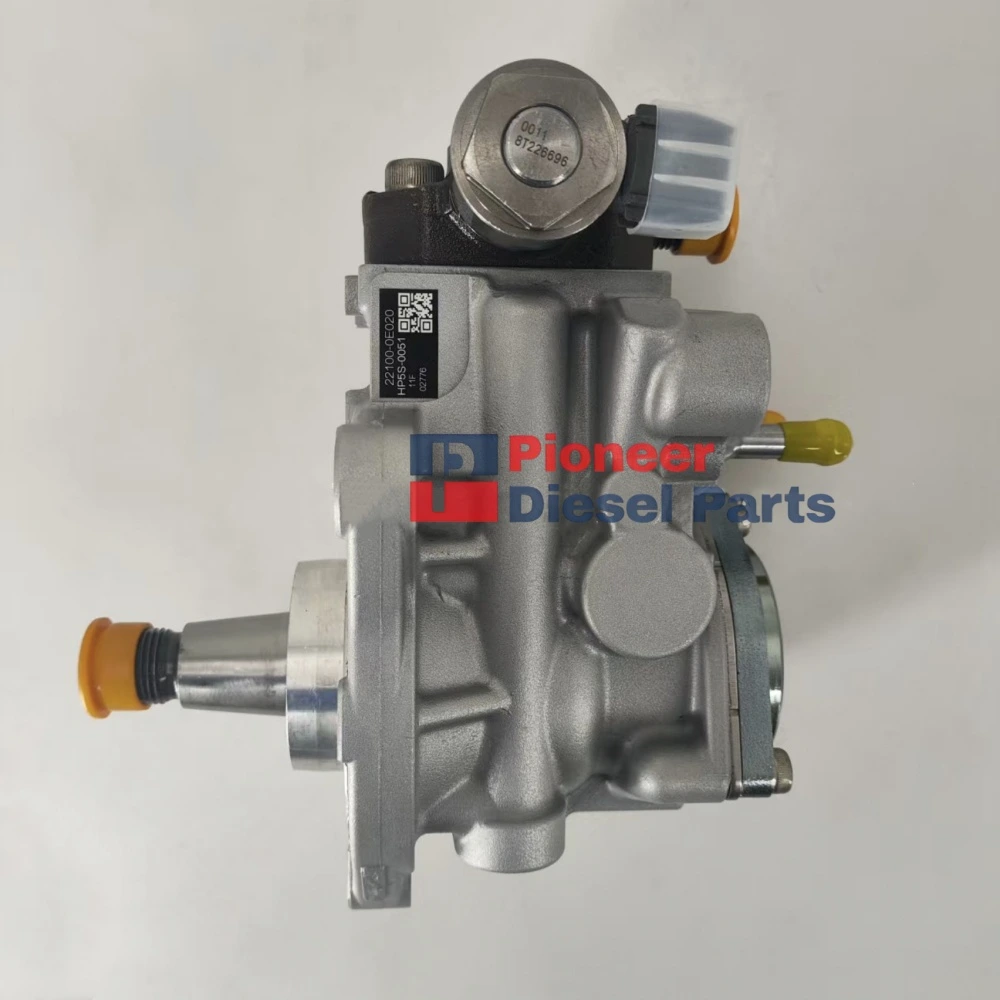
The Denso HP5 22100-0E020 is an advanced-generation common rail pump designed for Toyota 1GD-FTV (2.8L) and 2GD-FTV (2.4L) diesel engines. It supports common rail systems with pressures up to approximately 2,500 bar (depending on application calibration) and features a pre-stroke control valve for active discharge control.
Available as single-cylinder (HP5S) or dual-cylinder (HP5D) variants, it is widely applied in Toyota Hilux Mk8, Fortuner, Hiace H300, and selected Land Cruiser Prado models from 2015 onward.
Table of Contents
- Overview
- Technical Specifications
- HP5 vs HP4: Detailed Comparison
- Applications and Vehicle Fitment
- Common Failure Modes and Maintenance
- Replacement Guide
- HP5 22100-0E020 Replacement Availability
- New Aftermarket Parts – Pioneer Diesel Parts
- Related Models in This Series
- Frequently Asked Questions
- Conclusion
1. Overview
The Denso HP5 represents one of Denso’s latest-generation common rail high-pressure pump designs, developed to meet the demanding requirements of higher injection pressures and advanced diesel emission systems.
Evolving from earlier HP3 and HP4 pump families, the HP5 incorporates continued improvements in hydraulic efficiency, electronic control precision, fuel delivery management, and lightweight construction.
Denso pioneered the common rail system in 1995. Through continuous development of multiple common rail generations, diesel systems have achieved significant improvements in fuel efficiency, emissions reduction, and engine performance.
The HP5 was introduced for modern passenger vehicles and smaller-capacity commercial vehicles requiring higher injection precision and advanced emission control technologies, while the HP4 family was primarily developed for larger medium-duty diesel applications.
The 22100-0E020 is a specific HP5 variant manufactured by Denso, Toyota Group’s primary OEM diesel fuel system supplier. It is OE-specified for Toyota GD-series diesel engines, including the 1GD-FTV and 2GD-FTV platforms.
2. Technical Specifications
| Parameter | Denso HP5 22100-0E020 |
|---|---|
| Pump Family Generation | Newer HP family design |
| Introduction Era | ~2010s (Fourth-generation CRS era) |
| Vehicle Class | Passenger cars & smaller commercial vehicles |
| Cylinder Configuration | Single (HP5S) or Dual (HP5D) |
| Max System Pressure Capability | Supports up to ~2,500 bar (250 MPa)* |
| Control Valve Type | Pre-stroke control valve (active discharge) |
| Control Precision | Microsecond response, closed-loop capable |
| Lubrication | Fuel-lubricated |
| Housing Material | Aluminum (non-high-pressure parts) |
| Weight | ~4.41 kg (gross) |
| Typical Engine Applications | Toyota 1GD-FTV, 2GD-FTV |
*Actual rail pressure in production vehicles such as the 1GD-FTV typically varies depending on engine calibration, market specification, and operating conditions.
Key Design Highlights of HP5
Pre-stroke control valve
The HP5 uses a pre-stroke control valve that actively adjusts the effective stroke of the plunger to control fuel discharge quantity.
Compared with the HP4’s suction-side SCV system, this design provides more precise fuel metering and improved rail pressure control under different engine operating conditions.
i-ART Technology Compatibility
The HP5 is designed to work with Denso’s intelligent Accuracy Refinement Technology (i-ART), which integrates pressure sensing capability into injectors for more accurate closed-loop injection control.
This enables more precise fuel delivery management, improved combustion efficiency, and reduced emissions.
Lightweight Construction
The HP5 uses aluminum materials for non-pressure-bearing housing components, helping reduce weight compared with earlier truck-oriented pump designs.
3. HP5 vs HP4: Detailed Comparison
While both are Denso common rail high-pressure pumps, they represent different design approaches and application requirements.
The HP5 is optimized for modern passenger vehicles and light commercial diesel engines, while HP4 was developed mainly for higher-displacement medium-duty diesel applications.
| Feature | Denso HP5 | Denso HP4 |
|---|---|---|
| Design Generation | Newer HP family design | Earlier HP family design |
| CRS Era | Fourth-generation CRS systems | Second-generation CRS systems |
| Max Pressure Capability | Supports ~2,500 bar (250 MPa) | Up to 1,800 bar (180 MPa) |
| Control Valve Type | Pre-stroke control valve (active discharge) | Suction Control Valve (SCV) |
| Control Method | Adjusts plunger effective stroke | Regulates fuel intake volume |
| Cylinder Configuration | Single (HP5S) or Dual (HP5D) | Three cylinders |
| Primary Application | Passenger cars & smaller commercial vehicles | Medium-duty trucks |
| Example Vehicles | Toyota Hilux, Fortuner, Hiace | Isuzu 4HK1/6HK1, Toyota 1VD-FTV |
| Typical Engine Displacement | 2.4L–2.8L | 4.5L–7.8L |
| Emissions Compliance | Euro 6-oriented systems | Euro 4/5-oriented systems |
Key Insights from the Comparison
Control Evolution
The HP5’s pre-stroke control valve provides active fuel discharge management by adjusting the plunger’s effective stroke.
Compared with the HP4’s suction control valve (SCV), which regulates fuel intake volume, the HP5 design provides more precise fuel delivery control and improved response under changing engine conditions.
Pressure and Emissions
The HP5’s higher pressure capability (up to approximately 2,500 bar depending on application) supports finer fuel atomization, helping modern diesel engines achieve improved combustion efficiency and meet stricter emissions requirements.
The HP4’s pressure range and design philosophy were optimized for earlier-generation diesel applications, including medium-duty commercial vehicles.
Application Philosophy
The HP4 uses a three-cylinder design focused on higher fuel delivery capacity for larger diesel engines.
The HP5 uses single-cylinder or dual-cylinder configurations designed to match smaller engine displacement requirements, including Toyota’s 2.4L and 2.8L GD-series diesel engines.
Selection Guideline
- Modern Hilux / Fortuner / Hiace GD-engine → HP5
- Medium-duty truck (Isuzu, HINO) or V8 diesel → HP4
- Euro 6-oriented systems or higher pressure requirements → HP5
- Euro 4/5 applications where 2,000 bar capability is sufficient → HP4
4. Applications and Vehicle Fitment
The Denso HP5 22100-0E020 pump is mainly associated with Toyota vehicles equipped with GD-series diesel engines, including 1GD-FTV (2.8L) and 2GD-FTV (2.4L) applications.
Always confirm the exact pump number, engine code, and VIN before ordering because different markets may use different pump variants.
Primary Vehicle Applications
| Vehicle Model | Engine | Production Period |
|---|---|---|
| Toyota Hilux (Mk8) | 1GD-FTV (2.8L) | 2015–present |
| Toyota Hilux (Mk8) | 2GD-FTV (2.4L) | 2015–present |
| Fortuner (AN150/AN160) | 1GD-FTV / 2GD-FTV | 2015–present |
| Toyota Hiace (H300) | 1GD-FTV (2.8L) | 2019–present |
| Selected Toyota Land Cruiser Prado models | 1GD-FTV / 2GD-FTV | Varies by market (post-2015) |
| Selected Toyota Land Cruiser 70 Series | 1GD-FTV | 2023–present (specific markets) |
Engine Specifications
1GD-FTV
- Engine Type: 2.8L inline-4 turbo diesel
- Valve System: DOHC 16-valve
- Power Output: Approximately 130–147 kW (174–197 hp)
- Common Rail System: Denso electronically controlled injection system
- Rail Pressure: Approximately 35–220 MPa depending on calibration and operating conditions
2GD-FTV
- Engine Type: 2.4L inline-4 turbo diesel
- Valve System: DOHC 16-valve
- Power Output: Approximately 110–125 kW (150–170 hp)
Cross-Reference & Variant Numbers
| Reference Type | Number |
|---|---|
| Toyota OE / Primary Denso No. | 22100-0E020 |
| Alternate Denso Numbers | 299000-0050, 299000-0051 |
| Aftermarket Reference | DCRP500080 |
| Related HP5S Variant | HP5S-0051 |
| Similar OE Variants (verify before ordering) | 22100-0E010, 22100-0E030 |
Critical Ordering Note
The 22100-0E020 belongs to the HP5 pump family and may be identified as HP5S-0051 in some applications.
Before ordering, always confirm:
- Pump number stamped on the housing
- Engine code
- Vehicle VIN
- Electrical connector configuration
- Mounting position
- High-pressure pipe connection
Different variants may require different ECU calibration, mounting brackets, and fuel system configurations.
5. Common Failure Modes and Maintenance
The Denso HP5 is designed for long service life, but its high-pressure operating environment means fuel quality, maintenance, and correct installation are critical.
5.1 Pre-Stroke Control Valve Failure
The pre-stroke control valve is one of the most important electronic components in the HP5 system.
Failure or malfunction may cause:
- Erratic rail pressure
- Over-fueling or under-fueling
- Loss of power under load
- Fuel pressure deviation fault codes
Because the valve directly controls fuel discharge characteristics, diagnosis usually requires professional diagnostic equipment.
5.2 Fuel Contamination (Primary Cause)
The HP5 operates with extremely tight internal tolerances.
Water, rust, and particulate contamination can damage:
- Plunger and barrel surfaces
- Internal sealing areas
- Fuel metering components
In severe cases, metal debris generated inside the pump can circulate through the complete fuel system, affecting:
- Injectors
- Common rail
- Return lines
- Fuel pressure control components
A complete fuel system inspection is recommended whenever internal pump wear is suspected.
5.3 Low Fuel Level Operation
Common rail pumps rely on diesel fuel for both lubrication and cooling.
Frequent operation with very low fuel levels may increase:
- Fuel aeration
- Pump temperature
- Internal wear
Maintaining sufficient fuel level helps reduce unnecessary stress on the high-pressure pump.
5.4 Plunger and Barrel Wear
Continuous operation under extreme pressure may gradually wear the pumping elements.
Possible symptoms include:
- Extended cranking
- Hard starting
- Reduced power output
- Difficulty maintaining required rail pressure
5.5 Fuel Temperature Sensor Failure
A faulty fuel temperature sensor may provide incorrect fuel density information to the ECU.
This can affect:
- Injection quantity calculation
- Fuel timing adjustment
- Engine performance
Common Symptoms of HP5 Failure
| Symptom | Description |
|---|---|
| Poor startup | Extended cranking before engine starts |
| Loss of power | Noticeable during acceleration or uphill driving |
| Black smoke | Possible over-fueling or poor atomization |
| Fuel leaks | Visible fuel traces near pump area |
| Check engine light | Fuel system fault codes such as P0087, P0093, P0191 |
| Rough idle | Unstable engine speed caused by inconsistent fuel pressure |
6. Replacement Guide
Search terms such as “HP5 pump replacement” and “22100-0E020 replacement” indicate strong workshop demand.
Replacing an HP5 pump requires more than simply installing a new unit. The complete fuel system condition should be checked to prevent repeated failure.
Pre-Replacement Checklist
Inspect Fuel Quality
Check for:
- Water contamination
- Rust particles
- Diesel microbial contamination
- Abnormal fuel color or condition
Drain the water separator if necessary.
Inspect Injectors
Before installing a replacement HP5 pump:
- Test injector return flow
- Check injector condition
- Inspect for contamination damage
Damaged injectors or remaining metal debris can quickly damage a replacement pump.
Flush the Fuel System
Clean and inspect:
- Fuel rail
- High-pressure pipes
- Return lines
- Fuel tank system
Metal particles may remain inside fuel system components after pump failure.
Replace Fuel Filter
Always install a new fuel filter that meets OEM specifications before commissioning a replacement pump.
Check Drive System
Inspect:
- Pump drive gear
- Timing components
- Mechanical drive condition
A damaged drive system may affect pump operation and timing accuracy.
Post-Installation Procedure
Prime the Fuel System
Use the manual primer system where equipped to ensure the pump receives fuel before starting.
Avoid operating the pump without sufficient fuel supply.
Perform Diagnostic Checks
Recommended procedures:
- Check rail pressure generation
- Perform leak-off testing
- Verify fuel system parameters
- Clear and relearn ECU adaptations if required
7. HP5 22100-0E020 Replacement Availability
For workshops, distributors, and fleet operators servicing Toyota GD-series diesel engines, replacement options for the Denso HP5 22100-0E020 are available in several configurations.
Depending on repair requirements and budget considerations, customers may choose between complete replacement pumps or individual repair components.
Available Replacement Options
| Replacement Option | Application |
|---|---|
| Complete HP5 High-Pressure Pump | Direct replacement for worn or damaged 22100-0E020 pump assemblies |
| HP5S-0051 Replacement Pump | Applicable HP5S variant replacement where specifications match |
| Plunger & Barrel Assembly | Replacement of worn internal pumping elements |
| Pre-stroke Control Valve | Replacement of faulty fuel discharge control components |
| Seal & Gasket Kit | Restoration of fuel sealing performance during overhaul |
| Fuel Temperature Sensor | Replacement of faulty temperature sensing components |
Before Ordering Replacement Parts
To ensure correct compatibility, always confirm:
- Original pump number
- Denso reference number
- Toyota OE number
- Engine model (1GD-FTV / 2GD-FTV)
- Vehicle VIN
- Pump connector and mounting configuration
Different HP5 variants may look similar but can have differences in:
- Calibration requirements
- Electrical specifications
- Fuel pipe connections
- Mounting design
Correct identification helps avoid installation problems and unnecessary replacement costs.
8. New Aftermarket Parts – Pioneer Diesel Parts
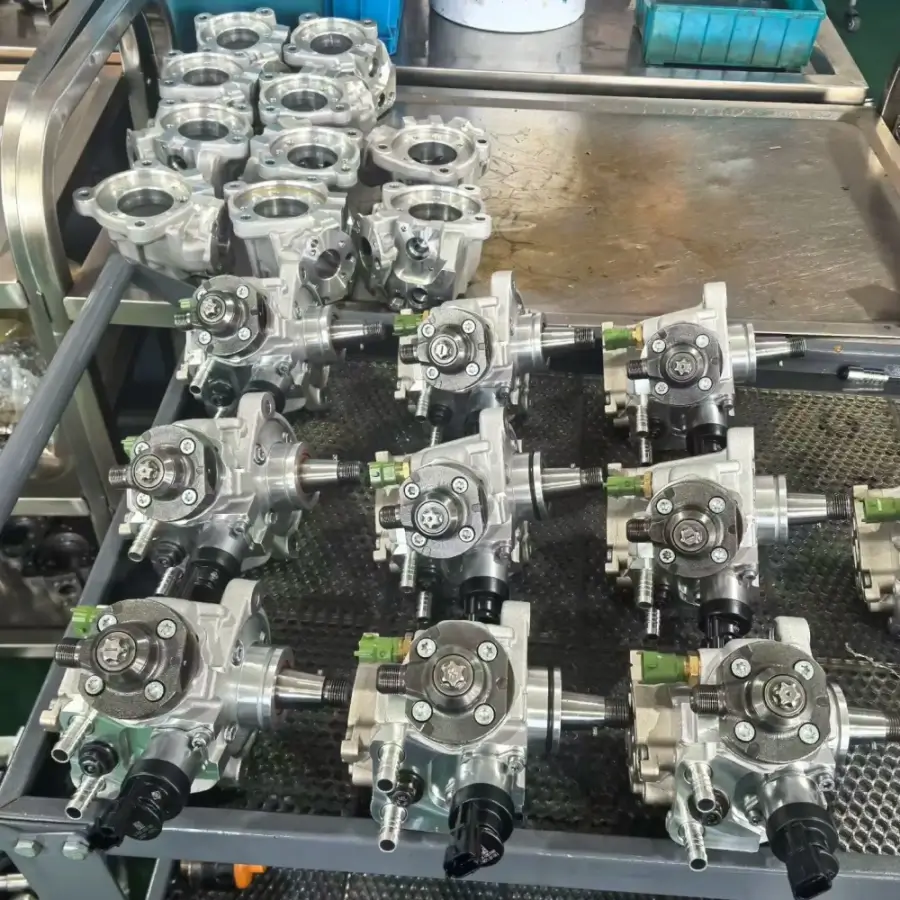
For workshops and fleet operators seeking replacement components for the Denso HP5 22100-0E020, Pioneer Diesel Parts specializes in supplying aftermarket diesel fuel system components, including common rail pumps, injectors, nozzles, and repair kits.
The product range covers major diesel injection systems from brands such as Bosch, Denso, and Delphi, providing replacement solutions for different vehicle and engine applications.
For the Denso HP5 pump family, available components include:
| Component | Description |
|---|---|
| Complete HP5 Pumps | New aftermarket replacement units for 22100-0E020 / HP5S-0051 applications |
| Plunger & Barrel Assemblies | Precision-manufactured components for restoring high-pressure pumping performance |
| Pre-stroke Control Valves | Replacement electronic control components for HP5 systems |
| Seal & Gasket Kits | Fuel-resistant sealing components for overhaul applications |
| Fuel Temperature Sensors | Replacement sensors for fuel temperature monitoring systems |
Why Choose Aftermarket Components from Pioneer Diesel Parts?
Application Matching
Pioneer Diesel Parts focuses on correct part identification based on:
- Pump number
- Engine model
- Vehicle application
- Customer requirements
This helps reduce compatibility issues when selecting replacement diesel components.
Cost-Effective Alternative
Aftermarket replacement components can provide a more economical solution compared with original dealer parts while maintaining the required specifications for proper application.
Wide Diesel System Coverage
Products are available for multiple common rail fuel systems, including:
- Denso
- Bosch
- Delphi
The product range supports various passenger vehicles, commercial vehicles, and diesel equipment applications.
Technical Support
Pioneer Diesel Parts provides application assistance for customers selecting diesel injection components, including:
- Part number verification
- Application confirmation
- Product selection guidance
Important Ordering Note
When sourcing aftermarket HP5 components, always verify:
- 22100-0E020
- 299000-0050
- 299000-0051
- HP5S-0051
Pioneer Diesel Parts provides application-specific matching support to help customers select the correct replacement components.
9. Related Models in This Series
Other HP4 Models:
- 299000-0060
- 299000-0080
- 22100-0E010
- 22100-0E030
Read more:
- Denso HP3 294000-0901 Fuel Pump for Toyota 1KD 2KD: Symptoms, Causes & Repair Guide
- Denso HP4 294050-0123 High-Pressure Pump – Complete Technical Guide with HP4 vs HP3 Comparison
- Fuel Injection Pump 22100-54780 096000-4860 for Toyota 2L Engine Hilux LN80 LN85 LN90
- Fuel Injection Pump 294000-0400 for FORD 2.2L Engine
10. Frequently Asked Questions
Q1: What is the maximum pressure of the Denso HP5 22100-0E020?
A: The HP5 pump family supports common rail systems with pressures up to approximately 2,500 bar (250 MPa), depending on application design and calibration.
For Toyota 1GD-FTV applications, actual rail pressure depends on engine operating conditions, market specifications, and ECU calibration.
Q2: What is the main difference between HP4 and HP5 pumps?
A: The main differences include:
- Pump design approach
- Pressure capability
- Control valve technology
- Vehicle application
The HP5 uses a pre-stroke control valve for active discharge control and is designed for modern passenger and light commercial diesel engines.
The HP4 uses a suction control valve system and is commonly associated with larger medium-duty diesel applications.
Q3: What is the pre-stroke control valve and why is it important?
A: The pre-stroke control valve is a key HP5 fuel control component.
Unlike the HP4 suction control valve, which regulates fuel intake volume, the HP5 pre-stroke valve adjusts the effective plunger stroke to control discharge quantity.
This allows more precise fuel management and improved rail pressure control.
Q4: Can an HP5 pump replace an HP4?
A: Generally, no.
HP5 and HP4 pumps are designed for different applications and are not direct replacements.
Differences include:
- Pump design
- Pressure capability
- Control system
- Mounting configuration
- ECU calibration requirements
Always select the pump specified for the original engine application.
Q5: What are common signs of HP5 pump failure?
A: Common symptoms include:
- Extended cranking
- Hard starting
- Loss of power under load
- Black smoke
- Fuel pressure-related fault codes
- Rough engine operation
A complete fuel system inspection is recommended before replacing the pump.
Q6: Where can I find quality aftermarket HP5 replacement parts?
A: Pioneer Diesel Parts supplies aftermarket components for Denso HP5 applications, including:
- Complete HP5 pumps
- Plunger and barrel assemblies
- Pre-stroke control valves
- Seal kits
- Related diesel injection components
Before ordering, confirm the exact pump number and vehicle application to ensure compatibility.
Q7: Is 22100-0E020 the same as 299000-0050?
A: 22100-0E020 is a Toyota OE reference number, while 299000-0050 and 299000-0051 are Denso reference numbers associated with HP5 pump applications.
They may refer to the same pump family, but exact compatibility should always be verified by:
- Pump identification number
- Engine code
- Vehicle VIN
- Application specifications
11. Conclusion
The Denso HP5 22100-0E020 is an advanced common rail pump designed for Toyota GD-series diesel engines, including 1GD-FTV and 2GD-FTV applications. With high-pressure capability, a pre-stroke control valve, and advanced fuel control technology, it delivers precise fuel management for modern diesel systems.
Understanding HP5 vs HP4 differences is essential for correct diagnosis and replacement. Always verify the pump number, engine code, and VIN before ordering. Pioneer Diesel Parts provides aftermarket HP5 replacement pumps and components for reliable application matching.
Disclaimer
We use Denso and Toyota part numbers only for compatibility and identification purposes. All products that we describe in this article are aftermarket replacement parts, and we do not claim them to be original Denso or Toyota products unless we explicitly state otherwise.