
The Fuel Metering Unit 0928400672 is a diesel fuel metering valve associated with common rail high-pressure fuel pump systems. It regulates the amount of fuel entering a compatible pump, helping the engine management system control fuel delivery and maintain the required rail pressure. Depending on the underlying fault, a malfunctioning metering unit may contribute to hard starting, unstable idle, reduced engine power, or abnormal fuel pressure readings.
Before ordering a replacement, verify the original part number, complete high-pressure pump number, electrical connector, and engine configuration. Catalog cross-references associate 0928400672 with selected Renault, Nissan, and Opel commercial vehicle applications. However, vehicle model names alone do not establish compatibility. Always confirm the specific application and any proposed replacement number before purchasing.
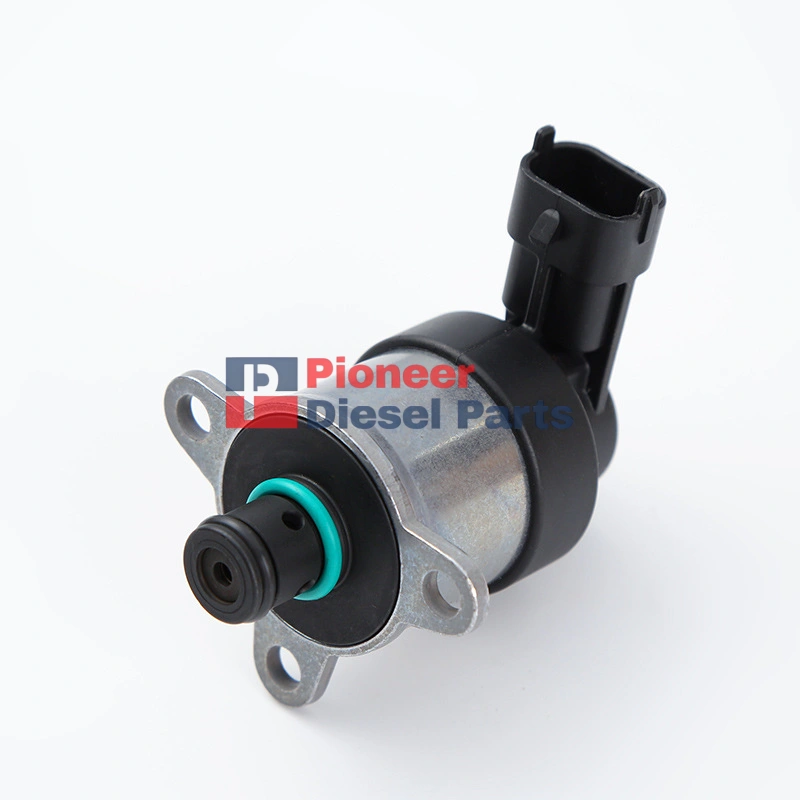
What Does Metering Unit 0928400672 Do?
The 0928400672 metering unit regulates fuel entering the high-pressure pumping elements of a compatible diesel fuel injection pump. Its operation is coordinated with the engine control module (ECM), which adjusts fuel system control according to engine operating conditions.
Its main functions include:
- Fuel inlet regulation: Controls the quantity of diesel supplied to the high-pressure pump.
- Rail pressure management: Helps the fuel system achieve the pressure required under different operating conditions.
- Engine operating stability: Supports consistent fuel delivery during starting, idling, acceleration, and changes in engine load.
- Fuel system efficiency: Helps the pump supply the required fuel quantity according to engine demand.
The metering unit is only one component in the fuel pressure control system. Actual rail pressure also depends on the low-pressure fuel supply, high-pressure pump condition, injectors, pressure sensors, and electronic control strategy.
Consequently, a pressure deviation or engine performance problem does not automatically mean that the metering valve has failed. Proper diagnosis is necessary before replacing the component.
What Are the Technical Specifications of Metering Unit 0928400672?
The following information provides a starting point for identifying the component and checking its application.
Basic Product Information
- Part number: 0928400672
- Alternative number format: 0 928 400 672
- Product name: Fuel metering valve / inlet metering unit
- System type: Common rail diesel fuel system
- Installation location: Fuel inlet side of a compatible high-pressure pump
- Operating medium: Diesel fuel
- Primary function: Regulating fuel entering the high-pressure pump
- Applicable Pump: 0445010140, 0445010196, 0445020119
Cross-Reference Numbers
The following numbers have been associated with 0928400672 in catalog cross-reference listings:
- Bosch reference: 1 465 ZS0 010
- Renault references: 8200503229, 8200503230
- Nissan reference: 1670100Q0A
- Opel reference: 93189943
These numbers are useful for further parts identification, but they should not be treated as universally interchangeable without application-specific confirmation.
Before purchasing, compare the original valve number with the complete high-pressure pump identification and a reliable parts catalog. If the original number is unavailable or illegible, additional vehicle and engine information may be necessary.
Exact electrical specifications, mounting dimensions, operating characteristics, and tightening torque should be obtained from documentation applicable to the specific component and pump assembly. Do not apply specifications from a visually similar valve.
Which Vehicles May Use Metering Unit 0928400672?
Catalog cross-reference searches associate this part number with selected commercial vehicle applications. The exact fitment depends on the installed fuel injection pump, engine configuration, and production version.
The following vehicle families can be used as starting points for compatibility checks, rather than as a guarantee of fitment.
Renault Commercial Vehicles
Renault Master II and Trafic II models equipped with certain 2.5 dCi diesel configurations are relevant to the 0928400672 application search.
When checking these vehicles, confirm the engine code, production year, original valve number, and complete pump number. Different versions of the same model may use different fuel system components.
Nissan Commercial Vehicles
Selected Nissan Interstar and Primastar configurations with 2.5 dCi engines may be relevant to this cross-reference.
Check the existing pump assembly and original component identification before ordering. Similar engine displacement or shared vehicle platforms do not necessarily mean that the same metering valve is suitable.
Opel and Vauxhall Commercial Vehicles
Selected Opel Movano and Vivaro diesel configurations are also worth checking against the applicable parts catalog.
Confirm the exact engine and pump combination rather than relying on the vehicle name alone.
How Should Heavy-Duty Applications Be Verified?
For MAN, Iveco, DAF, and other heavy-duty diesel vehicles, do not assume compatibility based solely on the manufacturer or engine family.
A valid application should be supported by a matching pump number, an applicable parts catalog entry, or reliable technical documentation. If the exact relationship cannot be established, leave the application unconfirmed rather than publishing it as a guaranteed fit.

What Symptoms Can a Faulty Metering Unit Cause?
A damaged, contaminated, electrically faulty, or sticking metering unit may interfere with fuel supply to the high-pressure pump. However, its symptoms can overlap with problems elsewhere in the fuel injection system.
1. Hard Starting or Failure to Start
If the high-pressure pump does not receive sufficient fuel, the system may struggle to build the pressure required for starting. The engine may crank for an extended period or fail to start.
Possible alternative causes include a restricted fuel filter, air entering the fuel circuit, excessive injector return flow, pump wear, or an electrical fault.
2. Unstable Idle
A metering valve that does not regulate fuel consistently may contribute to unstable rail pressure and uneven engine operation.
Check fuel supply conditions, relevant electrical connections, and injector performance before concluding that the valve itself is defective.
3. Reduced Power or Poor Acceleration
If actual rail pressure cannot follow the commanded value, the engine may not deliver the expected power. In some cases, the engine management system may limit performance.
The cause could be a metering valve problem, but it may also involve inadequate fuel supply, high-pressure pump wear, injector leakage, or an inaccurate sensor signal.
4. Fuel Pressure Fault Codes
Diagnostic trouble codes such as P0087 and P0089 may be relevant when investigating fuel pressure problems.
P0087 indicates that fuel rail or system pressure is too low, while P0089 relates to fuel pressure regulator performance. Neither code independently confirms failure of 0928400672.
Read the fault codes alongside freeze-frame data, actual and commanded pressure readings, and the manufacturer’s diagnostic instructions.
5. Intermittent Problems When Hot
Some electrical and mechanical faults become more noticeable as components warm up. If an engine develops starting difficulties or fuel pressure deviations when hot, compare test results under cold and hot conditions.
Inspect the wiring and connector, and check whether the fault can be reproduced. Temperature-related symptoms alone are not sufficient evidence to justify replacement.
How Should You Diagnose Metering Unit 0928400672?
A systematic diagnostic process helps prevent unnecessary parts replacement and reduces the risk of overlooking a more serious fuel system problem.
Step 1: Read Fault Codes and Operating Data
Use a suitable diagnostic scanner to retrieve stored and pending codes. Record the conditions under which the problem occurred, including engine temperature, speed, and load.
Where supported, compare commanded rail pressure with actual rail pressure under the conditions specified by the relevant service procedure.
Step 2: Check the Low-Pressure Fuel Supply
Inspect the fuel filter, supply lines, connections, and other relevant components for restrictions, air ingress, leakage, or contamination.
An inadequate low-pressure supply can prevent the high-pressure pump from receiving enough fuel, producing symptoms similar to a faulty metering valve.
Step 3: Inspect the Electrical Circuit
Check the connector for loose terminals, corrosion, damaged wiring, or poor electrical contact.
Test the circuit and control signal according to the applicable manufacturer’s procedure. Use the correct electrical specifications for the particular pump and valve instead of relying on generic resistance values.
Step 4: Inspect for Fuel Contamination
Check the fuel filter and relevant components for dirt, water, or metallic particles using the prescribed inspection procedure.
Metal debris may indicate internal wear in the high-pressure pump or another fuel system component. If contamination is present, investigate its source before installing a replacement valve.
Step 5: Evaluate Other Possible Causes
If the supply circuit and electrical connections are satisfactory, investigate other potential causes, including:
- Excessive injector return flow
- High-pressure pump wear
- Rail pressure sensor or wiring faults
- Other fuel pressure control components
- Mechanical or electronic engine management problems
Replace the metering unit when the test results and applicable service procedure support that decision.
Safety precaution: Common rail fuel systems can operate at extremely high pressure. Never loosen high-pressure fuel connections while the engine is running or before the system has been safely depressurized according to the applicable service instructions.
How Do You Replace Metering Unit 0928400672?
Replacement should be performed by a qualified technician following the service instructions for the specific engine and high-pressure pump.
Preparation
Before starting work:
- Confirm the replacement part number and pump compatibility.
- Obtain the correct seals and any required installation components.
- Prepare appropriate tools and diagnostic equipment.
- Clean the work area to prevent dirt entering the fuel system.
- Follow the manufacturer’s procedure for safely depressurizing the system.
Replacement Procedure
- Switch off the engine and isolate the electrical system as specified by the manufacturer.
- Ensure the fuel system is in the required safe condition before opening any connections.
- Locate the metering unit on the compatible high-pressure pump.
- Clean the surrounding area thoroughly.
- Disconnect the electrical connector without damaging the terminals or locking mechanism.
- Remove the retaining fasteners according to the pump manufacturer’s instructions.
- Carefully remove the old valve and inspect the accessible mounting area for contamination or damage.
- Check the sealing surfaces and replace seals as required.
- Install the replacement valve in the correct orientation without damaging the seals.
- Tighten the fasteners to the specified torque for that pump assembly.
- Reconnect the electrical connector and reinstall any removed components.
- Prime the fuel system using the approved procedure.
- Start the engine when permitted by the service procedure and check for fuel leaks.
- Recheck fault codes and verify fuel pressure operation under the appropriate test conditions.
Some engine management systems may require additional checks or adaptation procedures after replacement. Perform these only when specified by the applicable manufacturer.
Do not assume that every pump uses the same mounting torque, priming sequence, or reset procedure.
How Can You Extend the Service Life of a Metering Unit?
Good fuel system maintenance helps reduce contamination-related faults and unnecessary component replacement.
- Maintain the fuel filter: Replace it according to the applicable service schedule and use a suitable filter.
- Use clean diesel fuel: Minimize the risk of introducing water and dirt during refueling and maintenance.
- Prevent contamination during repairs: Protect open fuel connections and component ports.
- Investigate metallic debris: Identify the source of metal particles before installing a new valve.
- Address related faults promptly: Fuel restrictions, injector leakage, and pump wear can affect pressure regulation.
- Keep diagnostic records: Record fault codes, operating conditions, and pressure readings to help identify recurring problems.
Cleaning a removed valve is not a guaranteed repair. Internal wear, electrical damage, or mechanical sticking may require replacement. Follow the manufacturer’s inspection guidance and avoid unapproved cleaning chemicals or methods.
How Can You Confirm Fitment Before Ordering?
Correct identification is essential because metering valves may look similar while having different specifications or intended applications.
Check the following details before purchasing:
- Original valve number: Confirm that the number matches 0928400672 or a verified cross-reference.
- Complete pump number: Read the identification plate or label on the high-pressure pump.
- Vehicle and engine details: Record the make, model, production year, and engine code.
- Connector and mounting arrangement: Compare the connector, mounting points, sealing arrangement, and physical dimensions.
- Cross-reference evidence: Confirm that an alternative number is applicable to the same pump or vehicle configuration.
- Required quantity: Specify the number of units needed for repair or inventory.
Do not rely on a photograph alone. Visual similarity does not confirm internal calibration or functional interchangeability.
In particular, 0928400672 and 0928400481 should not be treated as interchangeable based on appearance or general function alone. Verify the correct application before choosing a substitute.
Related Metering Unit Models and Guides
- Fuel Metering Unit 0928400672 For Dodge Cummins Diesel 5.9L
- Metering Unit 0928400680 For OPEL FIAT Lancia
- Fuel Metering Valve 0928400689 For YUCHAI YC4G FAW24
- Fuel Metering Unit 0928400699 For FORD Cargo
Read more:
- Metering Unit 0928400481 How to Find the Right Fit and Avoid Costly Mistakes
- Metering Unit 0928400818 Complete Guide to CP1H Fitment and Common Fuel Problems
- Fuel Metering Unit 0928400712 For Cummins ISDE6 DFM02-03
- Fuel Metering Valve 0928400715 For Mazda BT-50 Ford Ranger
FAQ About Metering Unit 0928400672
1. Is 0928400672 a fuel pressure regulator?
It is a fuel metering valve associated with the inlet side of a compatible high-pressure pump. It regulates the quantity of fuel entering the pump and can influence rail pressure. The exact control strategy depends on the pump and engine management system.
2. Can I identify the correct valve using the vehicle model alone?
No. The same vehicle model may have different engines and fuel injection systems. Check the original valve number, complete pump number, and vehicle configuration before ordering.
3. Can a faulty metering unit cause P0087?
Yes. A valve that does not regulate fuel supply correctly may contribute to low rail pressure and P0087. However, restricted fuel supply, excessive injector return flow, pump wear, and other faults can produce similar symptoms.
4. Should I clean or replace the metering unit?
Cleaning may not correct internal wear, electrical damage, or mechanical sticking. Follow the manufacturer’s inspection guidance and replace the valve when testing confirms a defect or the applicable service procedure requires replacement.
5. Do 0928400672 and 0928400481 have the same function?
Both numbers are associated with diesel fuel metering components, but their general function does not establish interchangeability. Check the original pump number and reliable application data before selecting a replacement.
6. What should I check after replacing the valve?
Follow the applicable priming and starting procedure, inspect for leaks, read fault codes, and verify fuel pressure operation. Perform any required adaptation or additional diagnostic checks specified by the manufacturer.
7. What information should I provide when requesting a replacement?
Provide the original part number, complete pump number, vehicle and engine details, and a clear photograph of the existing component. Include the required quantity to help confirm the application and prepare a quotation.
Conclusion
The Metering Unit 0928400672 helps regulate fuel entering a compatible common rail high-pressure pump. Hard starting, unstable idle, reduced engine power, and abnormal fuel pressure readings may indicate a metering unit problem, but proper diagnosis is necessary to identify the actual cause.
For repair shops, distributors, and diesel parts buyers, confirming the original part number, complete pump identification, and vehicle configuration is the most reliable way to reduce fitment errors and unnecessary replacements.
Need help confirming compatibility or pricing? Send Pioneer Diesel Parts the original part number, pump number, engine model, and required quantity for a fitment check and quotation.
Brand names and reference numbers are used for identification and compatibility purposes. Products are aftermarket unless explicitly stated otherwise.