
Fuel Injector 28485 RE38087 is a pencil-type mechanical diesel injector associated with John Deere 300 Series diesel engines, including the 3029D, 4039D, 4045D, 6059D, and 6068D.
This injector uses a 4-hole nozzle, a 3.55 mm needle, and an opening pressure of 3820 ± 40 PSI (approximately 263 bar). The injector is identified by an Orange color code and is listed as a replacement for RE36939, RE38087, and SE501097.
Because John Deere used these engines across tractors, construction equipment, harvesting machinery, forestry equipment, and other applications, the correct injector should be confirmed by injector part number, engine model, equipment model, and existing injector identification before ordering.
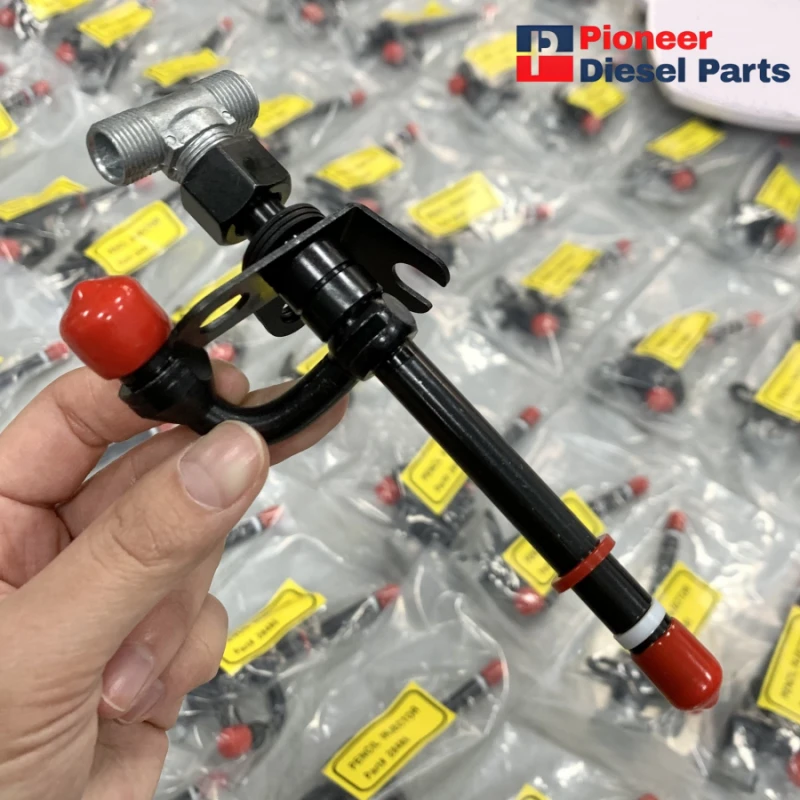
What Is Fuel Injector 28485?
Fuel Injector 28485 is a pencil-style mechanical diesel fuel injector used with selected John Deere 300 Series diesel engines.
Unlike modern electronically controlled common rail injectors, this type of mechanical injector operates through fuel pressure generated by the injection system. When fuel pressure reaches the injector’s specified opening pressure, the needle lifts and allows fuel to pass through the nozzle orifices.
The injector therefore performs several important functions:
- Receives high-pressure fuel from the mechanical injection system
- Opens when fuel pressure reaches the specified pop pressure
- Atomizes diesel fuel through the nozzle holes
- Directs the spray into the combustion chamber
- Closes after injection pressure falls
Correct injector condition is important because the injector directly affects how fuel enters the cylinder.
What Are the Specifications of Fuel Injector 28485?
The main identification and technical specifications of Fuel Injector 28485 include:
| Parameter | Specification |
|---|---|
| Injector Type | Pencil-type mechanical diesel injector |
| Needle Diameter | 3.55 mm |
| Nozzle Holes | 4 |
| Opening Pressure | 3820 ± 40 PSI |
| Approx. Opening Pressure | 263 bar |
| Injection System | Mechanical diesel injection |
| Color Code | Orange |
| Replacement Numbers | RE36939, RE38087, SE501097 |
| Related Number | 28484 |
These specifications are useful when identifying a replacement injector, but the part number should remain the primary reference when confirming compatibility.
Which John Deere Engines Use Fuel Injector 28485?
Fuel Injector 28485 is associated with several John Deere 300 Series diesel engines, including:
- 3029D
- 4039D
- 4045D
- 6059D
- 6068D
These engines were installed in different types of John Deere equipment. Because equipment configurations can vary by model and production specification, an engine match should be confirmed together with the injector number before replacement.
What Equipment Uses Fuel Injector 28485?
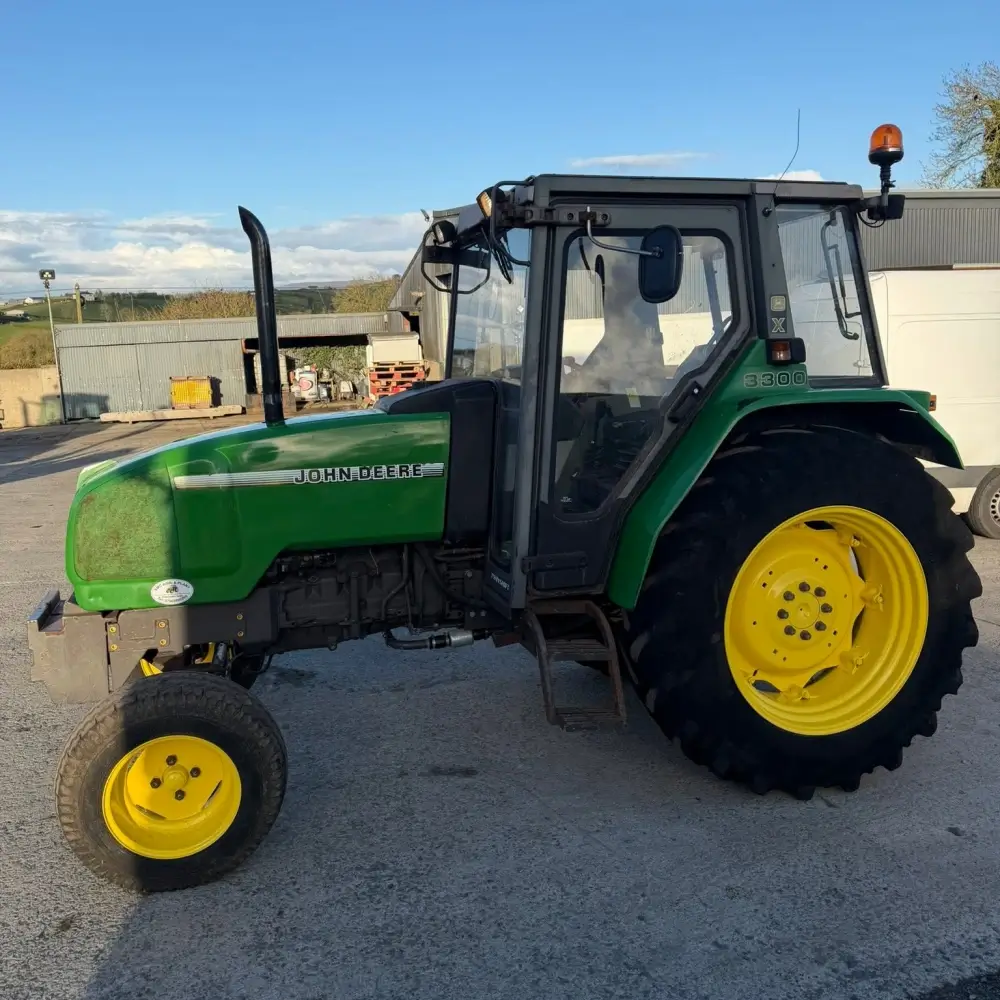
Fuel Injector 28485 is used in a range of John Deere agricultural, construction, harvesting, forestry, and industrial equipment. The following table summarizes representative equipment applications associated with this injector.
| Equipment Category | Representative John Deere Models |
|---|---|
| Agricultural Tractors | 3300, 3300X, 3400, 3400X, 5300, 5300N, 5400, 5400N, 5500, 5500N, 6100, 6200, 6200L, 6300, 6300L, 6400, 6400L, 6500, 6500L, 6506, 6800, 6900 |
| Loaders & Backhoes | 300D, 310C, 310D, 315C, 315D, 344E, 344G, 410C, 410D, 444E, 444G, 510C, 510D, 544E, 544G, 610C, 624E, 624G, 710B, 710C, 710D |
| Skid Steers | 448D, 540D, 540E, 540G, 548D, 548E, 548G, 640D, 640E, 640G, 648D, 648E, 648G, 740E, 740G, 748G |
| Combines & Harvesting Equipment | 1165, 1175, 1175H, 3430, 3830, 7445, 7450, 9930 |
| Crawlers & Excavators | 450G, 455G, 550G, 555G, 650G, 750B, 750C, 755B, 850, 490D, 490E, 495D, 590D, 595D, 690D, 690DR, 690ELC, 790ELC |
| Specialty Equipment | 440 log skidder, 4400 telescopic handler, 4500 telescopic handler, 570B, 670B, 672B motor graders, 6100, 6500, 6600 sprayers, 493D, 643, 643D, 653E, 693D feller bunchers |
Because equipment configurations can vary by production year and engine specification, confirm Fuel Injector 28485 using the injector number, engine model, equipment model, and existing injector identification before ordering.
How Does Fuel Injector 28485 Work?
Fuel Injector 28485 works as part of a mechanical diesel fuel injection system.
During the injection cycle, the mechanical injection pump sends pressurized fuel toward the injector. As fuel pressure rises, the injector reaches its specified opening pressure of approximately 3820 PSI.
At this point, the injector needle lifts from its seat. Fuel then passes through the four nozzle holes and enters the combustion chamber as a finely divided spray.
After the injection event, fuel pressure decreases and the needle returns to its seat. This stops fuel flow until the next injection cycle.
The injector’s opening pressure, nozzle condition, needle movement, and spray pattern all influence the quality of fuel delivery into the cylinder.
What Are the Common Failure Symptoms of Fuel Injector 28485?
A worn or contaminated mechanical injector can affect combustion and engine operation. Common symptoms may include:
Hard Starting
An injector that does not open correctly or has poor spray characteristics can contribute to difficult starting, particularly when the engine is hot.
Rough or Unstable Idle
Poor atomization or uneven fuel delivery between cylinders can cause an unstable or uneven idle.
White or Gray Exhaust Smoke
Poor fuel atomization can leave part of the injected fuel incompletely burned, producing visible white or gray exhaust smoke.
Black Smoke Under Load
An injector with poor spray quality can contribute to incomplete combustion and increased visible black smoke, especially when the engine is under load.
Reduced Engine Power
Incorrect fuel delivery can reduce combustion efficiency and result in noticeable power loss.
Increased Fuel Consumption
Poor injector performance can cause the engine to use fuel less efficiently.
Fuel Dilution of Engine Oil
A leaking injector can allow excess fuel to enter the cylinder and potentially contribute to fuel contamination of the engine oil. If fuel dilution is suspected, the cause should be diagnosed promptly rather than assuming the injector is the only possible source.
How Should Fuel Injector 28485 Be Tested?
Testing should begin with the injector itself rather than replacing parts based only on engine symptoms.
A suitable injector test procedure should include:
- Check the injector identification
Confirm that the injector is actually 28485 and compare the identification with the engine and equipment application. - Inspect the external condition
Look for damage, contamination, carbon deposits, or signs of fuel leakage. - Check opening pressure
Test the injector on a suitable diesel injector tester and compare the result with the specified 3820 ± 40 PSI. - Check spray quality
Observe the spray pattern for proper atomization and consistency. - Check needle operation
The needle should move correctly and return to its seat without abnormal sticking. - Check for leakage
Excessive leakage or poor sealing can indicate wear or contamination. - Compare suspect injectors
When diagnosing a multi-cylinder engine, comparing injector test results can help identify an injector that performs differently from the others.
Testing is preferable to replacing injectors solely on the basis of symptoms because hard starting, smoke, rough running, and power loss can have several possible causes.
When Should Fuel Injector 28485 Be Replaced?
Fuel Injector 28485 may require replacement when testing confirms that it no longer meets the required operating condition.
Replacement may be considered when:
- Opening pressure is outside the specified range
- The spray pattern is visibly distorted
- The needle does not operate correctly
- The injector shows abnormal leakage
- The injector has physical damage
- Cleaning and proper servicing do not restore acceptable performance
- Engine symptoms remain after other fuel-system causes have been checked
There is no universal replacement interval that applies to every Fuel Injector 28485 application. Actual service life depends on operating hours, fuel quality, contamination, maintenance practices, and working conditions.
When only one injector fails testing, replacement does not automatically mean that every injector must be replaced. However, checking the remaining injectors can help determine whether the problem is isolated or related to overall injector wear.
How Do Fuel Quality and Maintenance Affect Fuel Injector 28485?
Mechanical pencil injectors depend on clean fuel and precise internal components. Contamination can affect the injector needle, nozzle holes, and sealing surfaces.
Good maintenance practices include:
- Use clean diesel fuel from a reliable source.
- Replace fuel filters according to the engine manufacturer’s service requirements.
- Prevent dirt from entering the fuel system during filter or injector service.
- Keep removed injectors and fuel-system components clean.
- Avoid operating with contaminated fuel whenever possible.
- Inspect the fuel system when repeated injector problems occur.
- Test injectors when engine symptoms suggest a fuel-delivery problem.
If several injectors develop similar problems, checking fuel filtration and contamination is important instead of treating every injector failure as an isolated component problem.
Real-World Case: Fuel Injector Failure on a John Deere 6400 in Suriname
Customer Background: A mid-sized agricultural contractor based in the Para district of Suriname operates a John Deere 6400 tractor (6068D engine, approximately 4,800 hours) for rice paddy cultivation and sugarcane hauling. With Suriname’s construction equipment import market growing at a CAGR of 30.11% between 2020 and 2024, diesel injection system failures under tropical high-humidity conditions have become a recurring issue for local repair shops.
Symptoms: The tractor developed hard hot starting (requiring 8–10 seconds of cranking), rough idle, noticeable power loss under heavy loads, and an approximately 12% increase in daily fuel consumption. The machine eventually stalled in the field and could not be restarted.
Diagnosis: After ruling out clogged fuel filters and a faulty lift pump, the technician performed a return-flow (leak-off) test on all six injectors. Injector #4 returned 165 ml/min — more than three times the volume of the other five injectors (45–52 ml/min). Bench testing confirmed that Injector #4’s opening pressure had dropped to approximately 3,100 PSI (specification: 3,820 ± 40 PSI), with a deflected spray cone and visible side-jetting from one nozzle hole. The root cause was accelerated needle-and-seat wear driven by elevated moisture content and insufficient fuel lubricity in the local diesel supply — a common challenge in Suriname’s coastal climate.
Solution: All six injectors were replaced with Fuel Injector 28485 units (Orange code, replacing RE36939), along with new copper washers, O-rings, and return-line seals. The fuel lines were flushed and the filter replaced. The technician also recommended shortening the filter change interval from 500 hours to 250 hours and using a diesel lubricity additive.
Outcome: After the repair, hot start time returned to 1–2 seconds, Injector #4’s return flow dropped to 52 ml/min, idle stabilized, and daily fuel consumption returned to normal. The tractor ran without issues for three months of continuous operation, and the customer subsequently scheduled preventive injector testing for two additional John Deere machines (a 6200 tractor and a 310D loader).
Key Takeaways: Return-flow testing is the most efficient method for isolating a faulty mechanical injector without disassembly. Injectors should be replaced as a complete set to avoid cylinder-to-cylinder imbalance. In tropical high-humidity markets, shortened maintenance intervals and attention to fuel lubricity are essential for injector longevity.
What Are the Cross-Reference Numbers for Fuel Injector 28485?
Fuel Injector 28485 is associated with several identification and replacement numbers:
- 28485
- RE36939
- RE38087
- SE501097
These numbers can help identify the correct injector when searching for a replacement.
However, cross-reference numbers should not be treated as the only compatibility check. The engine model, equipment model, injector specifications, and existing injector identification should also be compared before ordering.
Related Pencil Fuel Injector Models and Guides
Explore the related guides below for more information on Pencil Fuel Injectors, covering part identification, engine and equipment applications, compatibility, specifications, performance, troubleshooting, and replacement.
- Fuel Injector AR50781 20494 AR39811 for John Deere 4020 4010 3020 4040 500C
- Fuel Injector 163668AS 303043983-R 20499 for Oliver 1650 1750 1800 1850 1855
- Fuel Injector A138322 20668 for Case 850 970 1070 1175 1450 Engine 336D 451BD
- Fuel Injector A140829 20671 for Case 480B 580B 580D 580SD 1835 1845 580CK
Read more:
- Fuel Injector 27333 for John Deere Tractors Specifications Applications and Troubleshooting
- Fuel Injector 29279
- Fuel Injector 20672 A138323 for Case 1070 1175 1270 1370
- Fuel Injector 22808 7N0449 for Caterpillar 120G 130G D4E 951 955 518 225
FAQ About Fuel Injector 28485
1. What engines use Fuel Injector 28485?
Fuel Injector 28485 is associated with John Deere 300 Series engines including the 3029D, 4039D, 4045D, 6059D, and 6068D.
2. What is the opening pressure of Fuel Injector 28485?
The specified opening pressure is 3820 ± 40 PSI, or approximately 263 bar.
3. How many spray holes does Fuel Injector 28485 have?
Fuel Injector 28485 uses a 4-hole nozzle.
4. What color code identifies Fuel Injector 28485?
The injector is identified by an Orange color code, which can provide an additional identification reference when checking an existing injector.
5. What numbers can replace Fuel Injector 28485?
The listed replacement numbers include RE36939, RE38087, and SE501097. Compatibility should still be confirmed against the engine and equipment application.
6. Can a faulty Fuel Injector 28485 cause hard starting?
Yes. An injector with incorrect opening pressure, poor spray quality, leakage, or abnormal needle movement can contribute to hard starting. However, fuel supply, air in the fuel system, injection timing, and other engine conditions should also be checked.
7. Should all Fuel Injector 28485 injectors be replaced at the same time?
Not necessarily. If testing identifies one defective injector, the remaining injectors can be tested to determine their condition. Replacing the entire set may be appropriate when multiple injectors show wear or when consistent performance across the cylinders is required.
Final Takeaway
Fuel Injector 28485 is a pencil-type mechanical diesel injector associated with selected John Deere 300 Series engines, including the 3029D, 4039D, 4045D, 6059D, and 6068D.
Its key identification points include a 4-hole nozzle, 3.55 mm needle, 3820 ± 40 PSI opening pressure, and Orange color code. The injector is also associated with replacement numbers RE36939, RE38087, and SE501097.
The Suriname customer case demonstrates how abnormal injector test results can help isolate a mechanical injector problem. In that case, Injector #4 showed substantially higher return flow, reduced opening pressure, and an abnormal spray pattern. After the six injectors were replaced and the fuel system was serviced, the customer reported improved starting, stabilized idle, and normal fuel consumption.
For purchasing inquiries, confirm the injector part number, engine model, quantity, and application before ordering to ensure the correct Fuel Injector 28485 configuration is selected.
Disclaimer
All brand names, trademarks, OEM part numbers, engine models, equipment models, and vehicle names mentioned in this article are used for reference and compatibility identification purposes only. Unless expressly stated otherwise, Pioneer Diesel Parts supplies high-quality aftermarket replacement parts featured on this website. These products are not genuine OEM products, and the respective original equipment manufacturers do not manufacture, affiliate with, endorse, or sponsor them. All trademarks and registered trademarks are the property of their respective owners.