
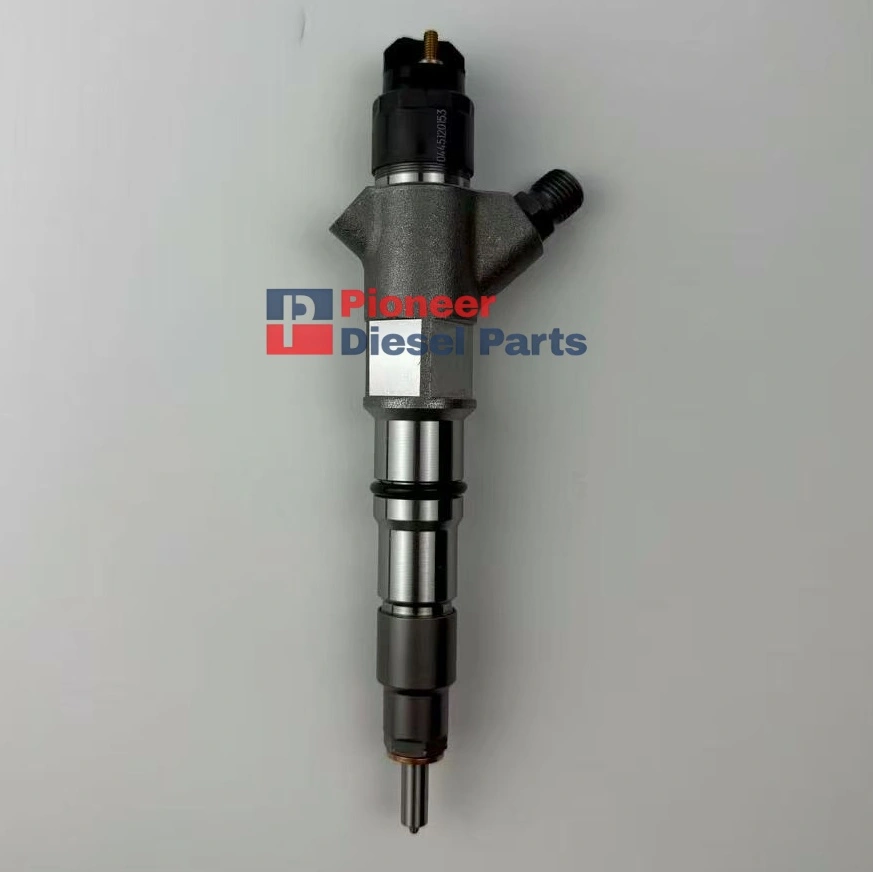
The Bosch injector 0445120153 is one of the most widely used common rail diesel injectors in heavy-duty engine applications. Known for its stable fuel delivery, high durability, and precise injection control, this injector plays a critical role in achieving optimal combustion efficiency and meeting modern emission standards. Whether you are maintaining a fleet of commercial trucks or repairing industrial diesel machinery, understanding the specifications and proper handling of this injector is essential for ensuring long-term engine reliability.
At Pioneer Diesel Parts, we supply high-quality Bosch-compatible diesel injectors for global customers, including both direct replacement and aftermarket solutions. Our components are rigorously tested to meet or exceed OEM performance requirements, helping you avoid costly downtime and premature engine wear.
👉 Browse full range here:
diesel fuel injectors
What Is Bosch Injector 0445120153?
The Bosch injector 0445120153 is a common rail fuel injection component specifically designed for modern electronically controlled diesel engines. Unlike older mechanical injection systems, this injector operates under extremely high fuel pressures—often exceeding 1,600 bar—and is actuated by a piezoelectric or solenoid valve controlled by the engine control unit (ECU). This design allows for highly flexible injection timing, split injections (pilot, main, and post injections), and precise fuel metering per cylinder.
Key attributes include:
- High-pressure operation – Consistent performance under extreme rail pressures.
- Multi-hole nozzle geometry – Optimized spray pattern for better air-fuel mixing.
- Fast dynamic response – Enables multiple injection events per combustion cycle.
- Robust construction – Withstands thermal and mechanical stresses in heavy-duty environments.
Because this injector directly influences combustion quality, any deviation in its performance can lead to increased fuel consumption, higher emissions, and even permanent engine damage.
Technical Specifications
Below are the detailed specifications for Bosch injector 0445120153:
| Parameter | Value |
|---|---|
| Manufacturer | Bosch |
| Part Number | 0445120153 |
| Injector Type | Common rail solenoid (or piezoelectric, depending on variant) |
| Operating Pressure | Up to 1,800 bar (typical range: 250–1,800 bar) |
| Nozzle Holes | 5–7 holes (exact count varies by application) |
| Spray Angle | 145°–155° (optimized for piston bowl design) |
| Static Flow | 450–550 cm³/min at 100 bar test pressure |
| Coil Resistance | 0.18–0.22 Ω (solenoid type) |
| Actuation Voltage | 12 V / 24 V compatible with ECU driver |
| Sealing | Copper washer + high-pressure sealing ring |
| Service Life (typical) | 500,000 – 800,000 km (application dependent) |
These parameters ensure that the injector delivers the right amount of fuel at precisely the right moment, regardless of engine load or speed.
Technical Features Explained
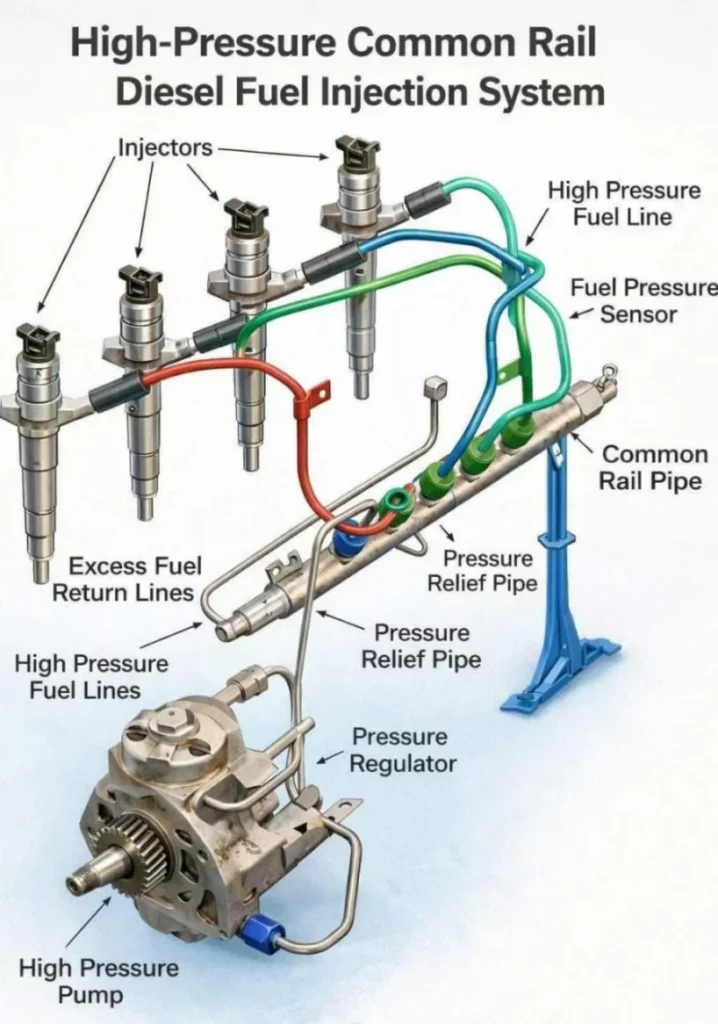
High-pressure common rail design – The injector receives fuel from a shared rail that maintains constant high pressure. This decouples pressure generation from injection timing, enabling greater control.
Precise fuel atomization – The multi-hole nozzle breaks fuel into microscopic droplets, increasing surface area for faster and more complete mixing with compressed air.
Improved combustion efficiency – Better atomization leads to more complete combustion, extracting more energy from each drop of fuel while reducing soot formation.
Reduced emissions – By supporting pilot injections (small fuel amounts before the main injection), the injector lowers combustion noise and reduces nitrogen oxide (NOx) and particulate matter (PM) emissions.
Stable engine performance under load – Even under full throttle or heavy towing conditions, the injector maintains consistent flow and timing, preventing power surges or flat spots.
Applications
The Bosch 0445120153 injector is commonly used in the following engine platforms and vehicle types:
- Heavy-duty trucks – Mercedes-Benz Actros, Axor, Atego; MAN TGA/TGS; DAF XF105; Volvo FH12/FH16 (certain engine families).
- Commercial diesel vehicles – Buses, delivery trucks, and municipal vehicles with Euro 5 and early Euro 6 engines.
- Construction machinery – Excavators, wheel loaders, and bulldozers from Caterpillar, Liebherr, Komatsu fitted with Mercedes-Benz or MTU diesel engines.
- Industrial engines – Stationary generators, irrigation pumps, and marine auxiliary engines using common rail injection systems.
Always cross-check with your engine’s OEM part number. This injector is often interchangeable with other Bosch numbers after proper coding.
Common Symptoms of Injector Problems
When the Bosch 0445120153 injector begins to fail or become clogged, you may experience one or more of the following symptoms:
Hard engine starting – Prolonged cranking, especially when cold. Leaking injector tip or insufficient fuel delivery due to internal wear.
Black smoke from exhaust – Incomplete combustion caused by poor spray pattern or incorrect injection quantity. Unburnt fuel turns into soot.
Loss of engine power – Reduced acceleration, inability to reach top speed, or poor hill-climbing performance. Often accompanied by increased fuel trim values in ECU diagnostics.
Increased fuel consumption – A deteriorating injector may deliver too much fuel (if the needle sticks open) or too little (if clogged), both causing the ECU to compensate inefficiently.
Engine vibration or misfire – Uneven fuel distribution between cylinders leads to rough idle and noticeable shaking. Cylinder contribution test will reveal one or more weak cylinders.
Other signs include:
- Knocking or metallic noise from the engine
- White or blue smoke (if injector leaks after shutdown)
- Diesel fuel dilution in engine oil (serious condition)
- Illuminated check engine light with codes like P0200, P0263–P0276 (injector circuit/balance faults)
These issues typically point to clogged nozzle holes, worn needle valve seat, leaking solenoid or piezo stack, or damaged sealing rings.
How to Replace Bosch Injector 0445120153
Proper replacement procedure is critical for safety and performance. Below is a detailed step-by-step guide.
Tools and supplies needed:
- New Bosch 0445120153 injector (or quality equivalent)
- New copper sealing washer and O-rings
- Injector extraction tool (if injector is stuck)
- Torque wrench (range: 5–80 Nm)
- Cleaning brush and solvent
- Calibration data (individual injector IQA code)
- Diagnostic scanner (for coding and testing)
Step1: Prepare the engine
Park on level ground, apply brakes, and allow engine to cool completely. Disconnect the battery negative terminal. Relieve fuel pressure by loosening the rail pressure sensor or following manufacturer instructions.
Step2: Remove engine covers and fuel lines
Remove any plastic covers, intake pipes, or wiring harnesses blocking access to the injectors. Label each high-pressure fuel line to avoid mixing. Unscrew lines carefully – spilled diesel is slippery and flammable.
Step3: Disconnect electrical connector and return line
Press the locking tab and pull the injector wiring harness connector. Remove the low-pressure fuel return line (often a hose or plastic pipe).
Step4: Extract old injector
Unbolt the injector clamp (typically a small bracket held by one or two bolts). Use an injector puller tool if the injector is stuck – never pry against the cylinder head. Remove the old copper washer from the injector bore (a pick tool works well).
Step5: Clean the injector seat
Thoroughly clean the bore hole in the cylinder head. Remove carbon deposits, old sealant, and debris. A clean seat is essential for proper sealing and heat transfer.
Step6: Prepare new injector
Install a new copper sealing washer on the tip of the new injector. Lightly lubricate O-rings with clean engine oil or diesel fuel. If your new injector comes with an individual IQA (Injector Quantity Adjustment) code, write it down.
Step7: Install new injector
Carefully lower the injector into the bore, ensuring it seats squarely. Install the clamp and tighten to manufacturer specification (typically 20–25 Nm for the clamp bolt). Reconnect the fuel return line and electrical connector.
Step8: Reinstall high-pressure lines
Fit the high pressure lines and torque connections (approx. 30–40 Nm). Over-tightening can split the line or damage the injector inlet.
Step9: ECU calibration (critical)
Using a diagnostic scanner, enter the new injector’s IQA code into the engine ECU. This code adjusts the ECU’s fueling strategy for that specific cylinder. Failure to code the injector will result in poor running and possible damage.
Step10: Start and test
Reconnect the battery, prime the fuel system (if needed), and start the engine. Let it idle for 1–2 minutes, checking for leaks. Test drive under varying loads while monitoring for smooth operation and no smoke.
Proper installation ensures long service life and stable engine operation. If you lack the tools or expertise, hire a professional diesel technician.
Why Choose Quality Replacement Injectors
While low-cost copy injectors may seem attractive, they carry hidden risks:
- Incorrect fuel spray pattern – Poorly machined nozzles produce uneven, large droplets, leading to incomplete combustion and soot clogging of DPF and EGR systems.
- Poor combustion efficiency – Up to 20% more fuel consumption and reduced power output.
- Engine damage over time – Leaking injectors can hydrolock cylinders, wash down cylinder walls (scuffing pistons/rings), or dilute engine oil, causing bearing failure.
Quality injectors from reputable suppliers like Pioneer Diesel Parts use OEM-grade components, pass flow bench testing, and come with correct IQA coding. They may cost more upfront, but they prevent expensive repairs and unnecessary downtime.
👉 Check compatible products:
Bosch diesel injectors
Maintenance Tips for Long Injector Life
Extend the life of your Bosch 0445120153 injectors with these practices:
- Use clean, high-quality diesel fuel – Contaminants and water are the #1 cause of injector wear. If possible, use branded fuel from busy stations where storage tanks are fresh.
- Replace fuel filters at recommended intervals – Typically every 20,000–30,000 km for heavy-duty trucks. Never “extend” filter life; clogged filters stress the fuel pump and allow particles to reach injectors.
- Avoid contaminated fuel – Refuel from trusted sources. If you suspect water or dirt, drain the fuel/water separator daily.
- Perform periodic engine inspection – Have a mechanic run injector balance tests during routine service. Monitor fuel trims and return flow rates. High return flow indicates internal leakage.
- Use diesel additive (carefully) – Quality fuel system cleaners can help remove lacquer from nozzle tips. Avoid harsh solvents not approved for common rail systems.
- Replace copper washers and O-rings whenever injectors are removed – Never reuse sealing components; they deform and will cause combustion gas blow-by.
- Keep the engine cooling system healthy – Overheating damages injector nozzles and solenoid insulation.
With proper care, these injectors often exceed 800,000 km before requiring replacement.
Conclusion
The Bosch injector 0445120153 is a precision component that plays an indispensable role in modern diesel fuel systems. From stable fuel delivery under high pressure to enabling cleaner combustion and better fuel economy, its performance directly impacts engine reliability and running costs. Recognizing the early symptoms of injector failure, following a thorough replacement procedure (including ECU coding), and practicing proactive maintenance are all essential steps for fleet managers, owner-operators, and diesel technicians. Choosing a reliable replacement from a trusted supplier guarantees long-term engine stability and peace of mind.
👉 Explore more diesel engine components:
diesel fuel system components
Contact
For Bosch, Denso, Delphi diesel injectors and other engine parts, contact Pioneer Diesel Parts for professional supply and global shipping. Whether you need a single injector or bulk orders for your workshop, we offer competitive pricing, fast dispatch, and technical support to help you choose the right part. Reach out via our website or email for a quote.