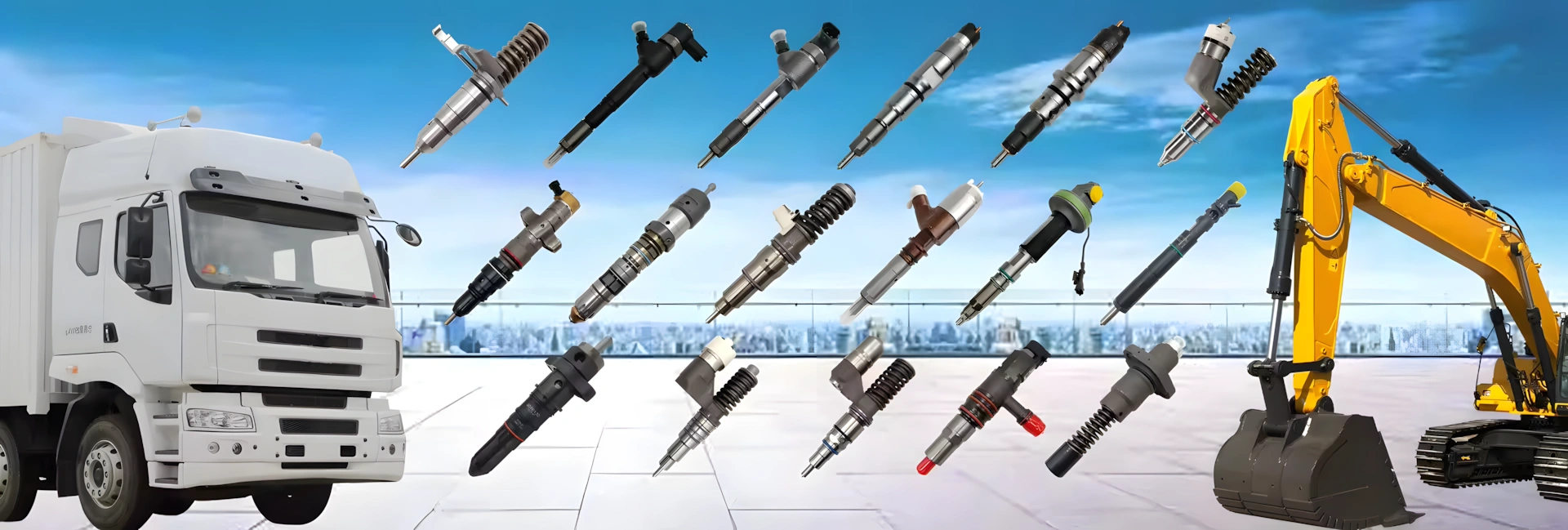
Diesel fuel injector play a crucial role in the performance, efficiency, and emissions of diesel engines. These precision-engineered components ensure that fuel is delivered at the correct pressure, timing, and atomization level to facilitate optimal combustion. In this article, we will explore the key components, functions, and real-world applications of fuel injectors in diesel engines.
一. Components of a Diesel Fuel Injector
A typical diesel fuel injector consists of several components that work together to deliver fuel precisely to the combustion chamber. These components include:
1.Injector Body: The main housing that contains all internal components. It’s typically made of high-strength steel to withstand the high pressure and heat in diesel engines.
2.Nozzle: The part of the injector that atomizes the fuel into fine droplets. The design and size of the nozzle holes significantly affect the combustion efficiency and emission levels.
3.Needle Valve: A critical component that controls the opening and closing of the nozzle. The needle valve ensures that fuel is injected at the correct pressure and timing.
4.Spring: The spring helps maintain the needle valve’s position, ensuring proper sealing when the injector is not in use.
5.Solenoid or Piezoelectric Actuator: This component controls the timing of fuel injection. In solenoid-type injectors, a magnetic field is used to open and close the injector, while piezoelectric injectors use crystals that change shape when electrically charged, offering even more precise control.
6.O-Rings and Seals: These prevent fuel leakage, ensuring that fuel remains contained and flows only where needed.
二. Functions of Diesel Fuel Injectors
The primary function of a diesel fuel injector is to inject fuel into the combustion chamber of an engine. However, the process involves several critical functions that impact engine performance:
1.Fuel Atomization: Diesel fuel injectors atomize the fuel to create a fine mist, which increases the surface area of the fuel. This facilitates more efficient combustion by allowing for better mixing of air and fuel inside the combustion chamber.
2.Precise Timing: Diesel engines rely on precise timing for fuel injection to ensure optimal combustion. Fuel injectors are engineered to release fuel at specific intervals based on engine speed, load, and temperature. Advanced fuel injectors, like those found in modern common-rail systems, can adjust their timing in real-time to optimize efficiency.
3.Fuel Pressure Regulation: Diesel injectors operate under extremely high pressures, often exceeding 1,000 bar (14,500 psi). The injector’s ability to handle such high pressures ensures that fuel is injected with the necessary force for efficient atomization and combustion.
4.Controlled Injection Quantity: Modern diesel engines require precise control of the amount of fuel injected into the engine. This is especially important in meeting emission standards and optimizing fuel consumption. A good injector ensures that only the right amount of fuel is injected at the right time.
5.Emissions Control: Diesel fuel injectors play an integral role in controlling emissions. By delivering fuel at the right pressure and timing, they help minimize the formation of harmful pollutants like nitrogen oxides (NOx) and particulate matter (PM), which are major contributors to air pollution.
三. Types of Diesel Fuel Injectors
There are various types of fuel injectors used in diesel engines, with differences in their design and functionality:
1.Mechanical Injectors: Older diesel engines used mechanical injectors, which were controlled by the engine’s camshaft. These injectors operate at a fixed injection timing and fuel pressure, making them less efficient and more prone to wear and tear compared to modern injectors.
2.Electronic Fuel Injectors (EFI): Modern diesel engines use electronic injectors, which are controlled by the engine control unit (ECU). These injectors can adjust injection timing, pressure, and quantity based on real-time engine parameters. This allows for much more precise control, leading to better fuel efficiency and lower emissions.
3.Common-Rail Injectors: In modern diesel systems, common-rail injectors are widely used. These injectors are supplied with high-pressure fuel from a shared rail, allowing for multiple injections per combustion cycle and enabling more precise fuel delivery. Common-rail systems provide excellent performance across a range of engine speeds and loads.
4.Piezoelectric Injectors: Piezoelectric injectors use piezoelectric actuators to open and close the injectors, offering faster and more precise control. These injectors are typically used in high-performance diesel engines due to their ability to perform multiple injection events per cycle with a high degree of accuracy.
四. Applications of Diesel Fuel Injectors
Diesel fuel injectors are used in various applications across a wide range of industries. Some of the most common applications include:
1.Automotive Industry: Diesel fuel injectors are found in a wide variety of vehicles, from commercial trucks and buses to passenger cars and SUVs. Diesel engines are often preferred in applications that require high torque and fuel efficiency, such as long-haul trucking and heavy machinery.
2.Agricultural Machinery: Diesel engines are widely used in agricultural equipment like tractors, harvesters, and irrigation pumps. Fuel injectors in these machines help maximize engine performance and efficiency in demanding environments.
3.Industrial Equipment: Diesel-powered generators, construction machinery, and marine vessels also rely on high-performance fuel injectors to ensure optimal power generation and emissions control.
4.Power Generation: Diesel engines are commonly used in backup power generation systems, where reliability and efficiency are critical. In these applications, fuel injectors must ensure that the engine operates efficiently over extended periods.
5.Military and Aerospace: Diesel engines, especially in military vehicles and aircraft, rely on precision fuel injectors for high performance, reliability, and efficient fuel consumption in critical operations.
Conclusion:In summary, diesel fuel injectors are vital components in ensuring that diesel engines operate efficiently, safely, and with minimal environmental impact. Their design and function have evolved significantly over the years, moving from mechanical systems to sophisticated electronic and piezoelectric injectors that allow for greater precision, better fuel efficiency, and lower emissions. Whether in commercial vehicles, industrial machines, or power generation, the fuel injector plays a central role in the performance and reliability of modern diesel engines. As emissions standards become more stringent and the demand for fuel efficiency increases, the role of the fuel injector in shaping the future of diesel technology remains more important than ever.