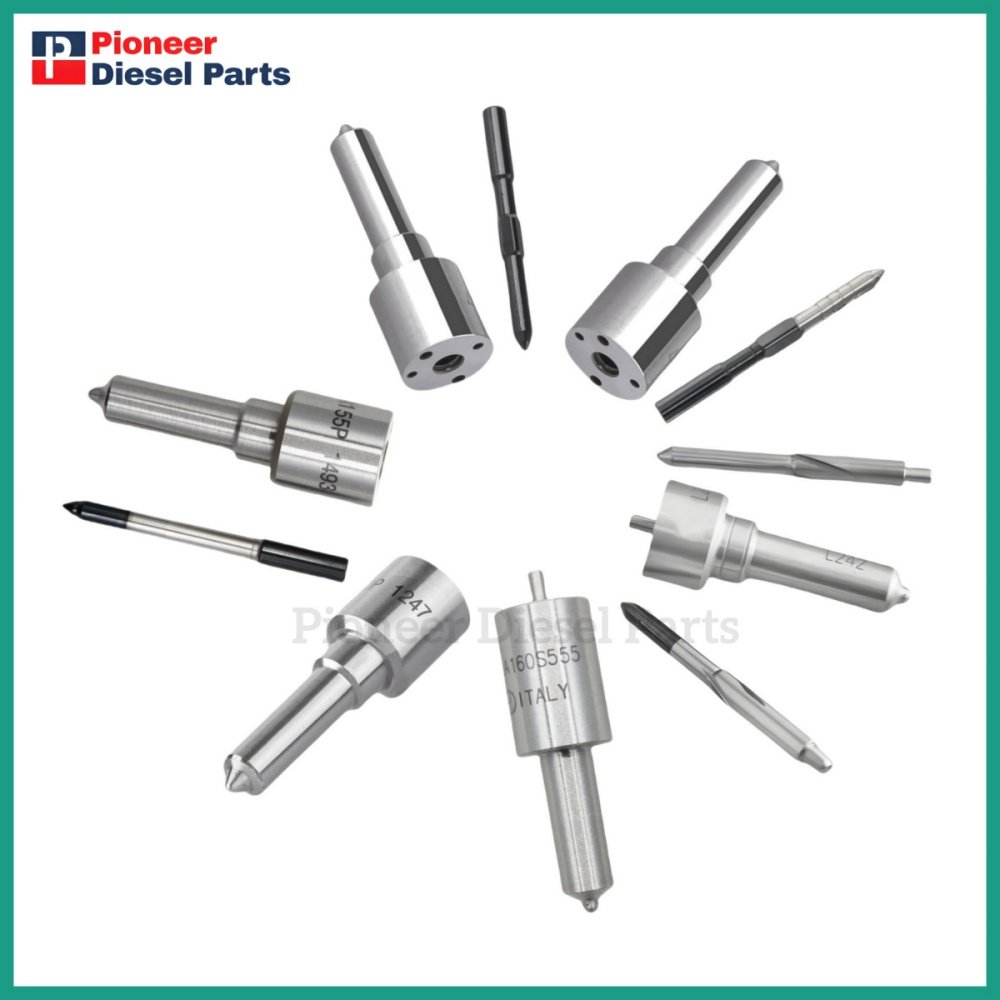
The Diesel Common Rail Nozzle is the core atomizing component of a high-pressure common rail fuel injector. It precisely controls fuel delivery by opening and closing under extreme pressure, converting fuel into a fine mist for optimal combustion. Leading global brands include Bosch, Denso, Delphi (now integrated into BorgWarner), and Siemens VDO. Each brand develops nozzle technologies tailored to different engine management systems, emission regulations, and pressure platforms. European systems are commonly found in passenger cars and light commercial vehicles, while Japanese systems are widely used in Asian vehicles and industrial engines.
In terms of model classification, common rail nozzles are typically identified by codes such as DLLA, DSLA, G3S, and G4S series. For example, DLLA150Pxxx and DLLA145Pxxx indicate specific spray angles (150° or 145°), hole configuration, and performance calibration. Differences in hole number (5-hole, 6-hole, 7-hole, or more), hole diameter, sac type (VCO or mini-sac), and needle design determine fuel atomization quality and injection rate. Modern nozzles are engineered to withstand ultra-high injection pressures ranging from 1,600 bar to over 2,500 bar in advanced systems. Precision machining, micro-tolerance control, surface hardening treatment, and anti-corrosion coating ensure durability, stable spray pattern, and consistent flow rate under severe operating conditions.
Diesel common rail nozzles are widely applied in passenger vehicles, SUVs, pickup trucks, agricultural tractors, construction machinery, marine engines, and heavy-duty trucks. They play a critical role in improving combustion efficiency, reducing particulate emissions, lowering NOx output, and enhancing fuel economy. A properly functioning nozzle ensures smooth engine operation, quick throttle response, stable idling, and reduced vibration. With stricter emission standards such as Euro V and Euro VI, nozzle design has evolved to support multiple injection events (pilot injection, main injection, and post injection), enabling cleaner and quieter engine performance.
Replacement conditions should be carefully evaluated during maintenance. Signs that a nozzle may require replacement include hard starting, rough idle, excessive black or white smoke, knocking noise, reduced engine power, increased fuel consumption, injector leakage, and abnormal return flow. Internally, common failure causes include needle wear, erosion of spray holes, carbon deposits, sticking needle valve, cavitation damage, or deformation due to overheating. Poor fuel quality and inadequate filtration can significantly shorten service life. Professional testing on a calibration bench is recommended to check spray pattern, opening pressure, and flow consistency. Timely replacement of worn nozzles not only restores engine efficiency but also prevents further damage to injectors, pistons, and emission control systems, ensuring long-term reliability and performance stability.