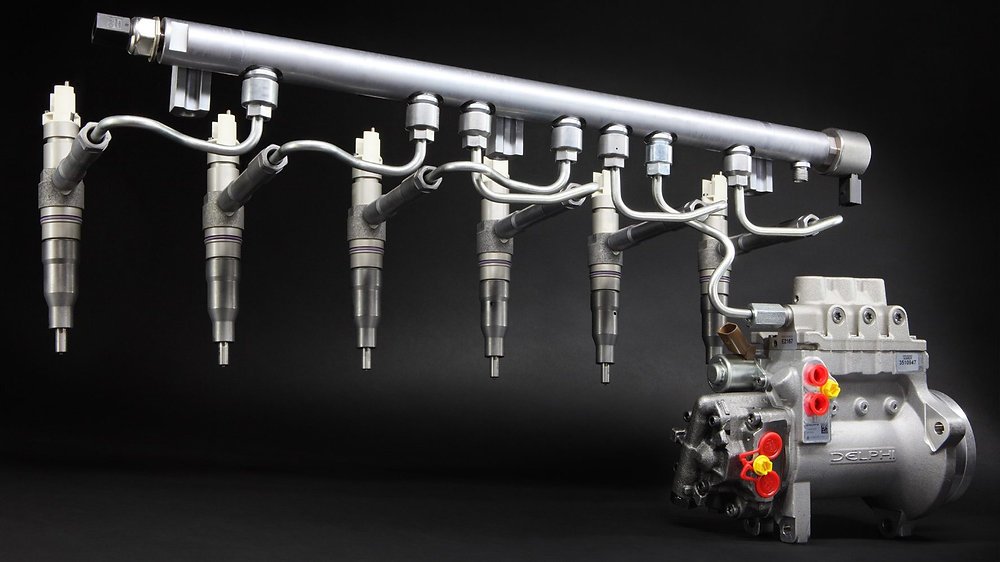
The common rail system has revolutionized the modern diesel injection system, delivering higher efficiency, lower emissions, and improved engine performance. Widely used in passenger cars, commercial vehicles, and heavy-duty machinery, this advanced fuel delivery technology plays a critical role in today’s diesel engines. Understanding how it works and why it matters can help operators and parts buyers make better maintenance and purchasing decisions.
What Is a Common Rail System?
A common rail system is an electronically controlled fuel injection system that supplies high-pressure fuel to multiple injectors through a shared rail. Unlike traditional mechanical systems, it separates pressure generation from fuel injection timing, allowing more precise diesel fuel control.
This system enables multiple injections per cycle, improving combustion efficiency, reducing noise, and lowering harmful emissions—making it a key technology for meeting modern environmental standards.
Key Components of a Diesel Injection System
The high-pressure pump is responsible for compressing diesel fuel to extremely high pressures, often exceeding 1,500 bar. It ensures a constant supply of pressurized fuel to the rail regardless of engine speed or load.
Common pump models include:
- Bosch CP1, CP3, and CP4 series
- Denso HP3 and HP4 pumps
A reliable pump is essential for maintaining stable pressure and ensuring optimal engine performance.
- Common Rail (Fuel Rail)
The common rail acts as a high-pressure accumulator that stores and distributes fuel evenly to each injector. It maintains consistent pressure across all cylinders, allowing the engine control unit (ECU) to precisely regulate injection timing and quantity.
Popular rail pressure components and sensors include:
- Fuel Rail Pressure Sensor 0281006002
- Pressure Relief Valve F00R000756
These components are critical for accurate diesel fuel control and system safety.
Fuel injectors are the core of the diesel injection system, responsible for delivering finely atomized fuel directly into the combustion chamber. Controlled electronically, they can perform multiple injections (pilot, main, and post-injection) within a single cycle.
Widely used injector models include:
- 0445110248
- 0445120153
- 23670-0L090
- 33800-84820
High-quality injectors ensure better fuel atomization, improved combustion efficiency, and reduced fuel consumption.
Control valves regulate fuel flow and pressure within the system. These include fuel metering valves, pressure control valves, and injector control valves, all of which work together to maintain precise system operation.
Typical valve models include:
- F00RJ01479 (injector control valve set)
- F00ZC01307 (control valve assembly)
- 0 928 400 666 (fuel metering unit)
These components are essential for maintaining accurate injection timing and stable pressure levels.
How the Common Rail System Works
The process begins when the high-pressure pump compresses fuel and sends it to the common rail. The rail stores this pressurized fuel and distributes it to each injector. Based on signals from the ECU, injectors open and close electronically, delivering precise amounts of fuel at the right moment.
This coordinated process allows for:
- Multiple injection events per cycle
- Optimized combustion timing
- Reduced engine noise and vibration
- Lower emissions and improved fuel efficiency
Why the Common Rail System Matters
The importance of the common rail system lies in its ability to significantly enhance engine performance while meeting strict emission regulations. Compared to older diesel systems, it offers:
- Improved Fuel Efficiency – Precise injection reduces fuel waste
- Lower Emissions – Cleaner combustion meets global standards
- Better Engine Performance – Smoother operation and higher power output
- Reduced Maintenance Costs – Efficient fuel use and optimized wear
For fleet operators and equipment owners, investing in high-quality components—such as injectors, pumps, and control valves—ensures long-term reliability and reduced downtime.
Conclusion
The diesel injection system, particularly the common rail system, is at the heart of modern diesel engine performance. Its advanced design allows precise diesel fuel control, making engines more efficient, powerful, and environmentally friendly.
As global demand for diesel-powered equipment continues, the need for reliable and compatible spare parts—ranging from injectors to control valves—will keep growing. Choosing high-quality components and maintaining the system properly is essential for maximizing engine life and performance.